
Beyond The Blueprint: China’s 14th Five-Year Plan Achievements And Sino-Arab Cooperation Opportunities In The Greater Bay Area – OpEd
In the People’s Republic of China, Five-Year Plans and the Two Centennial Goals offer a clear lens to understand the nation’s economic and social development strategies — and what truly matters to China and its people. Since 1953, the Communist Party of China (CPC) has issued a series of Five-Year Plans for social and economic development, while the Two Centennial Goals, announced at the 18th National Congress of the CPC in 2012, chart a long-term course: first, to build a moderately prosperous society in all respects, doubling China’s 2010 GDP and per capita income by the CPC’s centenary in 2021; second, to develop China into a great modern socialist country that is prosperous, strong, democratic, culturally advanced, harmonious, and beautiful by the PRC’s centenary in 2049, reaching the level of moderately developed nations.
As 2025 draws to a close, marking the culmination of China’s 14th Five-Year Plan (2021–2025), we reflect on a period when the world has faced unprecedented turbulence and transformation. Against this backdrop of global uncertainty, China has not only maintained steady progress but achieved groundbreaking advancements and historic socioeconomic milestones. Far from being an isolated success, China’s development trajectory during this period has demonstrated its profound capacity to generate positive spillover effects globally — making its growth not just a national achievement, but a genuine boon to the world. This truth finds compelling validation in the remarkable alignment between China’s development priorities and those of Arab nations.
Green Transition: From “Petroleum Dusk” to “New Energy Dawn” — A Shared Resonance
The world stands at a crossroads in energy history, and so do the Arab peoples. The Arab region has shown unwavering political commitment to the 2030 Agenda for Sustainable Development and the Paris Agreement: many countries have set clean energy transition targets for 2030–2035 and net-zero emissions pledges by 2060 or earlier. From the Saudi Green Initiative (SGI) and Middle East Green Initiative (MGI) under Saudi Vision 2030 to the UAE Energy Strategy 2050 and Egypt’s Vision 2030, these are collective responses to the “petroleum dusk” — a turning away from over-reliance on fossil fuels toward a sustainable future.
China’s dual-carbon goals, announced in September 2020 — striving to peak carbon emissions before 2030 and achieve carbon neutrality before 2060 — represent a bold self-revolution against traditional development models. This shared vision has fostered cooperation between China and the Arab world that goes far beyond mere technology transfer; it is a partnership rooted in mutual understanding, like travelers on the ancient Silk Road sharing wisdom and resources.
The philosophy that “lucid waters and lush mountains are invaluable assets” is etched in the Chinese psyche, and green has become the defining hue of contemporary China. Between 2021 and 2025, the 14th Five-Year Plan’s green achievements shine in four key areas: expanding green cover, curbing pollution, transitioning to clean energy, and boosting circular energy use.
Green Cover Expansion: China leads the world in adding green spaces, raising its forest coverage to over 25% and contributing one-fourth of the globe’s newly added green areas—an area roughly the size of Syria.
Pollution Control: The campaign against pollution has yielded stunning results. Days with good or moderate air quality have stabilized at 87%, a 3-percentage-point increase from the 13th Five-Year Plan period. Most hearteningly, China’s two “mother rivers” — the Yangtze and the Yellow River—now maintain Grade II water quality (suitable for drinking after standard treatment) along their entire mainstreams.
Clean Energy Transition: New energy installed capacity has historically surpassed coal-fired power, making China home to the world’s largest clean energy power generation system. One-third of China’s electricity now comes from clean energy, and this ratio is rising steadily — powering cities and villages like the sun and wind that sustain life in the Arabian Peninsula.
Circular Energy Use: Progress in energy conservation and carbon reduction is remarkable. Over 20% of raw materials used in annual steel production come from recycled steel, turning waste into wealth as Arab traders have done for centuries.
Across China’s megacities and rural areas, bluer skies, clearer waters, and more sustainable lives have become a daily reality. These concrete achievements prove China’s commitment to the UN Sustainable Development Goals (SDGs) and its ability to drive global green transition. Such progress is particularly evident in China’s most open economic hub — the Guangdong-Hong Kong-Macao Greater Bay Area (GBA) — a dynamic region that has become a beacon for global investment, including from Arab nations.
Guangdong-Hong Kong-Macao Greater Bay Area: A Global Economic Powerhouse Aligned with Arab Development Aspirations
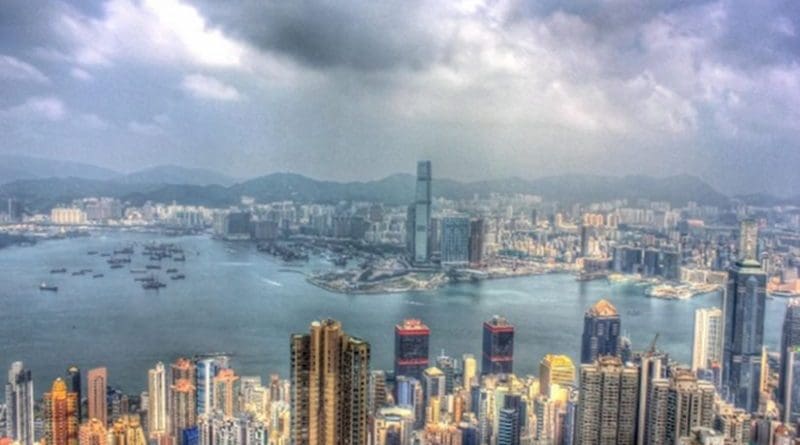
As a core pillar of China’s 14th Five-Year Plan, the Guangdong-Hong Kong-Macao Greater Bay Area (GBA) has risen as a world-leading economic cluster, now standing in the first echelon of global bay areas alongside Tokyo Bay — having surpassed New York Bay and San Francisco Bay in economic size by 2024. With a per capita GDP estimated at 170,200 yuan, the GBA has evolved from a regional growth engine to a core player in the global economic landscape. The GBA acts as China’s gateway to the Indian Ocean and Pacific Ocean, offering Arab investors unrivaled access to a vast consumer market of over 70 million people and a springboard to the broader Asia-Pacific region. It blends Guangdong’s manufacturing might, Hong Kong’s status as an international financial hub, and Macao’s unique platform for cooperation with Portuguese-speaking countries — creating a synergy that mirrors the integrated economic strengths of the GCC states.
Manufacturing & Innovation — Powering High-End Industrial Diversification: The GBA is a global hub of advanced manufacturing, boasting a complete industrial chain and abundant application scenarios — mirroring the industrial diversification efforts of Arab nations moving beyond petroleum. Guangdong Province, the economic backbone of the GBA, is a manufacturing powerhouse with all 31 major manufacturing categories, accounting for approximately one-eighth of China’s total manufacturing value-added and contributing over 50% to local GDP growth. It is home to 73,900 industrial enterprises above designated size, accounting for one-seventh of the national total and ranking first in China. The GBA also hosts over 65,000 national-level high-tech enterprises, including globally influential firms like Huawei, Tencent, and BYD — leaders in digital technology and new energy, fields that align with Arab investments in sustainable innovation. A standout example is Greater Bay Technology, which specializes in extreme fast charging (XFC) batteries. Its mass-produced 6C-rate battery can charge from 0 to 80% in 8 minutes, and from 30 to 80% in just 5 minutes, realizing the vision of “charging as fast as refueling”— a game-changer for the new energy vehicles market that Arab investors are actively exploring.
Connectivity & Mobility — Forging a “Greater Bay Area on Rails”: The GBA’s transportation network has achieved a leap forward, making the vision of “one network, one ticket, one cluster of cities” a tangible reality. The Guangzhou-Shenzhen-Hong Kong High-Speed Railway operates like a “commuter bus,” with the fastest journey from Guangzhou South Station to Hong Kong West Kowloon Station taking just 48 minutes, turning “cross-city living” into a daily norm for millions. Meanwhile, the opening of lines such as the Guangfo Ring Line and Foshan-Guangzhou-Dongguan Intercity Rail has built a Golden Corridor connecting the four trillion-yuan GDP cities of Guangzhou, Shenzhen, Foshan and Dongguan, and create a Greater Bay Area on Rails.. This “one-hour living circle” has significantly reduced logistics and time costs within the region, and boosting the efficient flow and optimal allocation of talents, capital, and technology — critical elements for Arab businesses engaged in cross-border trade, manufacturing collaboration, and investment.
For Arab nations pursuing economic diversification beyond petroleum, the GBA’s strengths in new energy (exemplified by Greater Bay Technology’s fast-charging solutions), advanced manufacturing, digital economy, and financial services are perfectly aligned with their development priorities. The region’s free trade pilot zones have attracted over 30% of new foreign-invested enterprises in China, with targeted policies encouraging investment in high-tech, energy conservation, and environmental protection sectors. Whether it’s collaborating on new energy vehicle technology, investing in digital innovation, or leveraging the GBA’s logistics network for cross-border trade, the opportunities for Sino-Arab win-win cooperation are abundant.
Opening-Up: A Permanent Policy, An Invitation to Shared Prosperity
Opening up to the outside world is a basic state policy of China, and attracting and utilizing foreign investment is a key part of this strategy. From 2021 to May 2025, cumulative FDI into China reached 4.7 trillion yuan, surpassing the total of the 13th Five-Year Plan period. Foreign-invested enterprises account for one-third of China’s imports and exports, one-fourth of industrial added value, and one-seventh of tax revenue, creating more than 30 million jobs. Their thriving development is a powerful endorsement of China’s market-oriented, law-based, and international business environment, and the best proof of the effectiveness of China’s foreign investment policies.
For foreign investors, three truths about China’s market are clear as day:
Wider Market Access: The negative list for foreign investment has been repeatedly trimmed. In 2021 and 2024, China reduced the list to 29 items nationwide and 27 in pilot free trade zones. Restrictions on foreign investment in manufacturing have been completely eliminated, and access has been further eased in agriculture and services. Since last year, China has launched pilot opening-up programs in healthcare and value-added telecommunications. In the GBA, this openness is taken a step further, with specialized policies allowing foreign financial institutions to operate more freely and qualified foreign limited partners to invest in private equity and venture capital funds.
Strong Investment Appeal: China has revised the Catalogue of Encouraged Industries for Foreign Investment multiple times, expanding it to 1,474 items. This guides foreign capital toward advanced manufacturing, modern services, high and new technologies, energy conservation, and environmental protection — sectors that are also priorities for Arab economic diversification. Projects in the catalog enjoy preferential policies on taxation and land use, and major foreign-invested projects receive full-cycle tracking services to resolve issues related to land, sea use, and energy supply.
Fair Business Environment: China fully guarantees national treatment for foreign-invested enterprises, creating a policy environment with transparent rules and equal opportunities. China has also strengthened intellectual property rights (IPR) protection by intensifying law enforcement against infringements affecting foreign enterprises — protecting innovation like a guardian of ancient treasures.
Conclusion
The successful implementation of the 14th Five‑Year Plan underscores China’s structural resilience and its capacity for transformative growth. The 14th Five-Year Plan’s focus on combining an “efficient market” with an “effective government” offers the world an alternative to the Western free-market model. The Guangdong‑Hong Kong‑Macao Greater Bay Area epitomises this transformation, representing not merely a geographic region but an open, innovative, and integrated development model.
For forward‑looking Arab investors, engagement with China — especially through the GBA — offers more than exposure to a high‑growth economy. It represents a strategic partnership in co‑shaping the green and digital future of Asia and beyond. As an ancient Chinese maxim reminds us, “The wise adapt to the times.” The time is now, and the momentum is clear. In the historic transition from the “dusk of petroleum” to the “dawn of new energy,” China, with the Greater Bay Area at its forefront, stands ready to be a steadfast and creative partner in realising the ambitious Visions of the Arab world.
We invite our Arab partners to join us — not only in sharing the growth of a market, but in building a sustainable, intelligent, and shared future.

Like what you read?
Please consider supporting Eurasia Review. Thank you for your consideration!
