Anwar’s Legal Immunity Claim Destroys Any Moral High Ground: Yusoff Rawther Sexual Harassment Case – OpEd
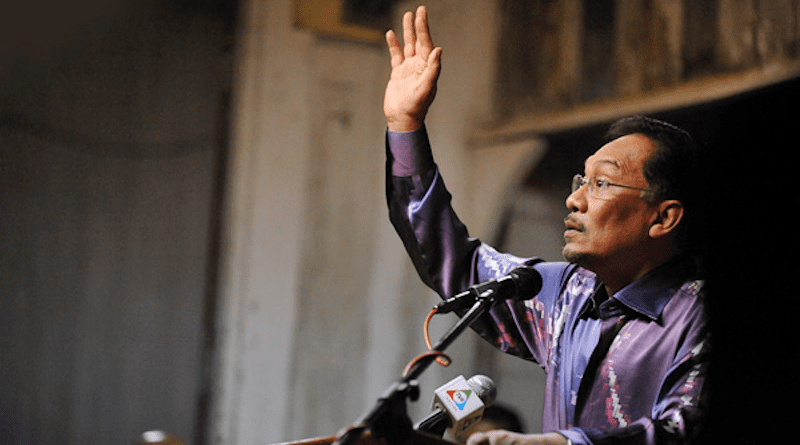
Malaysian prime minister Anwar Ibrahim is pulling out all stops to prevent a sexual harassment case against him claim in the civil court. Anwar is claiming he has “constitutional immunity” and/or he should be allowed to be unhindered in his work as prime minister. The alleged sexual harassment occurred in 2018 soon after Anwar was released from prison by a Royal pardon for a sodomy conviction.
Consequently, Yusoff Rawther’s civil case has been postponed pending Anwar’s claim for legal immunity on “constitutional questions of public importance.” Anwar and his lawyers claim these questions are important because any future prime minister could be targeted with potential lawsuits in the future.
Last month, the High Court had already dismissed Anwar’s claims and block Yusuff Rawther’s suit. However, Anwar’s lawyers have taken the matter to appeal. Thus, the Yusuff Rawther suit has been removed from its proposed June hearing until sometime in the future, pending Anwar’s immunity appeal.
Anwar raised criminal prosecution issues into Mahathir official decisions while in office
Interestingly, Anwar while seeking immunity for himself has taken up the matter of former prime minister Mahathir Mohamed’s decisions on a sovereignty dispute with Singapore over the Batu Puteh rocks in the South China Sea. Anwar said that the cabinet decided not to pursue any prosecution of Mahathir, not because of immunity, but because of his age.
The difference in the Anwar and Mahathir cases are that Anwar is alleged to have sexually harassed Yusuff Rawther, while he held no public office, and Mahathir was acting in his official capacity.
Anwar was looking to breach the convention of not prosecuting public officials working in their official capacity in a previous administration, while seeking immunity for himself on behaviour outside of public office.
Such is Anwar’s own inconsistency.
Precedents around prime ministerial immunity
Anwar Ibrahim’s own cabinet perceived they had the power to advise the Attorney General to prosecute a former prime minister undertaking his duties, but decided not to act upon this perceived power. This has zero legal bearing, but holds inferences over Anwar’s own moral standing.
In addition, the Malaysian Anti-Corruption Commission (MACC) last March arrested the Menteri Besar (Chief Minister) of Perlis Shukri Ramli and later released him on bail. There has been no application of any immunity concept in this case. There is no recognition of any immunity of a senior political leader.
In Australia, four state premiers have stood down from office due to criminal allegations. These are Nick Greiner in New Sale Wales during 1992 after issues regarding his integrity, Barry O’Farrell in New South Wales during 2014 stepping down over political gifts, Gladys Berejikian in New South Wales during 2021 into allegations she breached public trust due to undisclosed relationships, and Joh Bjelke-Petersen in Queensland during 1987 amid the Fitzgerald Inquiry into police and political corruption.
Although these cases in Australia have no legal precedent on any Malaysian court, it indicates political leaders don’t generally enjoy any immunity during their tenure in office.
Within the Malaysian Constitution, there is no explicit or implicit indication that a prime minister enjoys any immunity while in office. Anwar’s administration has acted in the matters above, as there is no immunity to the prime minister or state chief ministers.
Even the Yang Di-Petuan Agong (king) or sultans don’t have immunity, as there are provisions for a special court to trial matters relating to immediate members of the Royal family. Consequently, it would take a courageous judge to rule that the prime minister had any immunity from prosecution. This should be especially so given the civil suit against him was involving allegations of sexual harassment back in 2018 before Anwar held any public office.
Legacy is being destroyed
In the 27 years Anwar has been fighting for ‘justice’ and ‘reform’ in Malaysia, he was often compared to Mandela and Gandhi, due to the long struggle for political reform. Like Nelson Mandela, Anwar was imprisoned for what was considered political persecution two times, over 11 years. This earned Anwar the label as a ‘prisoner of conscience’ by Amesty International.
Anwar was a symbol of resistance in the ‘reformasi’ movement, showing parallels to Nelson Mandela’s leadership after he was released from prison. Commentators like Roger Tan suggested Anwar could show compassion towards his former adversaries and political opponents. However, Anwar’s seeking of immunity from the Yusuff Rawther case has publicly washed away much of the Madela aura from his persona.
Anwar’s compassion was compared to Mahatma Gandhi. However, his approach to the Yusuff Rawther case has also washed away any semblance of empathy the public perceived. Anwar now resembles the image of Myanmar’s Aung San Suu Kyi, long abandoned by those seeking peace, reform, and people-centered power.
Anwar’s immunity case will blemish his legacy, and put him more in the category of Barack Obama, and Bill Clinton for the moral dilemma’s they are leaving behind.