
Healthy European Peatlands Require Specific Temperature And Water Level Parameters
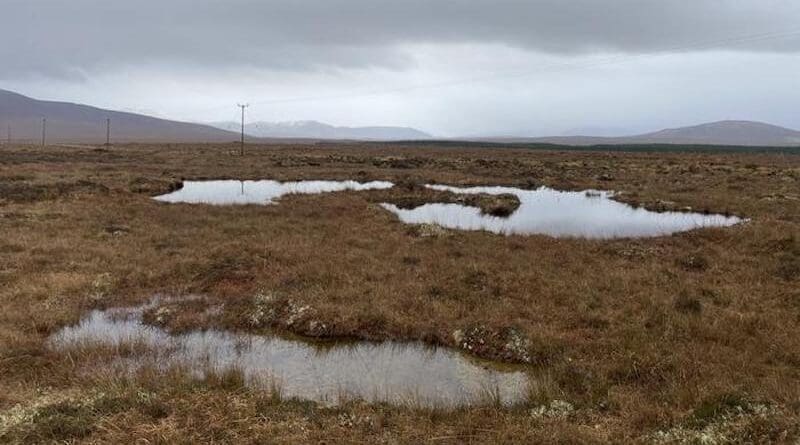
Efforts to enhance peat accumulation in European peatlands, which contain around half of Europe’s soil carbon, will require a combination of warm temperatures and a specific depth of the water table, according to a study published in the open-access journal PLOS One by Graeme Swindles of Queen’s University Belfast, U.K. and colleagues.
Peatlands form via the buildup of plant matter, and they serve an important role in carbon sequestration, containing around half of Europe’s soil organic carbon and five times more carbon than its forests. In recent decades, European peatlands have been damaged by human activities, including pollution, draining, and climate change itself. Efforts are underway to restore these environments, but the factors that influence peatland accumulation are poorly understood. In this study, Swindles and colleagues calculate peat accumulation rates over the past 2,000 years from cores taken from 28 peat bogs across Europe.
Among the studied sites, the fastest peat accumulation, up to nearly 0.5 centimeters per year, occurred around the Baltic Sea, at sites in Denmark, Poland, Sweden, and Finland which experience warm and humid summers. The slowest peat accumulation was measured in northern Sweden, which experiences cold winters and a short growing season. Across all sites, peat accumulated fastest in regions with warm summer temperatures, which improves plant growth, and a water table around 10 centimeters below the surface. If the water table is too high, plants struggle to grow, and if the water table is too low, decomposers can rapidly break down peat as it develops.
These results show that rapid peat growth relies on a delicate combination of climate and water conditions, with important implications for peatland restoration efforts. The authors suggest that previous peatland restoration programs should be evaluated to determine if their relative successes or deficiencies corroborate these findings.
The authors add: “Our work demonstrates that European peatlands function most effectively under specific climatic and hydrological conditions.”
“Our study suggests that warmer summer temperatures could boost growth rates in European peatlands – but only if the water table stays high enough. We also found that maintaining a water table around 10 cm below the surface is key to allowing peat to grow quickly and store carbon over the long term. These findings strengthen current evidence and have important implications for how we restore and rewet peatlands as part of global efforts to tackle climate change.”

Like what you read?
Please consider supporting Eurasia Review. Thank you for your consideration!
