
Balancing Faith And Security: Pakistan’s Counterterrorism Policy And The Proscription Of TLP – OpEd
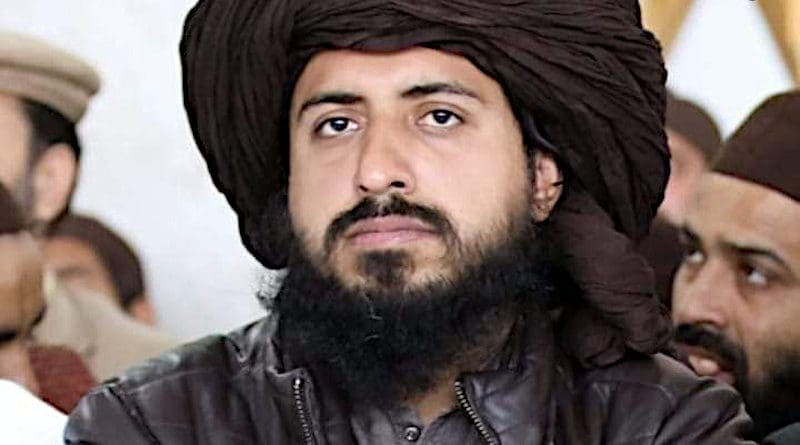
The recent decision by the Pakistan federal government to outlaw Tehreek-e-Labbaik Pakistan (TLP) through the Anti-Terrorism Act (ATA) has created a nuanced debate; one that resides at the nexus of religion, law, and national security. For some, the step represents an oppression of religious articulation, but an intense, objectivist analysis reveals it to be a constitutional and ethical imperative to safeguard Pakistan against violent extremism masquerading as religiosity.
Islam does not prohibit dissent or peaceful expression. The Qur’an clearly states:
“Invite to the way of your Lord with wisdom and good instruction, and argue with them in a way that is best.” (Surah An-Nahl 16:125)
This verse, repeated by many an Islamic scholar, establishes the tone of discord, it has to be based on hikmah (wisdom) and adab (respect). When protests turn into acts of vandalism, bloodshed, and intimidation of civilians or security personnel, the divide between acceptable expression and fasad fil-ard (corruption on earth) is breached.
Esoteric scholar Imam Abu Hamid al-Ghazali cautioned that “chaos and rebellion under the banner of piety are more dangerous than disbelief itself, for they undermine the very fabric of society.” Maulana Wahiduddin Khan too stressed that “Islam’s revolution is intellectual and moral, not militant.” These readings affirm once again that violence in the name of religion is not martyrdom, it is moral deviance.
Established in 2016, the TLP’s campaign was based on the slogan of protecting the Prophet’s (PBUH) honor, a feeling common to all Muslims. The group’s protests, however, kept turning violent year after year, resulting in deaths of security forces and citizens alike.
The government, though acknowledging the religious nature of the group, has been keen to assert that its grievance is not against the beliefs, but against the methods used.
In 2021, the TLP was proscribed under the ATA, only to be unbanned subsequently after guarantees that it would renounce violence. However, the recent incidents, including the Muridke clashes, demonstrated a shift to violent tactics: picketing of police weapons, targeting of cars, and strangulation of major national roads.
As Prime Minister Adviser to Rana Sanaullah correctly observed, “The aim behind the ban is not to kill any party but to cleanse it of anti-state and terrorist elements.” That is the critical difference. The problem is not theological but behavioral, not religion, but rebellion.
The Anti-Terrorism Act gives the federal government the power to ban any group linked with terrorism. In the latest notification by the Interior Ministry, it is clear that the government had “reasonable grounds” for believing TLP was engaged in such activities.
This came after following due process — instigated by the Punjab government, deliberated on by federal authorities, and established on documented evidence involving violent behavior, illegal bearing of arms, and incitement on social media.
According to Article 17(2) of the Constitution of Pakistan, any political party that plays a “prejudicial to the sovereignty or integrity of Pakistan” role can be sent to the Supreme Court to dissolve. So not arbitrary at all, the ban expresses Pakistan’s constitutional and security regime functioning.
Traditional Islamic jurisprudence has always denounced khuruj; armed rebellion against rightful authority as a great sin.
Imam Nawawi, commenting on Sahih Muslim, wrote: “It is not permissible to rebel against the ruler, even when he is unjust, unless he innovated clear disbelief, because uprising causes bloodshed and puts people in disarray.”
The TLP’s activities violating writ of the state, freezing cities, and risking lives squarely fall within this definition. Islam does not allow anarchy under the garb of piety. Prophet Muhammad (PBUH) stated: A Muslim is the one from whose tongue and hand others are safe.” (Sahih Bukhari, 10) This hadith emphasizes the dignity of human life and peace; values desecrated when religion is used as a means of oppression.
The Islamic Republic of Pakistan has the double responsibility of safeguarding both deen (faith) and aman (peace). When violent extremist groups use religious emotion for political mileage, they compromise on both.
The ban by the state on such attire is not anti-Muslim; it is an exercise in maslahat, public good something deeply ingrained in Islamic rule. Caliph Umar ibn al-Khattab (RA) once asserted, “The survival of the state depends on justice, even if its people are not believers.” Justice here requires protection of innocent lives from violent extremism.
Additionally, as Minister Talal Chaudhry put it, “Those who take the route of violence have no business to be granted political rights.” Democracy and militancy cannot go hand in hand.
Pakistan’s leadership has consistently asserted that nobody’s faith is being attacked. The problem is making sure that faith is not an excuse for violence.
The government will now have to add strength to its security program with comprehensive deradicalization efforts, civic education, and responsible media policy. Religious leaders also need to take back their rightful place in advancing peace and combating extremist ideology.
The prohibition on TLP should not be perceived as a war on religion, but rather as a declaration of Pakistan’s commitment to peace, law, and authentic Islamic values.
Violence, however holy the cause it advances, is to be condemned alike by the Qur’an and by common sense. As Allama Iqbal observed,
“Deen-e-Mullah fi sabilillah fasad”; The religion of the mullah, when politicized, becomes a source of discord rather than divine guidance.
The state’s measure, thus, is not suppression of belief, but preservation of it, ensuring that the affection for Prophet (PBUH) is untainted, uninfringed, and in accordance with the genuine essence of Islam: peace, justice, and wisdom.

Like what you read?
Please consider supporting Eurasia Review. Thank you for your consideration!
