
ASEAN At A Crossroads In The China–Japan Rivalry – OpEd
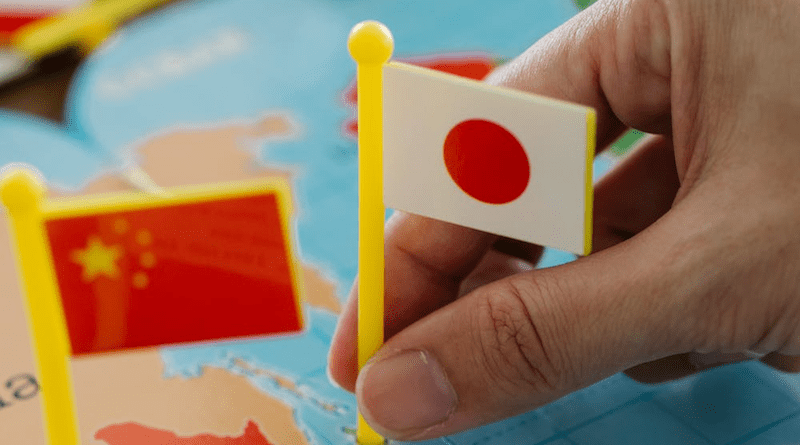
The tensions between China and Japan reached an all-time high in 2025. Beijing has strengthened its naval operations in the East China Sea; at the same time, Tokyo has boosted its defence budget to reach 2 per cent of GDP by 2027. The United States has strengthened its military exercises with Japan, which Beijing views as a form of encirclement. The Northeast Asian dispute between China and Japan now affects Southeast Asia because ASEAN members face increasing pressure to act.
The geopolitical rivalry between China and Japan creates a direct impact on ASEAN because it affects South China Sea disputes and economic relationships, and Indo-Pacific regional leadership. The growing competition between China and Japan tests ASEAN unity by exposing existing disagreements while creating an essential chance for Southeast Asia to demonstrate its importance in the regional structure.
China maintains its position as ASEAN’s leading trading partner because its 2025 bilateral trade reached USD 950 billion. Japan maintains its position as a major investor in Southeast Asian infrastructure and manufacturing through various projects across Vietnam and Indonesia. The economic bonds between ASEAN and these two nations allow the organisation to implement diplomatic methods which concentrate on solving real-world problems. The rising demands from Beijing and Tokyo for alliances have forced ASEAN to give up its previous stance of neutrality.
The external environment shows rising complexity levels in its current state. The United States and Japan expect ASEAN to show solidarity through public statements against the Chinese aggressive actions. The international community will view ASEAN negatively because it failed to demonstrate collective support. China has shown its willingness to use economic sanctions as a tool for retaliation through past restrictions on Philippine agricultural exports during maritime disputes, which exposes ASEAN economies to risk. The current supply chain disruptions in 2025 create a major economic threat because China might impose trade restrictions on ASEAN nations.
The internal disagreements between member states create additional difficulties for ASEAN to handle its situation. Vietnam and the Philippines support taking a stronger stance against China, but Cambodia and Laos show reluctance to confront Beijing. The various national interests within ASEAN create barriers for collective action, which leads to indecision when the situation requires an immediate response. The Indonesian government faces difficulties in maintaining its leadership position for ASEAN centrality because of domestic priorities, which create uncertainty for the bloc.
The organisation needs to solve various critical problems which exist at present. The close alignment with Japan and the United States creates economic risks from China. The expansion of Japan’s defence capabilities faces opposition from Vietnam because it could weaken South China Sea deterrence. The lack of decision-making from ASEAN threatens to damage its institutional reputation, which would harm its position as a central power in the Indo-Pacific. Member states’ failure to reach an agreement will turn ASEAN into a reactive organisation which cannot generate its own results.
The present situation in Southeast Asia produces effects which extend throughout the entire region. The failure of ASEAN to stay neutral will create more Indo-Pacific bloc politics, which will divide the region into deeper segments. The regional institution maintains its credibility because it successfully manages crises while keeping its fundamental principles intact. The loss of neutrality will drive ASEAN toward international diplomatic sidelines, which will harm its established international standing that has developed over multiple decades.
The current situation presents ASEAN with opportunities to take advantage of. The East Asia Summit and ASEAN Regional Forum maintain their importance because they provide a common meeting space for China and Japan to interact. ASEAN functions as an impartial communication platform which works to prevent conflicts from escalating into more serious situations. The region needs to establish economic diversification as its main solution. ASEAN needs to create more economic ties with India and Australia because this will help protect against external threats while expanding its economic reach to these middle powers.
The success of ASEAN depends on its effective management of internal disputes. The South China Sea functions as the main testing area for ASEAN. The Code of Conduct negotiations with China have experienced delays, but ASEAN can use this moment to demonstrate its ability to work together as a single unit. The implementation of joint maritime security operations through patrol missions and information sharing will demonstrate ASEAN’s active role in maintaining regional stability.
The region faces an extremely critical situation because of its economic growth and strategic location in the Indo-Pacific region. The region will maintain its importance and become vital for stability in the region when ASEAN adapts successfully to current challenges. The organisation will lose its significance in a world controlled by great powers because it fails to transform according to new environmental conditions.
The rising tensions between China and Japan in 2025 forced ASEAN to deal with its weakened ability to work together diplomatically. The region’s current bloc politics environment makes it difficult for ASEAN to maintain its traditional neutrality. The upcoming economic exposure and international pressure and domestic disagreements, and institutional stability create urgent challenges which require ASEAN to take immediate action. The region needs to establish its fundamental position through building strong institutions which will demonstrate Southeast Asian leadership in Indo-Pacific development initiatives. The future stability of the region depends on ASEAN’s ability to solve its current problems. The organisation stands at a decisive point which will establish its position in the developing Indo-Pacific regional power dynamics. The decisions ASEAN makes during 2025 will establish permanent impacts which will influence the Indo-Pacific region throughout the following years.
Simon Hutagalung is a retired Indonesian Foreign Ministry official and received his Master’s degree in Political Science and Comparative Politics from the City
The opinions expressed in this article are the author’s own.
References
- Khong, Y. F., & Liow, J. C. (2025, June 24). Southeast Asia Is Starting to Choose: Why the Region Is Leaning Toward China. Foreign Affairs.
- Milner, A. (2025, February 25). ASEAN adapts and advances as global politics shift. East Asia Forum.
- Sakaki, A. (2025, June). Japan in Southeast Asia: Countering China’s Growing Influence (SWP Research Paper 2025RP01). Stiftung Wissenschaft und Politik

Like what you read?
Please consider supporting Eurasia Review. Thank you for your consideration!
