
Missing Afghan Weapons Threaten Security – OpEd
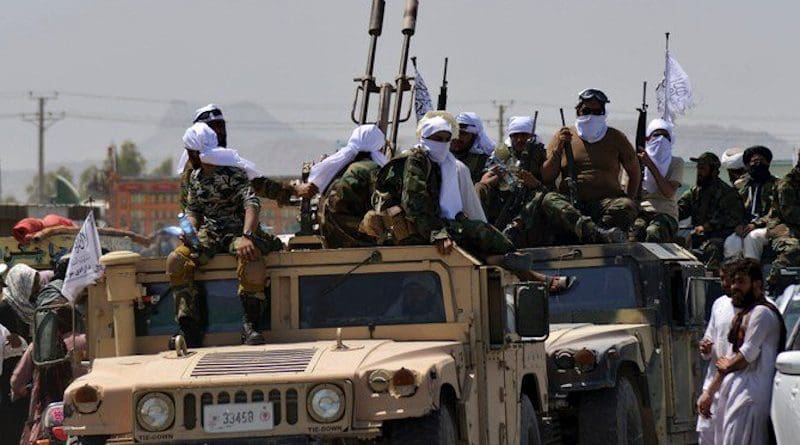
The discovery of missing weapons including US-made items such as AK-47s and M16s together with Beretta 9mm pistols and M4 ammunition from Afghan army depots in Badghis creates serious doubts about regional security. The provincial GDI (General Directorate of Intelligence) located in Badghis conducted weapons audits that revealed extensive unaccountability of these weapons. An official demand for an investigation has been made to Kabul’s central GDI by the provincial GDI headquarters to demonstrate the magnitude of the situation. The incident demonstrates a major growth point in the alarming sequence of weapons disappearing from Afghan military control that ends up with terrorist organizations.
This is not an isolated case. Numerous reports have emerged about the U.S.-made weapons which the Afghan military abandoned after its August 2021 collapse now end up with militant groups primarily among the Tehrik-i-Taliban Pakistan (TTP). Multiple reports show an increasing pattern where weapons that either military units discard during retreat or that are stolen from storage depots lead to insurgencies throughout neighboring states primarily affecting Pakistan. The weapons found missing in Badghis represents a bigger worrying trend of observations.
There is a worsening of conditions on Pakistani soil during the previous twelve months. Agents from Pakistan’s security forces discovered a large number of US and foreign weapons used by border militants near Afghanistan. Weapons such as firearms and explosive devices along with ammunition confirm that Afghanistan now supplies arms worth noting to militant organizations following the Taliban takeover. Modern militant operations along the Pakistan territory receive weapons from Afghanistan through established channels which have existed for a long time. The existence of hostile militant sanctuaries across the Afghan border has served as a persistent concern which Pakistan has persistently raised with other countries for several years. Multiple thefts of military-grade weapons from Afghan military depots show Pakistan was correct in making its warnings. These weapons escaped Afghanistan to become an immediate security threat to Pakistan’s territory.
The weapons transfers problem further intensifies due to Taliban involvement which ranges from active participation to passive acceptance of the weapon movements. The fatal assassination of Badruddin a 207th Al-Farooq Corps Afghan military member on Pakistani soil demonstrated the dire conditions the nation faces. The use of US-made weapons by Badruddin when he fought with the TTP highlights both Taliban military equipment insecurity and indicates intentional equipment diversion by extremist groups. Badruddin’s support for TTP along with his possession of US weapons creates major doubts about the reliability of Afghan Ministry of Defense personnel because they show allegiance towards extremist movements through their terrorist connections and weapon distribution activities.
The alarming frequency of terrorist activities demonstrates that Afghanistan serves as a primary origin for cross-border crimes. The weapons which belonged to the Afghan military provide arms to militant insurgencies especially to the TTP that launches attacks inside Pakistani borders against Pakistani security forces and civilian targets. The increasing number of evidence vindicates both Taliban’s weapons denial statements and their backing of militant operations in Pakistan. Through their inaction or potential support of arms distribution to terror networks the Taliban reinforces these militant groups thus intensifying the dangerous security conditions throughout the region.
For many years Pakistan has warned about the danger zones in Afghanistan which serve as terrorist militant bases and logistics centers. Afghanistan’s fall to the Taliban caused global strategic failure since the terrorist sanctuaries continue without government interference under the Taliban’s control. The weapons stolen from Afghan military depots have reached Pakistani territories to be used against the country because of failed US strategies.
It becomes harder for the international community to trust the Taliban due to its deceptive behaviors. The Taliban fails to fulfill its terrorism prevention commitments made to both domestic and international peace despite their stated pledges. The Taliban has succeeded in empowering extremist organizations by giving them better weapons as well as valuable resources. This failure at a large scale both endangers Pakistan’s safety while impacting the stability of the entire regional area. The unaddressed challenges faced by the Taliban toward preventing extremism will keep destabilizing the total region until they take decisive steps to resolve these matters.
The international community needs to combine the demand for Taliban terrorist sanctuary elimination with speedy military weapons prevention targeting militant organizations. The weapon seizures in Badghis exceed Afghan borders because they create regional security risks. An unaddressed problem has the potential to create an escalating weapon competition between militant groups across the region which would make similar nations struggle harder to suppress growing terrorist organizations.
The weapon thefts from Afghan army depots that get transformed into militant organizations’ weapons systems decidedly threatens the security of the region. This situation which the Taliban neglects or supports has confirmed that Afghanistan serves as the central hub for cross-border terrorism. Pakistan demands that Afghanistan faces responsibility for its inability to halt weapon distribution to terrorist organizations while continuing to manage the repercussions of weapon theft from Afghan military bases. The security of Pakistan together with its surrounding area faces continuous danger when there is no accountability in place.

Like what you read?
Please consider supporting Eurasia Review. Thank you for your consideration!
