
Separating Fact From Fiction: Pakistan’s Position On US-Iran Conflict – OpEd
After recent air strikes on Iranian nuclear installations by the United States an avalanche of wrong information has followed which has tried to mislead by saying that Pakistan may have been a party to it and had given its air space to the United States to make such an attack. There is no evidence to believe that such allegations have anything to do with facts, common sense and geography, and seem to revolve around a well-considered effort to tarnish the credibility of Pakistan and its relations with Iran and misguide the world audience.
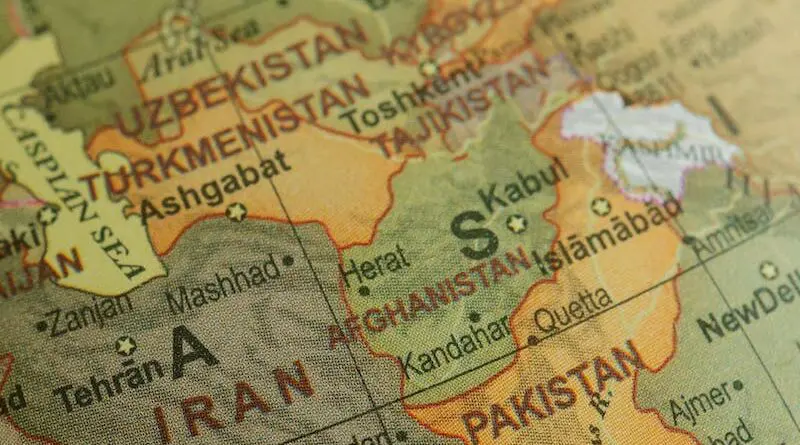
These accusations can be rejected by a simple knowledge of the geography in the area. The southern border of Iran spans more than eighteen hundred kilometers to give the United States easy access to the Iranian territory through the south with freedom. The US has been content with large-scale military facilities in the Gulf countries of the Kingdom of Qatar, the UAE and Oman. These places are very near to the targets of Iranian as compared to any path touching Pakistan, which makes it operationally unwise that the US has to take at least an extraneous route through Pakistan to South Asia.
Besides, it is the nature of the flying machine taking part in such risky flights that abolishes any airspace deliberations. Stealth bomber B-2 Spirit, widely known to partake in such actions, is designed in such a way to avoid detection by radar. None of the countries in the region including Pakistan possess technological capacity to monitor or detect their presence. These aircraft do not need clearance of the airspace like other normal flights do and their routes cannot be monitored by the civilian or regional radar. This proves any speculation concerning the usage of the air-space of Pakistan to be completely baseless.
The story about Pakistan easing or condoning such attacks is not only wrong, but hazardous. This seems to intend to instill distrust in Islamabad and Tehran and lead to diminish the position of Pakistan among the rest of the Muslim world. As a matter of fact, Pakistan has conducted itself before the escalation in a manner that testifies its strong interest take steps toward diplomacy and de-escalation. General Asim Munir, the Chairman of the Army staff of Pakistan during his latest visit to Washington is reported to have tried hard to convince the United States that it should not get involved in what Pakistan perceives as an Israeli instigated conflict where it seemed that Israel was engaged in one-side aggression.
Pakistan has also lamented and mourned the pain that it has subjected the Iranian people to as well as denounced the US attacks in media. Meanwhile, Islamabad has followed a diplomatic route to get restraint and prevent escalation in the region. Even President Trump himself in his own announcement of the strikes gave noteworthy change of tone that gave an indication of willingness to give it a chance though peace and dialogue. This marked moderation on his previous stance can be possibly due to diplomacy, even that held by general Asim Munir.
Critics have tried to contradict the nomination of President Trump into the Nobel peace Prize by Pakistan since he had commissioned the attacks. This criticism fails to keep the time schedule and intention of the nomination. It was recommended a full day before the strikes, as the entire recommendation was on the basis of Donald Trump breaking the tension between India and Pakistan when a risky standoff occurred in the month of May. This nomination was not a victory of the past deeds but a tactical one, which was aimed at supporting the restraint and directing Trump to making other peace-prosperous choices, especially concerning Israeli aggression on Iran. It has also been a move to impose moral pressure on the leadership of the US to avoid war over that of diplomacy.
The attitude of Pakistan is not contradictory. A principled foreign policy is to condemn aggression and at the same time engage in backchannel diplomacy. All these: the support of Pakistan to the Iranian people, the actual rejection of strikes on the part of Pakistan, the diplomacy applied by Pakistan to the United States are carried out on the ground of the same principle, i.e., the stability of the region and peaceful solutions to the conflicts. The nature of dual-pronged approach is not contradictory but complementary.
Meanwhile, one should be aware of the pattern of disinformation to be observed. There are all signs of a concerted effort in false narratives concerning the role of Pakistan. India especially has a history of publicizing regional conflicts to defame and demonize Pakistan by placing fake stories in media and hiring spies to conduct secret influence campaigns. The intention to circulate gossips in regard to the involvement of Pakistan in the strikes in Iran is part of this broad strategy of manipulating narratives in order to diminish the diplomatic positions of Pakistan and cause a rift among the Muslim countries.
The disinformation perpetuated under the guise of a political strategy is a very irresponsible thing given that the region is at a risk of broader conflict. Through the restraint, promotion of peace and constructive measures, Pakistan never allowed the situation to escalate. Instead of being accused or even blamed due to unreasonable rumors, these attempts should be supported as a responsible but even needed input into the region diplomacy.
The facts do not show that Pakistan permitted the American military activities to be used against Iran in its airspace. Military logic, geographical facts, diplomatic conduct and technological reality do not support the suggestion. It is a politically-designed lie, which is created to deceive and separate. The global community must not buy this misinformation and the coherence of the Pakistan position. Pakistan has not engaged in belligerence. It has made efforts to stop it. It has played a fair role in this crisis as a responsible regional actor, which vows peace, stability, and unity with the people of Iran.

Like what you read?
Please consider supporting Eurasia Review. Thank you for your consideration!
