
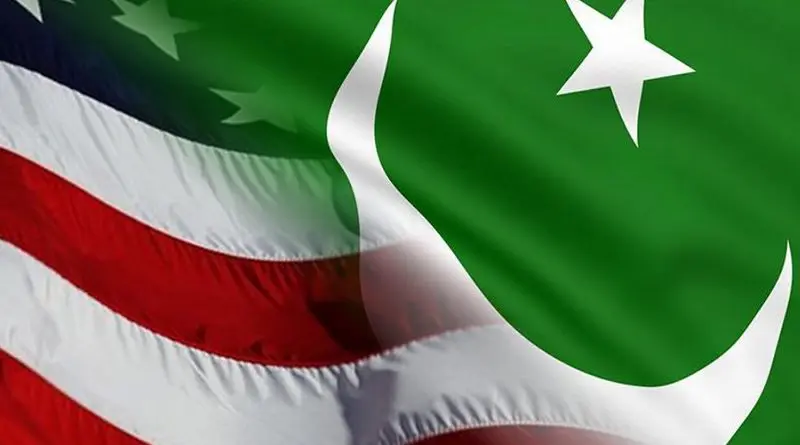
The New Center Of Pakistan-US Relations – OpEd
The existing situation of the Pakistan-US relation seems to be in a better position today than it was several years ago not because it suddenly turned romantic on but because the incentive has finally caught up. Washington is trying to compete more smartly, through less open-ended deployments and more emphasis on trade, supply chains, technology and selective partnerships which will minimize long term security costs. Islamabad is trying to stabilize the economy, bring investment, modernize payments and industry, find energy and hold the militants at pressure. As soon as the priorities are overlapping, relations no longer cycle between crisis and neglect and start functioning as a working partnership.
The most insightful phenomenon is the existing equilibrium between the two forces to consider economics and technology as means of national security. The best example is the case of the mid-January 2026 memorandum of understanding between Pakistan and SC financial technologies LLC that is said to be affiliated with World Liberty financial. The MoU covers the use of a dollar pegged stable coin, USD1, into the payment’s infrastructure in Pakistan, and the central bank was planning on digital currency. Like it or not, the reasoning is strategic one, to have cross border payments faster and cheaper and to have honest flows like trade and remittances lighter than not, whilst the regulation remains in the driving seat.
In this instance, remittances are not a footnote, however, they are a macro stabilizer. As the data given by the State Bank shows, workers remittances during the fiscal year 2025 were at 38.3 billion dollars which are the highest rates ever. So long as Pakistan can lower the scale of transaction expenses and enhance the speed of settlement, not only that is a win in the fintech domain, but it is a reserve against the balance of payments position, and a way of bringing more flows into the formal sector. The coin debate of the stable coins also connects to the interest of Washington in stable and rules based financial infrastructure that will enable it to grow without having to build new risks of sanctions and illegal finance loopholes. It is a credible regulation and not platitudes that are put in the right place.
Pakistan is going that far at least on paper to that credibility of regulation. The ordinance of Virtual Assets 2025 created a new specific regulator, the Pakistan Virtual Assets Regulatory Authority, and outlined licensing expectations of the virtual asset service providers. The government has also been publicly advertising the large base of local users, and the number of users has been estimated to be 40 million with the potential rate of trading amounting up to 300 billion dollars but one should take these as estimates rather than things to be audited. In the case of United States, the test is whether it can be possible that money laundering standards and the mitigation of systemic risk can be established by Pakistan in such a manner that they meet its anti-money laundering standards. The question to the Pakistan is whether the digitisation is a product narrative or a hypothetical balloon.
The other pillar of structure is convergence of security that has been hardened since 2021. The militant violence against Pakistan Afghanistan belt has never softened and the security position of Islamabad might not be softened soon. In January 2026, the military spokesperson of Pakistan quoted 5,397 terrorist attacks in 2025, 75,175 intelligence-based attacks and 2,597 killed militants in 2025. These statistics is one of the reasons why the country is considering that Pakistan is bearing an immense internal security cost which will also ensure greater regional interests. Although the United States has withdrawn in Afghanistan, it has a stake in transnational threat, and it does not wish to have another unregulated vacuum. That does not have to be a large footprint, but it must have a regular intelligence and capacity collaboration, and red lines against sanctuaries.
The boundaries are however spelt out by strategic competition. Pakistan would like to find US as a strategic partner and China as a major economic partner. It is rational of a middle power that borders India and Afghanistan to perform such a balancing act, however, when all infrastructure projects are considered loyalty tests, it becomes weak. The more prudent action that Washington can take is to compete by offering Pakistan with more plausible opportunities, investment, access to the market, technological relationship and energy relations which can be grounded on the reasoning of commerce. It is wiser of Islamabad to grow less dependent on the one foreign benefactor by strengthening the administration, predictability, and administration of contracts, the unglamorous commodities prized by investors.
The most enduring base can be ideology. The possibility of Pakistan holding the minerals is often in trillions but is approximated at a total of 6 to 8 trillion dollars, however, the valuation is so diffused and needs to be all verified. The only fact which cannot be doubted is that those projects like Reko Diq can have worldwide significance if those projects are managed in a transparent way. According to the leadership of Barrick, it has been argued that Reko Diq can generate some 74 billion dollars of free cash flow in 37 years. Reuters has also reported the presence of several international financiers such as negotiations with US EXIM Bank. It is at this juncture that Pakistan US partnership can be brought into reality, fund, standardization, environmental regulation, local value addition and supply chain networks to partner markets.

Like what you read?
Please consider supporting Eurasia Review. Thank you for your consideration!
