
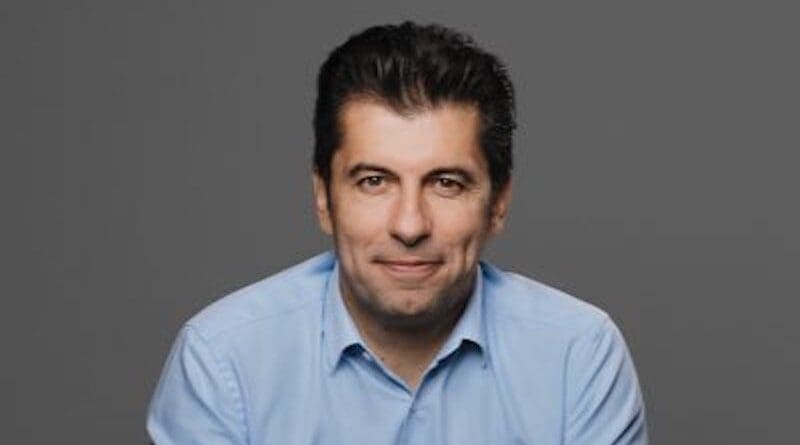
Bulgarian Opposition Leader Quits Amid Party Corruption Allegations
By Svetoslav Todorov
Bulgaria opposition leader Kiril Petkov on Wednesday unexpectedly announced his resignation from the We Continue the Change party and from parliament.
The move from Petkov, who was Prime Minister between 2021 and 2022, comes amid a brewing corruption scandal – details about which are still incoming.
In recent days, We Continue the Change experienced problems with members leaving, including the regional mayors of several of Sofia’s biggest neighbourhoods.
Some said they had been under pressure to favour certain property development firms while the We Continue the Change party has insinuated that some of these former members had been bought off by political opponents and persuaded to leave, although they deny this.
On the same day Petkov resigned, so did Sofia’s deputy mayor Nikolai Barbutov, who was questioned by an anti-corruption commission the previous day. A recording of what was alleged to be Barbutov and another party member seemingly arranging public procurements for specific people was leaked to the media earlier on Wednesday.
In the recording, the two men appear to discuss green-lighting property projects for companies, the owners of which are currently being questioned by the police.
Petkov said he was “terribly disappointed” by the claims.
“If this investigation and this recording are genuinely connected to wrongdoing, then this is indeed a big misstep […] As someone who was in charge of the nominations for the Sofia region, I want to take political responsibility for this failure to select the right people,” he said.
One of the members exiting the party, Emil Branchevski, told local media on Wednesday that Petkov had been “threatening” him to stop the controversial demolition of a Roma neighbourhood in Sofia. Despite criticisms, Branchevski has been adamant he has done his job as a regional mayor.
Petkov is one of the main figures from a generation who burst onto the political scene at the beginning of Bulgaria’s turbulent election cycle between 2021-2024, when there was general discontent with the dominance since 2008 of the GERB (Citizens for European Development of Bulgaria) party.
Petkov, a Harvard graduate previously known as an entrepreneur, served as an interim Minister of Economy in 2021 in a caretaker government, handpicked by President Rumen Radev.
Along with another political hope, Assen Vassilev, the 2021 Interim Minister of Finance, Petkov founded the centrist party We Continue the Change, named to reflect their outspoken reformist ambitions.
We Continue the Change immediately gained voter trust and won elections in November 2021, forming a wide coalition with three allies: Democratic Bulgaria, There’s Such a People, and a recent presence on the political scene, the Bulgarian Socialist Party, with Petkov as the Prime Minister.
Russia’s invasion of Ukraine changed internal dynamics as President Radev and the Socialists took a soft approach to the Kremlin’s war. Both parties started to distance themselves from We Continue the Change. Petkov was eventually ousted in June 2022 after There’s Such a People left the coalition.
During Petkov’s short-lived cabinet, Bulgaria cut ties with Russia’s gas giant Gazprom and established a gas link with Greece. In the same period, Petkov also initiated numerous expulsions of Russian diplomats and spies from Sofia.
Petkov also demonstrated a willingness to improve diplomatic relations with North Macedonia after GERB imposed a veto on Skopje’s accession to the EU.
During Petkov’s mandate, GERB leader Boyko Borissov was briefly arrested on unclear corruption charges in 2022. When Borissov’s GERB came back to power in 2025, prosecutors eventually charged Petkov with overstepping his rights over the arrest.
We Continue the Change’s reputation was damaged when in June 2023 entered a coalition of compromise with their biggest opponents, GERB, and despite plans for rotating prime ministers and a shared pro-EU perspective, it failed to last.
We Continue the Change, running alongside Democratic Bulgaria, came in second in the October 2024 elections, with 14.2 per cent of the vote. Winners GERB eventually arranged a coalition, which is currently in power, with There’s Such a People and Bulgaria’s socialist party, with GERB’s Rossen Zhelyazkov as Prime Minister.

Like what you read?
Please consider supporting Eurasia Review. Thank you for your consideration!
