
Pakistan: Industrial Growth And Special Economic Zones – OpEd
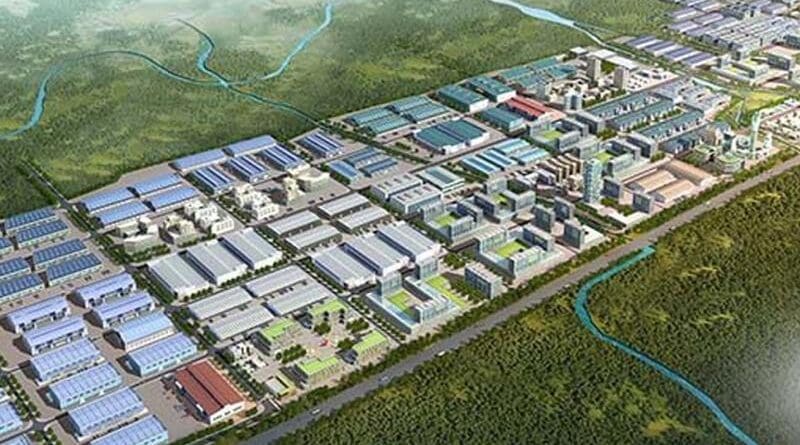
CPEC Phase 2 is not only roads and power plants. It is all about laying the ground work of sustainable export-led growth. The SEZs are being designed considering the strengths of each within the manufacturing and textiles, energy and technology. The model has a template of China in which SEZs have been the drivers of China to take off economically through tax incentives, advanced infrastructure, and investor-friendly laws. In the case of Pakistan, this may be the turning point that is going to change its economic outlook over the generations.
These SEZs have a potential of creating millions of jobs, which is the promise of these SEZs. This could not have come at a better time considering that almost two-thirds of the Pakistani population is below the age of 30. One of the most outstanding issues of the country has been youth employment. SEZs are able to absorb an increasing number of workers by establishing industrial clusters that accommodate both large foreign companies and domestic businesses to provide both skilled and semi-skilled workers. Slots will be available in all industries, starting with the assembly-line technicians going up to the logistics managers and engineers, providing young Pakistanis with a legitimate opportunity at meaningful work. In its turn, it can alleviate the social pressures and enhance the stability as a whole.
The main pillar of this new industrial strategy is export-led growth. Over the decades, Pakistani economy has been dependent mostly on imports that has put a strain on its external balance and foreign reserves are exhausted. SEZ-based industries are able to contribute to the effort to change that balance by increasing industrial production and moving to global markets. Some of the sectors that would flourish under this export-oriented approach are textiles, light manufacturing, food processing and even the assembling of electric vehicles. The export strengthening will enhance the balance of trade as well as ensuring resilience against external shocks.
Inclusive development is also highlighted at CPEC Phase 2. In contrast with the initial stage when the majority of the projects became localized in particular areas, the new SEZs are spread over the entire provinces, with the examples of Rashakai in Khyber Pakhtunkhwa and Dhabeji in Sindh and Bostan in Balochistan and Allama Iqbal Industrial City in Punjab. This balanced spread will make sure that the industrial development is no longer limited to some cities but is made available across the country. The economic cooperation among different provinces will also be more equal and politically sustainable as the disparities between the regions will be reduced.
The other significant change in process is the transformation of the Pakistan economy, which is a consumption economy to a production economy. Imports have met the domestic need in terms of machinery to consumer goods over the years. The framework of SEZ in CPEC seeks to reform that by promoting manufacturing in the country. The outcome is the increased autonomy, not solitude, but more intelligent involvement in the international commerce where the local industries substitute the imports with the local production. That is how nations such as South Korea and Vietnam were able to advance on the economic ladder and Pakistan is currently trying to place itself into the same category.
Incorporation into world supply chain is also occurring. Multinationals establishing in SEZs are not producing to only supply the Pakistani market but they export parts and finished goods all over Asia, Middle East, and Africa. Pakistan has an opportunity to become a new regional re-export and value-added manufacturing hub with the correct logistics and custom changes. Gwadar Port is strategically located, which enhances this potential by providing industries with a smooth access to maritime trade routes and international shipping networks.
Notably, big corporations are not the only ones that can enjoy the benefits of SEZs. The small and medium enterprises (SMEs) will also play a part. When big anchor companies settle in an area, they develop a supply system which depends on medium-sized local companies to provide parts, packaging, transportation and even services. This ripple effect will provide a guarantee that the economic benefits extend beyond the gates of the SEZs and provide potential opportunities to the local entrepreneurs and consolidate the domestic business ecosystems.
A workforce skilled in any industrial revolution is necessary and CPEC Phase 2 takes this straight to the head. Vocational training facilities and technical institutes are being established around SEZs in order to train workers on skills that are industry specific. The idea is to match the demands of industry be it precision engineering, automation, or state of the art production of textiles. Given the fact that the training programs can be directly connected with the operations of SEZ, Pakistan will be able to achieve a high level of productivity and increase the quality of the labour force to the international standards.
The SEZ model proposed by CPEC is based on the many years of success of China. Shenzhen, which used to be a fishing village, has become a world tech giant as a result of policies that supported the state and at the same time privatized business. Pakistan is also tailoring the latter to the realities in their country, which is based on consistency of policy, transparency and protection of investors. This model has been proven to be working in Pakistan through the presence of international companies in the country. It represents an increasing feeling that the industrial potential of the country is being finally opened.
Naturally, success does not come on a silver platter. SEZs should be well administered, well governed, dependable on energy, and easy regulations. Predictability is a much sought-after aspect of investment, especially by investors and the policy makers of Pakistan must make sure that these zones are able to provide both. When done properly, CPEC Phase 2 has the potential of starting a new economic era that depends not on aid, but production, exports and innovations.

Like what you read?
Please consider supporting Eurasia Review. Thank you for your consideration!
