
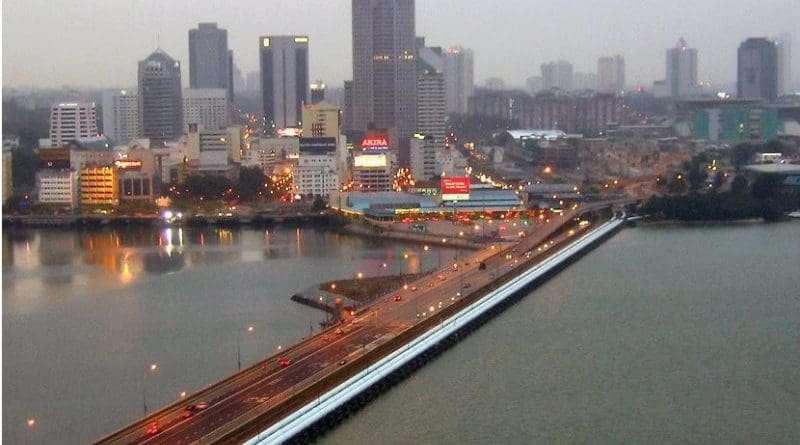
Singapore In 2025: A Global Hub For AI Collaboration And Growth – OpEd
In 2025 Singapore stands at the forefront of innovation technological global collaboration and economic dynamism solidifying its reputation as a hub for artificial intelligence (AI), international meetings, think tanks and economic growth.
With its strategic location bridging East and West infrastructure and robust and forward-looking governance Singapore has become a nexus for technological advancements and global thought leadership. However, sustaining this momentum in an increasingly competitive world requires addressing critical challenges such as rising global competition socio-economic inequalities and ethical concerns surrounding technology. By embracing these challenges and leveraging its strengths Singapore can maintain and enhance its position as a global leader in the AI-driven economy and beyond.
One of the primary reasons for Singapore’s success is its strategic location and exceptional connectivity. Positioned at the crossroads of global trade Singapore’s long routes have been a gateway between East and West. Its world-class transport infrastructure including Changi Airport consistently ranked among the best globally and its highly efficient port facilities ensure seamless access to global markets. This geographic advantage has been complemented by Singapore’s status as a trusted platform for international collaboration with its neutral stance and transparent regulatory framework attracting businesses and governments worldwide.
Another cornerstone of Singapore’s leadership is its political stability and governance. The government’s proactive policies have fostered a conducive environment for innovation and technological advancement. For instance, Singapore’s National AI Strategy, launched in 2019 and refined through 2024, outlines a comprehensive roadmap for integrating AI across key sectors such as healthcare, finance, and urban planning. Initiatives like AI Singapore, which combines government funding, academic research, and private-sector collaboration, exemplify the city-state’s commitment to becoming a global leader in AI. Additionally, Singapore’s ethical frameworks for AI emphasize governance, transparency, and accountability, setting a benchmark for responsible AI use worldwide.
Singapore’s technological infrastructure further reinforces its position as a global hub. The deployment of nationwide 5G networks coupled with investments in smart city initiatives has created an enabled digital environment that supports innovation. As of 2024, Singapore has been recognized for its advancements in AI-driven urban planning including predictive traffic and management energy optimization systems which enhance the quality of life of its residents. This cutting-edge infrastructure attracts global tech firm startups and establishes researchers with a vibrant ecosystem for collaboration and innovation.
The City state’s role as a host for international meetings and think tanks is another key pillar of its global influence. Singapore boasts state-of-the-art conference facilities such as Marina Sands Bay and Suntec City and has a track-proven record of hosting major events like the World Economic Forum and the Singapore FinTech Festival. These gatherings serve as for platforms global dialogue bringing together policymakers, business leaders and academics to address pressing global challenges. Moreover, the presence of renowned think tanks as such the Lee Kuan Yew School of Public Policy underscores Singapore’s intellectual capital and its role as a convener of ideas and solutions.
Economic growth through innovation is a hallmark of Singapore’s development strategy. The city-state’s diversified economy, spanning finance logistics technology and healthcare has been bolstered by a thriving start-up ecosystem and support for small and medium-sized enterprises (SMEs). Government funding for research and development (R&D) has been instrumental with over SGD 25 billion allocated for R&D initiatives between 2021 and 2025. Education policies focused on science, technology engineering and mathematics (STEM), alongside programs for lifelong ensure a learning steady pipeline of skilled talent. Furthermore, initiatives like the Global Talent Programme attract top international talent reinforcing Singapore’s position as a global innovation hub.
Despite these achievements, Singapore faces significant challenges that threaten its leadership. The rise of competing tech ecosystems in cities such as Dubai Shenzhen and Silicon Valley necessitates differentiation of Singapore’s value proposition. While excels in governance and infrastructure, these rivals leverage scale, cost advantages and specialized expertise to challenge its dominance. For example, Dubai’s aggressive push for AI-driven smart governance and Shenzhen’s deep integration of China’s vast technology supply chain highlight the intense global competition.
Socio-economic inequalities present another challenge. Although Singapore has made strides in transformation, the benefits of AI and technology are not evenly distributed. The digital divide—both within Singapore and across Southeast Asia—risks marginalizing segments of the population who lack access to technology or digital literacy. This inequality could undermine social cohesion and limit the broader societal benefits of AI adoption.
Ethical and security concerns further complicate Singapore’s trajectory. As AI becomes more pervasive risks of misuse bias and data breaches escalate. Singapore’s emphasis on AI governance is a step in the right direction but the global nature of technology necessitates international frameworks to address these challenges effectively. Additionally navigating geopolitical tensions such as the US-China tech rivalry requires Singapore to balance relationships carefully while safeguarding its technological and economic interests.
To sustain its leadership Singapore must adopt a multi-faceted approach. Strengthening its competitive advantage through continued investments in digital infrastructure AI capabilities and partnerships emerging with economies is essential. Expanding collaboration with Southeast Asian nations for instance positions Singapore as a regional hub fostering inclusive growth.
Promoting inclusivity should also be a priority. Bridging the digital divide through targeted policies such as subsidized access to technology and upskilling digital programs can ensure participation broader in the AI-driven economy. By addressing socio-economic inequalities Singapore can enhance its resilience and social cohesion.
Finally, Singapore must lead on ethical standards. Establishing itself as a global leader in AI ethics not only safeguards its domestic ecosystem but also enhances its international reputation. Developing and championing international frameworks for responsible AI governance can position Singapore as a thought leader in this critical domain.
In conclusion, Singapore’s strong foresight infrastructure and dedication to innovation have established it as a global hub for AI-related international meetings and economic growth. However, maintaining its leadership requires addressing rising global competition socio-economic inequalities and ethical concerns. By leveraging its strengths and embracing forward strategies Singapore can not only sustain its position but also drive global progress and collaboration cementing its role as a gateway to the future.
The opinions expressed in this article are the author’s own.
References
- Brynjolfsson, Erik, and Andrew McAfee. The Second Machine Age: Work, Progress, and Prosperity in a Time of Brilliant Technologies. W.W. Norton & Company, 2014.
- Chua, Beng Huat. Political Legitimacy and Housing: Stakeholding in Singapore. Routledge, 1997.
- Schwab, Klaus. The Fourth Industrial Revolution. Crown Business, 2017.

Like what you read?
Please consider supporting Eurasia Review. Thank you for your consideration!
