
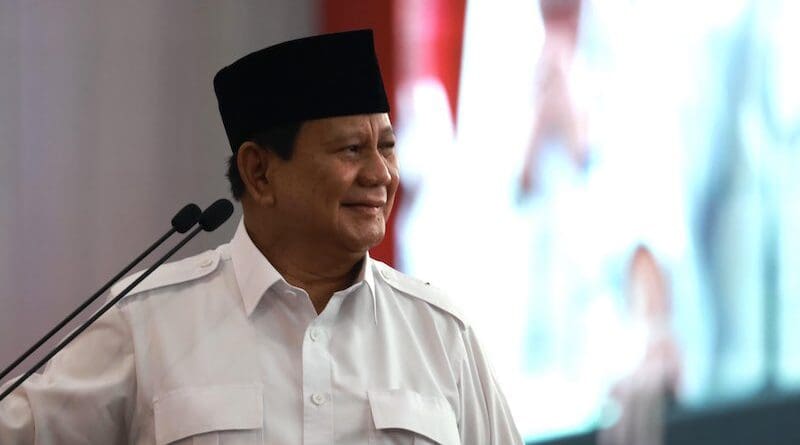
Prabowo Economics: Welfare Vs Stability – OpEd
President Prabowo Subianto of Indonesia has proven himself to be a stability advocate during times when worldwide events become more difficult to predict. His first World Economic Forum appearance in Davos served two purposes because he used the event to conduct diplomatic duties while presenting Indonesia as a stable economic zone during worldwide instability. The economic plan of Prabowo presents Indonesia with a strong story about surviving economic challenges while providing benefits to all citizens. The optimistic outlook faces a major obstacle because the government needs to achieve both its social spending goals and its fiscal responsibility targets, and economic structural changes for sustainable development.
The World Economic Forum presentation by Prabowo aimed to establish Indonesia as a stable region which maintained stability throughout worldwide economic turmoil. The International Monetary Fund identifies Indonesia as a “bright spot” in worldwide economic performance because its inflation rate stays at 2 per cent while its budget deficit remains under 3 per cent of national GDP. The indicators show that previous administrations upheld solid macroeconomic policies, which established a reliable framework for investors to place their trust. International investors gained more confidence about Indonesian investment potential because Prabowo showed financial management skills and market stability, which proved Indonesia remains an attractive investment destination despite global economic and political challenges that affect other developing countries.
The economic plans of Prabowo reach further than his focus on maintaining stable macroeconomic conditions. His main initiative, which offers free food to children, their mothers and elderly people, represents the biggest growth of social welfare programs which Indonesia has experienced since its founding. The system generates 60 million daily meals, but experts predict it will outperform McDonald’s and all other multinational companies worldwide. The program operates as a two-part system which delivers humanitarian support and economic growth through nutrition improvement because it will boost human capabilities, reduce social gaps, and build stronger community bonds. The welfare populist approach of Prabowo works to support economic stability through investments, which will boost Indonesia’s population productivity in the future.
The financial costs stand as the main obstacle which requires an immediate solution. Big welfare programs need economic growth to exceed 5 per cent annually because their financial expenses depend on it for sustainable operation. The Indonesian economy continues to grow strongly but faces ongoing risks from global economic events, which affect commodity market values, foreign exchange controls and international political tensions. The government faces a budget crisis risk because operating a free meal program for millions of people daily would generate such high expenses that it could prevent infrastructure growth and endanger the economic framework, which Prabowo aims to create. The wide-ranging program faces two major operational problems which affect its performance and create risks for financial management and public trust in government institutions.
The credibility of Prabowo’s anti-corruption position stands as a major obstacle for him. His words about “greedanomics” find support among investors and citizens, but the actual success of this program depends on concrete actions instead of empty statements. The Indonesian government has shown variable success in fighting corruption since its establishment, but has not reached targets that threaten foreign investment stability. The need to expand welfare services creates an urgent conflict with the requirement for implementing institutional changes because welfare populism offers immediate political support, yet institutional credibility remains vital for maintaining future system stability.
A complete solution needs to exist for solving these problems. The first requirement for fiscal sustainability involves creating multiple revenue streams. The tax-to-GDP ratio in Indonesia remains lower than that of other regional countries because they use digital tax collection and expand their tax base, which would strengthen government financial resources to fund welfare programs without harming economic stability. The implementation of welfare expansion requires strong monitoring systems, which need to be combined with evaluation procedures to prevent both inefficient use of resources and corrupt activities. The organisation can minimise product loss while improving its accountability through technology-based systems, which provide clear distribution tracking, biometric identification and immediate auditing capabilities. The path to achieving more than 5 per cent growth requires structural reforms, which serve as its fundamental base. The nation should dedicate its resources to constructing infrastructure and creating renewable energy systems and digital technology because these investments will enhance productivity while reducing its need for unstable export commodities. The institutional framework of anti-corruption agencies needs immediate improvement because this will create conditions for Prabowo to deliver actual results from his anti-corruption promises.
The system needs to handle populism equally to how it handles investor confidence maintenance. The narrative of inclusive growth presented by Prabowo should be understood as a single agenda which supports all elements rather than representing a compromise between different priorities. The government needs to prove to investors that welfare expansion serves as human capital development because this method demonstrates that social spending functions as a strategic tool to boost future productivity. The government needs to maintain proper communication and policy alignment because investors should understand welfare programs as elements of a complete fiscal management strategy, which includes structural changes.
The economic plan of Prabowo Subianto contains broad objectives, but these goals by themselves will not protect Indonesia’s path to success. The free meal program functions as an emblem of welcome, but its actual implementation requires solving three main problems, which involve program growth and revenue generation and developing strong institutional frameworks. Prabowo needs to solve these problems because his election victory will protect Indonesian economic leadership, and he will create a new method to connect citizen backing with ethical leadership. The absence of such measures would result in fiscal populism destroying the stability promise, which Indonesia needs to protect itself from market instability.
The opinions expressed in this article are the author’s own.
References
- 1. Siow, M. (2026, January 23). Indonesia’s Prabowo pitches stability at Davos amid rising global tensions. South China Morning Post. Retrieved from https://www.scmp.com/week-asia/economics/article/3340904/indonesias-prabowo-pitches-stability-davos-amid-rising-global-tensions
- 2. Indonesia’s 2026 Economic Outlook: Resilient, but Acceleration Elusive (2025, December 18). Business Indonesia. Retrieved from https://business-indonesia.org/news/indonesia-s-economic-outlook-2026-resilient-but-acceleration-elusive

Like what you read?
Please consider supporting Eurasia Review. Thank you for your consideration!
