
No Sanctuary Beyond The Durand Line: Why Pakistan’s Response Reflects Security Imperatives – OpEd
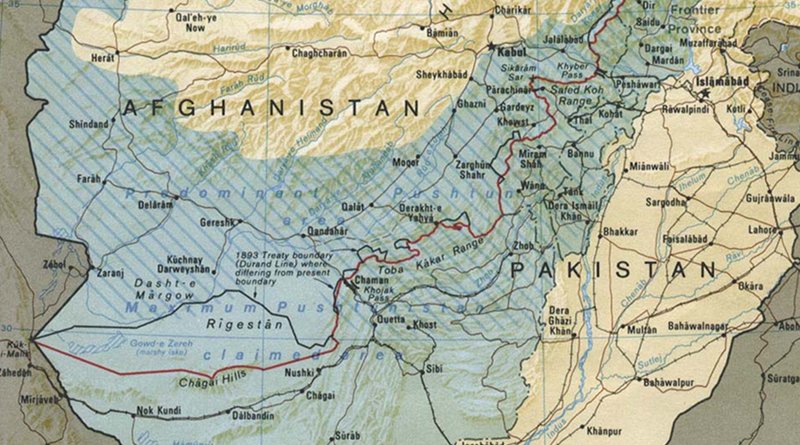
The latest round of cross-border strikes between Pakistan and Afghanistan marks a dangerous escalation in an already fragile relationship. Reports of explosions in Kabul and Kandahar, retaliatory fire along the border, and competing casualty claims underscore how volatile the 2,574-kilometer frontier has become. Yet beyond the immediate exchange of fire lies a deeper structural issue: Pakistan’s longstanding contention that militant outfits continue to operate from Afghan soil with insufficient restraint from the Taliban regime.
For Islamabad, the core argument is not about power projection or territorial ambition. It is about counterterrorism and sovereign security. Over the past several years, Pakistan has faced a resurgence of attacks attributed to Tehreek-e-Taliban Pakistan (TTP) factions allegedly operating from within Afghanistan. Suicide bombings in Khyber Pakhtunkhwa and Balochistan, assaults on security posts, and targeted killings have reignited public and institutional pressure on the state to act decisively.
Pakistan maintains that it has repeatedly urged Kabul to dismantle these sanctuaries. The Afghan Taliban, since returning to power in 2021, pledged that Afghan territory would not be used against other states. However, from Islamabad’s perspective, implementation has fallen short of commitment. The gap between assurances and ground realities has steadily eroded trust.
In this context, Pakistan’s recent strikes — described as “counter strikes” in response to “unprovoked fire” — are framed by its leadership as defensive and proportionate. Islamabad argues that when cross-border militant attacks intensify, it cannot remain passive. The doctrine underpinning such action reflects a widely recognized principle in international security: a state has the right to defend itself when faced with persistent armed aggression emanating from beyond its borders, particularly if the host state is unwilling or unable to neutralize the threat.
The Afghan Taliban, for their part, contest Pakistan’s narrative. They claim their operations were retaliatory responses to earlier Pakistani strikes and accuse Islamabad of targeting civilian structures. As in most border conflicts, truth is clouded by competing claims and wartime messaging. What remains indisputable, however, is that militant violence has destabilized Pakistan’s western regions, and the government faces mounting domestic pressure to ensure deterrence.
The October ceasefire between the two countries was always fragile. Without verifiable mechanisms to monitor militant activity and enforce accountability, ceasefires risk becoming temporary pauses rather than durable solutions. The recent flare-up illustrates how quickly tensions can reignite when underlying grievances remain unresolved.
From a strategic standpoint, Pakistan’s calculus appears rooted in necessity rather than escalation. Cross-border operations carry diplomatic and humanitarian risks, but inaction carries its own costs. A permissive environment for militant networks emboldens insurgent planning, undermines public confidence in state institutions, and weakens regional stability. Islamabad’s position is that calibrated strikes targeting alleged militant infrastructure are aimed at restoring deterrence, not provoking broader confrontation.
Critics warn that such actions could further destabilize Afghanistan, already grappling with economic hardship and political isolation. That concern is valid. A spiraling conflict between the two neighbors would compound humanitarian challenges and risk drawing in external actors. However, stability cannot rest on unilateral restraint. It requires reciprocal responsibility. If Afghan territory is indeed being used by groups conducting attacks in Pakistan, failure to address that reality perpetuates a cycle of violence.
The suspension of cross-border repatriation processes and temporary closure of the Torkham crossing illustrate how quickly security tensions disrupt civilian life. Border communities on both sides suffer immediate consequences, from displacement to economic interruption. This human cost reinforces the urgency of a more structured security dialogue.
Ultimately, Pakistan’s justification hinges on the principle of state responsibility. The Taliban regime, as the de facto authority in Kabul, bears the obligation to ensure its territory is not used for cross-border militancy. When that obligation is perceived to be unmet, affected neighbors will inevitably consider unilateral measures. Yet military action alone cannot substitute for political engagement. Sustainable de-escalation demands robust border coordination mechanisms, intelligence-sharing frameworks, and verifiable counterterrorism cooperation. Absent these, sporadic clashes risk becoming normalized.
Pakistan’s recent actions reflect a belief that deterrence must be reestablished to compel compliance with earlier assurances. Whether this strategy yields greater stability or deeper estrangement will depend on subsequent diplomatic outreach and concrete counterterrorism steps from Kabul. In the final analysis, security imperatives are rarely exercised in ideal conditions. They arise from accumulated grievances, repeated attacks, and diminishing patience. For Islamabad, the message is clear: sovereignty includes the right — and responsibility — to protect citizens from armed threats, wherever they originate. For Kabul, the challenge is equally clear: preventing its soil from becoming a staging ground for regional instability is essential not only for bilateral peace but for Afghanistan’s own international credibility.

Like what you read?
Please consider supporting Eurasia Review. Thank you for your consideration!
