
Starved Into Silence: How Capitalist States Betray The Rohingya – OpEd
The Rohingya crisis is not just a humanitarian failure—it’s a brutal outcome of racial capitalism, nationalist militarism, and an international order designed to secure capital, not people. From Myanmar to Malaysia, India to Bangladesh, and from the U.N. to the IMF, global power structures—through action or indifference—have conspired in the protracted erasure of an entire people.
Stateless by Design: Ethno-Nationalism as a Tool of Exclusion
The Rohingya were not always stateless. For generations, they lived in the western Rakhine region of Myanmar. It was the rise of ethno-Buddhist nationalism, intensified under British colonial divide-and-rule policies, that constructed the Rohingya as “others.” Post-independence, successive Burmese regimes—civilian and military—leveraged this ethnic exclusion to consolidate internal control.
The 1982 Citizenship Law effectively rendered the Rohingya stateless, denying them access to education, healthcare, and freedom of movement. But this wasn’t simply about ethnicity—it was a class project cloaked in ethnic rhetoric. By excluding the Rohingya from the economy, land rights, and state protections, the Myanmar state cleared the way for corporate extraction, regional militarization, and foreign investment in infrastructure along the western corridor.
Capital, Camps, and the Politics of Bare Life
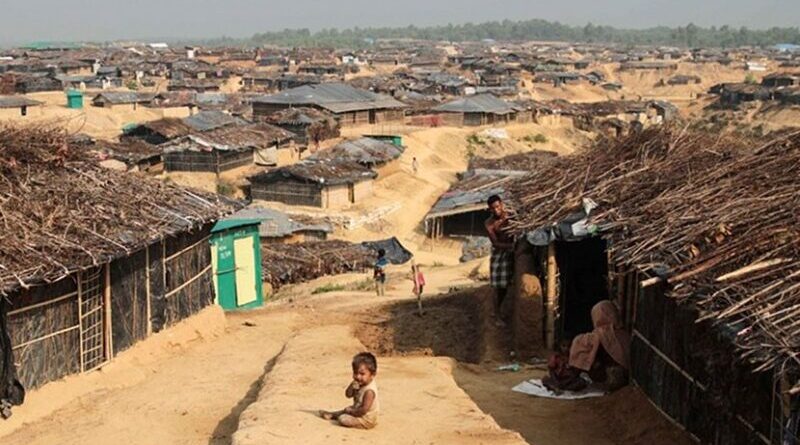
The exodus of over a million Rohingya into Bangladesh in 2017 revealed the global refugee regime’s indifference to structural injustice. The camps in Cox’s Bazar—now the world’s largest refugee settlement—have morphed into zones of containment, not sanctuaries of protection. Cut off from formal work, education, and mobility, the Rohingya live in what philosopher Giorgio Agamben called “bare life”—alive but stripped of political rights.
Yet this “humanitarian” crisis has proved profitable. NGOs, U.N. agencies, and government contracts have created a refugee economy in which international donors, local elites, and development agencies extract value from crisis. Humanitarian aid is not a neutral force—it operates within and often reinforces the very capitalist and imperial hierarchies that create displacement. Aid is rationed, not expanded; refugee labor is criminalised, not protected.
Regional Hypocrisy: The Border Politics of Exploitation
Bangladesh, India, Malaysia, and Indonesia have all weaponised the refugee crisis for their own political ends. While Bangladesh initially welcomed the Rohingya, its ruling Awami League now uses them as pawns in diplomatic negotiations and domestic populist politics. The camps are over-policed and under-resourced; the state periodically cuts off internet access, stoking fear of “radicalisation” to justify military presence.
India—under the Modi regime’s Hindu-nationalist BJP—has gone further, openly labelling Rohingya as “infiltrators.” Despite being a signatory to numerous U.N. rights conventions, the Indian state has detained, deported, and vilified refugees, using them as scapegoats to stoke Islamophobia and consolidate authoritarian control. Malaysia and Indonesia, despite invoking Islamic solidarity, routinely turn away refugee boats and criminalise undocumented migrants.
What links these regimes is their commitment to a capitalist development model that excludes the poor, criminalises the stateless, and tolerates human rights only as public relations.
From Neoliberalism to Necropolitics: The Global Order and the Death of Solidarity
The United Nations, bound by its member states and dependent on donor funding, has failed the Rohingya at every stage—from its muted response to the genocide, to its ongoing acquiescence in the face of Bangladesh’s encampment policy and repatriation talks with Myanmar. The UNHCR’s focus on “voluntary repatriation” ignores the complete absence of safety, rights, or citizenship guarantees in Myanmar.
Behind this bureaucratic paralysis is a larger truth: the global refugee regime is structured to manage the fallout of global capitalism, not challenge it. Countries that create the conditions for war and displacement—through arms sales, resource extraction, or climate inaction—are often the least willing to accept refugees. Human rights declarations are routinely bypassed by “national security” and “sovereignty.”
The irony is stark: the Universal Declaration of Human Rights proclaims the right to seek asylum from persecution, but the system denies any obligation to receive refugees with dignity. What we witness is not just a policy failure—it is the institutionalisation of necropolitics, where some lives are deemed expendable for the functioning of the global order.
The Gendered Abyss: Women Refugees and Capital’s Cruel Arithmetic
Among the most brutalised are Rohingya women. Widowed by conflict and stranded in camps, they are pushed into the most precarious survival economies—begging, coerced marriages, or transactional sex. International aid agencies fail to protect them from trafficking, gender-based violence, or reproductive health crises.
This is not simply a humanitarian tragedy; it’s the reproduction of gendered exploitation under capitalist patriarchy. With global aid declining—accelerated by Trump-era foreign aid cuts and sustained Western indifference—these women become invisible casualties of structural abandonment.
Their suffering is not incidental. It is central to a system that devalues unproductive bodies, denies reproductive justice, and strips the stateless of the right to life with dignity.
Towards Liberation: Solidarity Beyond Borders
What is needed is not more charity, but internationalist solidarity grounded in political struggle. The Left must insist that refugee rights are not secondary to economic justice—they are integral. We must expose how imperialism, racism, and neoliberalism create and perpetuate displacement.
Land must be reclaimed for the people, not for pipelines or military zones. Citizenship must be de-linked from ethnic identity and reimagined as a universal right grounded in human need, not state power. Aid must be restructured not as handouts, but as reparative justice.
The Rohingya crisis is not an anomaly—it is a window into how the modern state, under capitalist logic, disciplines, marginalises, and eliminates populations that stand in the way of profit. Their survival demands more than sympathy. It demands a movement.

Like what you read?
Please consider supporting Eurasia Review. Thank you for your consideration!
