
Islamist Radicalism Continues To Spread From Eastern North Caucasus Into Bi-National Republics In The Middle – OpEd
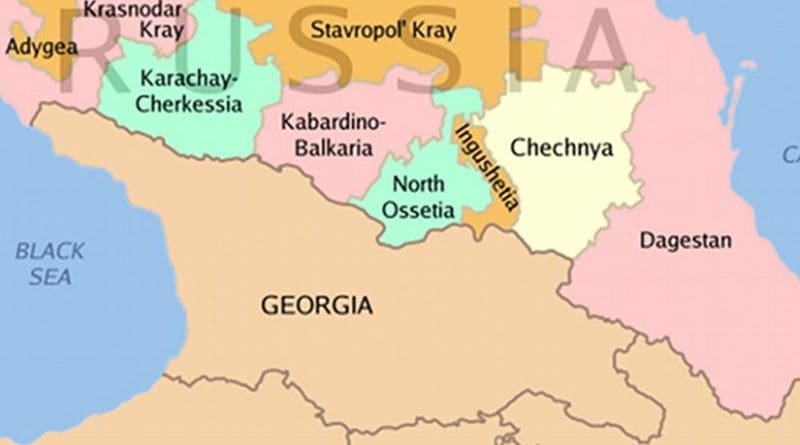
Since 1991, most of the Islamist violence in the North Caucasus has occurred in the three republics in the eastern part of that region, Dagestan, Ingushetia and Chechnya, while the surviving bi-national republics in the middle and the national republics in the west have remained relatively quiet.
But since last spring, radicalism has been spreading into the bi-national republics, a development that could trigger a new wave of unrest in the region and lead to more questions about the capacity of the local authorities and Moscow to maintain effective control (windowoneurasia2.blogspot.com/2024/04/attacks-on-officials-spreading-from.html).
Last April, after almost three years of quiescence, Karachayevo-Cherkessia, a republic dominated by the Turkic Karachays but with a significant Circassian (Cherkess) minority, there was a deadly attack on a police outpost there by militants (newizv.ru/news/2024-04-22/v-kchr-neizvestnye-rasstrelyali-treh-politseyskih-vveden-plan-sirena-429518).
This week, the FSB said that it had forestalled violence in Kabardino-Balkaria, a republic dominated by the Circassian Kabardins but with a significant Turkic minority, the Balkars, by arresting 15 local residents (fsb.ru/fsb/press/message/single.htm%21id%3D10440083%40fsbMessage.html).
That action has attracted some attention as a sign that Islamism may be again on the rise in the region (themoscowtimes.com/2024/09/23/russias-fsb-detains-15-in-north-caucasus-for-spreading-extremist-ideology-a86432 and sova-center.ru/racism-xenophobia/news/counteraction/2024/09/d50458/).
But the most important aspect of this development has not been stressed enough: Islamism is spreading to the central and western regions of the North Caucasus, areas where the Russian authorities have repressed national movements only to see Islamist protest arise in their stead.

Like what you read?
Please consider supporting Eurasia Review. Thank you for your consideration!
