
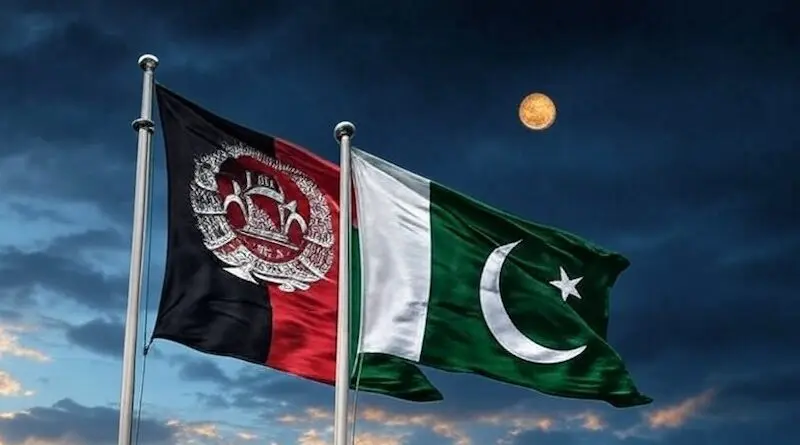
Pakistan Draws Red Line In Istanbul: ‘No Compromise On Terror From Afghan Soil’ – OpEd
Pakistan’s delegation to the Istanbul talks has proceeded with clear demands and a near one-point agenda: no compromise on the elimination of terrorism emanating from Afghan soil. Islamabad has made it clear that all cooperation and bilateral progress depend on this single condition.
The nine-hour talks between Pakistan and the Taliban government in Turkey are a watershed moment in strained bilateral relations broken by months of border skirmishes and growing militant violence. For Pakistan, these negotiations are not merely yet another round of diplomatic talks, they are a litmus test of Afghanistan’s good faith in keeping its soil free from being launched as an attack on Pakistan.
The Pakistani delegation, headed by Defence Minister Khawaja Asif, put forth a detailed anti-terror strategy, calling on Kabul to close down terrorist training camps and safe havens running under different umbrellas, such as Fitna al-Khawarij (FAK) and Fitna ul Hindustan (FuH). These groups, have been behind some of the most catastrophic attacks within Pakistan over the past few years.
Islamabad’s stance is the same: counterterrorism cooperation cannot move unless the Afghan side shows tangible action against these groups. The message given in Istanbul was blunt and unambiguous peace cannot be unilateral.
The Istanbul round comes after the Doha talks, in which both sides agreed on an immediate ceasefire following fierce border clashes last week. The ceasefire was a thin but significant breakthrough, providing room for talks on deeper structural issues.
Addressing media persons, Khawaja Asif reiterated that mediation by Qatar and Turkey has been positive, stating that no serious incidents took place after the Doha agreement. “They [the Taliban] desire peace,” he added, “but the conditions under which they desire peace will come to light gradually.”
But Asif also made a blunt threat: if there were no significant agreement, “open war” would be the only choice left. These comments sum up Pakistan’s mounting anger at broken assurances and repeated cross-border intrusions.
The core of Pakistan’s agenda is the call for full dismantling of militant networks. The proposal in Istanbul contains concrete suggestions for:
- Joint verification and sharing of intelligence on militant sanctuaries.
- Cross-border infiltration prevention mechanisms under mutual observation.
- Gradual rehabilitation and repatriation of TTP-associated armed groups.
- Creation of a bilateral coordination cell for immediate communication in case of security incidents.
The Afghan side, headed by Acting Defence Minister Mullah Yaqoob, has agreed to consider Pakistan’s draft and report back after internal consultations, as per diplomatic sources. Both sides are likely to meet in follow-up discussions in the days to come.
Khawaja Asif’s emotional words at his briefing were reflective of the feelings of most Pakistanis. He reminded the leadership in Afghanistan of Pakistan having accepted millions of Afghan refugees for more than four decades, giving them education, livelihoods, and shelter. “Three generations of Afghans grew up here,” he said. “It is deeply painful that a country that stood by you could be targeted by terrorism emanating from your soil.
His words sounded beyond diplomacy, they echoed a feeling of betrayal, yet a will toward reconciliation based on respect. Pakistan does not want war; it wants accountability and peace founded upon mutual security interests.
Turkey and Qatar’s role as mediators reflects the development of a regional response to calming the Pakistan-Afghanistan security crisis. Both countries have close relations with Islamabad and Kabul and are interested in preventing the region from descending into another cycle of instability.
Saudi Arabia’s announcement accepting the Pakistan-Afghanistan ceasefire also points to regional endorsement of peace. Riyadh, Ankara, and Doha all understand that the continuation of militancy in Afghanistan not only jeopardizes Pakistan but the economic and political stability of the wider region.
Pakistan’s delegation has established a red line, no negotiations on national security. Collaboration in trade, border control, or refugee issues will only move forward if the Taliban regime demonstrates its intent to counterterrorism.
The Istanbul talks therefore mark a turning point: either two nations build trust through verifiable steps toward each other or else tensions threaten to return to conflict.
In this regard, Islamabad’s message is still clear: Pakistan wants peace with dignity, security with sovereignty, and cooperation with reciprocity. It is willing to cooperate with Afghanistan as a partner, not an enemy, but responsibility equally falls on Kabul to translate words into acts.
Pakistan’s position in Istanbul shows a transition away from reactive diplomacy towards proactive regional outreach, rooted in a strong advocacy for national sovereignty. The obvious “one-point agenda” symbolizes not obstinacy but determination, a realization that lasting peace cannot go hand-in-hand with tolerated militancy.
As talks go on, the fate will be sealed depending on whether Afghanistan’s leaders are ready to act against elements that are destabilizing Pakistan. The way forward can be tough, but Pakistan’s stance is now clearly stated: no security compromise, no tolerance for terrorism, and no cooperation without trust.

Like what you read?
Please consider supporting Eurasia Review. Thank you for your consideration!
