
Pivoting East: Bangladesh’s New Diplomatic Strategy – OpEd
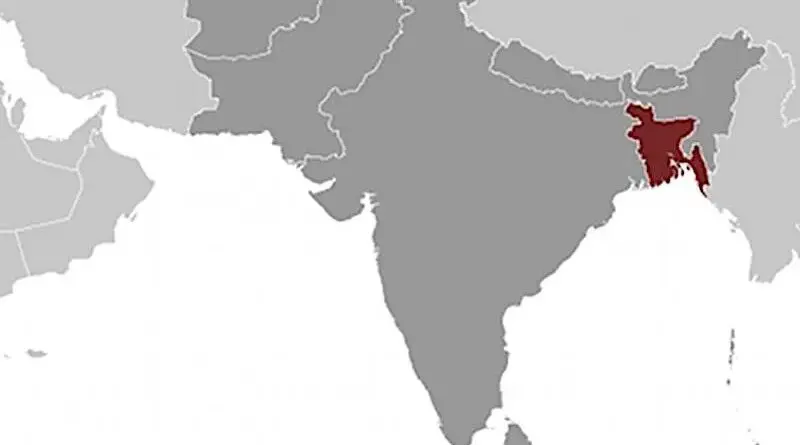
In a remarkable pivot from its recent past, Bangladesh is intensifying efforts to distance itself from India’s sphere of influence while seeking to strengthen ties with Pakistan and reinvigorate regional cooperation within the South Asian Association for Regional Cooperation (SAARC). These developments come at a time when growing public discontent with the previous government, under Prime Minister Sheikh Hasina Wajid, has catalyzed a rethinking of the country’s foreign policy and its internal political landscape.
Under the leadership of Sheikh Hasina Wajid, who governed Bangladesh for over a decade, the country’s foreign policy was largely seen as being aligned with Indian interests, a strategy that many in Bangladesh have come to view as compromising national sovereignty. The recent actions of the interim government, which replaced Hasina’s administration, signal a clear shift toward a more independent course in regional diplomacy.
The disillusionment with the previous government reached a boiling point after allegations of serious human rights violations against Sheikh Hasina and her associates. The ex-Prime Minister, charged in nearly 170 FIRs, stands accused of genocidal acts, political repression, and widespread corruption. Many of these charges center around her administration’s handling of the Rohingya crisis, its controversial crackdown on political dissent, and alleged misuse of power to consolidate ties with New Delhi.
With several close aides of Hasina now arrested, the interim government’s decision to freeze the financial accounts of her family underscores the deepening public anger. Critics argue that Hasina’s pro-India stance undermined Bangladesh’s sovereignty and allowed Indian influence to creep into the country’s political and economic decision-making processes.
A crucial turning point in this recalibration of Bangladesh’s foreign policy came on October 6, 2024, when Chief Advisor Yunus inaugurated the Bangladesh Army Selection Board at Army Headquarters. This event marked a significant moment in the ongoing efforts to strengthen the autonomy of Bangladesh’s military, which had previously been seen as subordinated to Indian interests.
The Army’s newfound emphasis on national pride is further reflected in recent legislative changes that have rolled back laws providing extra protection to the Mujib family, the political dynasty that has ruled Bangladesh since its independence. The public sees these moves as part of a broader push for reform, signaling the country’s intent to break free from external pressures, particularly from India.
One of the most significant moves by the interim government has been inviting the UN Commission for Human Rights (UNCHR) to investigate allegations of human rights abuses during Hasina’s tenure. The fact-finding team’s presence in Bangladesh is viewed by many as an opportunity to expose the abuses tolerated under the previous administration, which critics argue were facilitated by India’s tacit support.
While the investigation unfolds, Bangladeshis are closely watching the interim government’s handling of Sheikh Hasina’s family, including her son, Sajeeb Wazed Joy. Wazed, facing severe allegations of corruption and misconduct, has hired the American lobbying firm Stryk Global Diplomacy to sway U.S. policymakers in an attempt to mitigate the political fallout and maintain his family’s international standing.
The rupture in Bangladesh-India relations became even more apparent at the 79th United Nations General Assembly, where India expressed regret over Bangladesh’s request for a bilateral meeting between Prime Minister Narendra Modi and Bangladesh’s Chief Advisor Yunus. India’s reluctance to engage with its neighbor diplomatically underscores growing frustration in Bangladesh with India’s perceived interference in its domestic affairs.
Further aggravating matters, the Indian Ministry of External Affairs (MEA) held a closed-door meeting strategizing support for the Awami League, Bangladesh’s ruling political party during Hasina’s reign. This move was seen as an attempt to influence internal politics in Bangladesh, and has contributed to the diplomatic rift. In retaliation, Bangladesh recalled its envoy from New Delhi, signaling its intention to distance itself from India’s regional dominance.
As Bangladesh distances itself from India, it is looking to strengthen ties with Pakistan, its long-time regional counterpart. A recent diplomatic meeting between Bangladesh’s Foreign Secretary and the Pakistani High Commissioner marked the beginning of a new chapter in bilateral relations. A follow-up Foreign Secretary-level meeting is scheduled for late November 2024, signifying a new commitment to regional cooperation.
Bangladesh’s removal of the 100% physical inspection requirement for Pakistani goods is expected to further facilitate trade between the two nations, signaling a thaw in what has often been a strained relationship since the 1971 independence war.
The two countries are also working together to revive SAARC, a regional body that has long been sidelined due to political tensions, especially between India and Pakistan. Bangladesh has expressed strong support for SAARC’s renewal, along with Nepal, suggesting a regional agenda focused on economic integration and collaborative growth.
Perhaps the most hopeful sign of changing relations is Bangladesh’s promotion of educational exchanges with Pakistan. The Ministry of Foreign Affairs has actively encouraged Bangladeshi students to explore academic opportunities in Pakistan, reflecting a growing desire for people-to-people connections.
The moves by Bangladesh to assert its independence and realign with Pakistan also reflect broader regional trends. As India’s assertive regional policies increasingly face pushback, both Bangladesh and Pakistan are seeking to carve out a new space for themselves in South Asia. The push to revive SAARC could be a significant step in this direction, providing a platform for multilateral cooperation and economic integration.
For Bangladesh, the road ahead appears to be one of reasserting sovereignty, breaking free from foreign influence, and promoting a vision of South Asia that is less dominated by any one power. Whether these ambitions can be realized, however, depends on navigating the delicate balance between regional cooperation and national autonomy.
For now, Bangladesh’s diplomatic shift away from India and towards Pakistan appears to be a pivotal moment in the country’s history, driven by a populace eager for justice, reform, and renewed sovereignty.

Like what you read?
Please consider supporting Eurasia Review. Thank you for your consideration!
