
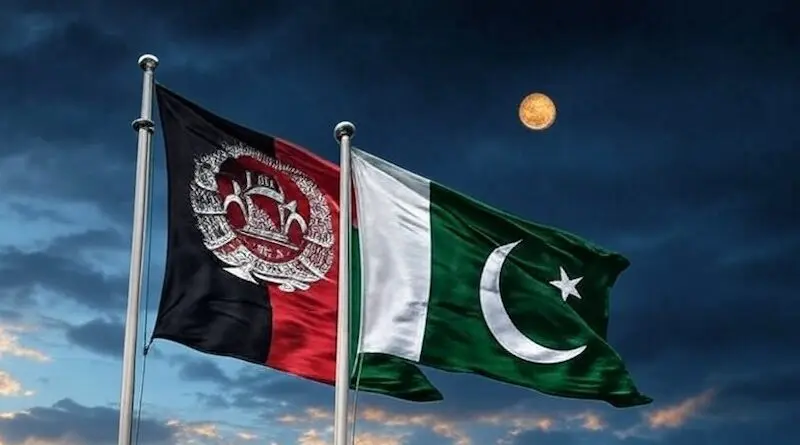
If Pakistan Weakens, The Region Pays – OpEd
The Afghanistan after 2021 is not an Afghan problem anymore. It is also a security exporter and the export channel is via Pakistan. It is the geography of this crisis which is difficult. The world was lost and militant ecosystem did not disappear by international forces going and attention being lost. The resultant effect is an Afghanistan where different warlike costumes can recruit, train, raise funds and even plot even with a considerably lower pressure than before and the neighbours are the recipients. Pakistan is almost in one thing; Pakistan is not in its path.
It is the monitors of sanctions of the UN Security Council that have been vocal about what is on the ground. According to its sixteenth report, it was not an Al Qaida state as claimed by the Taliban but rather there were more than 20 foreign and regional terrorist groups operating in Afghanistan, and they included Al Qaida, Tehrik e Taliban Pakistan, ETIM or TIP, the Islamic Movement of Uzbekistan and Jamaat Ansarullah among others. That one sentence is just which must bring to a conclusion the debate whether it is a localized matter or an outburst. It is an operational environment that is known and borders on the most susceptible border of Pakistan.
Pakistan is vulnerable to this threat of blood. According to the military briefs of the leading news channels, the development of 2025 related terrorism resulted in the loss of 1, 235 lives of civilians and law enforcement officials. These are not utopian characters. They are policemen and women who have been killed in the checkpoints, soldiers who have been killed in the ambush and ordinary citizens caught in suicidal attacks, and gun attacks. That toll is a sign of a long-time running campaign and no one-time matter and the campaign is increasingly becoming linked with sanctuaries and command networks across the border.
The same level and rate of violence by the Tehrik e Taliban Pakistan identified in the UN report is occurring on the territory of Pakistan. It highlights that according to some estimations, in as early as 2025, there have been more than 600 attacks in Pakistan, the majority of them being intricate and coordinated, using vehicle borne bombs, and suicide teams. It also reports that the TTP fighters were estimated about 6,000 and had their presence in various provinces within the eastern belt in Afghanistan like Kunar and Nangarhar. Not just another border nuisance, but a highly structured militant group, rooted, mobile and running.
The 2025 response of Pakistan shows that it can be possible to be a fortress in terms of its reaction. The number of intelligences led operations which the country had conducted and the number of killed militants at this time was 75, 175 and 2,597 respectively as per the same official briefs leaked by the country to the public. They also mention which extent of effort is required to hold a lid on a threat that is being reproduced across the border. When Pakistan screws the nuts, it is as well not only protecting its own cities; but it is also sabotaging routes which would otherwise be used to export violence to Central Asia; it may even sabotage routes to other distant destinations.
It is in this situation that the majority of external individuals misread the image. It is a treatment of an internal security problem that is being accorded to Pakistan. But the threat is on a local level. The trends in recruitment which attracts volunteers in Central Asia region, some of whom go to Afghanistan, others stay back at home and some are still sent to Europe are described by the report released by the UN. And that is what is meant by transnational risk. When the border defences, intelligence practice and the pace of the counterterrorism becomes weaker in Pakistan, there is a likelihood that it will not be Pakistan that would suffer more, but it is the pipeline that is opened to the more far-reaching targets not only of the region but also of outside targets of the region.
It is not whether Pakistan is doing enough or not. The more important question is whether the remainder of the international community is playing its part as this is what the activities of Pakistan are holding in check. It is also not about charity or sympathy it is aligned self-interest. With Afghanistan turning into a haven of active terrorist cells and a launching point where there are organizations that execute the cross-border attacks, one will realize that stabilization of the area requires the help of the states that are already dealing with the blowback and the further spread.
This support should be viable and conditional. It involves additional cross border funding, travel and procurement network intelligence sharing. It involves enhancement of borders technology, biometrics and coordinated watchlists to disrupt movement. It means that there are additional international pressures on Kabul to act against organizations that utilize Afghanistan land to plan and execute operation and these standards are closely tied to the diplomatic activities. And is the understanding of the burden that Pakistan has a security burden in its long-rugged border and also has been accepting large numbers of refugees of Afghanistan over a long period, a factor that makes policing and screening hard even when it is done in good faith.
The term strategic bulwark cannot be called a piece of rhetoric when applied to Pakistan; this is how it is, in the real world. Even the UN report reveals that Afghanistan still has a dense militant environment and Pakistan is losing life and is conducting massive operations to ensure that the violence does not creep further to even higher levels within the territory. When such line is broken, the costs will not be retained in Pakistan. They will be traveling the same way the networks travel.

Like what you read?
Please consider supporting Eurasia Review. Thank you for your consideration!
