
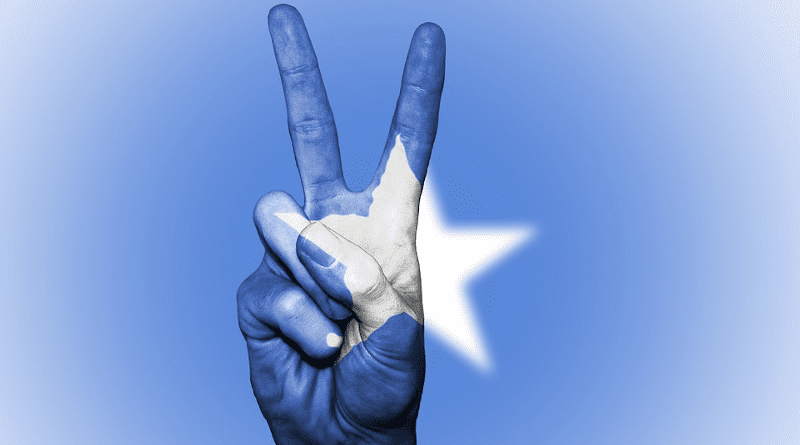
Somalia’s Upcoming Election: Between Political Consensus And Staying The Course – OpEd
Generally speaking, national elections are a fundamental mechanism for legitimising the assignment of authority in a state’s leadership. In Somalia’s context, ascending to the presidency, and entering Villa Somalia, the presidential palace requires more than just votes. It demands political legitimacy, an inclusive electoral process, and a credible and independent electoral commission, of which concerned parties agree upon its formation and how it will conduct the national elections. Above all, public confidence is a paramount pillar in the nation’s election process.
This is part of the representative democracy, the suffrage or the right to vote, which not only enables citizens to elect their leaders but also allows them to voice their opinions on their government’s political direction. For this reason, anyone aspiring to hold Somalia’s highest office must understand the rights of their people and that the country’s political journey is shaped by two enduring dynamics: external competing interests and internal clan-based rivalries. Unless our leaders understand how to deal with these competing interests that exacerbate the political immaturity in Somalia, it is hard to find an exit solution to end our persistent political crisis.
Since 2000, Somalia has relied on an indirect electoral model, which was first introduced during the Arta reconciliation conference in Djibouti. This system emerged after a decade of anarchy, and it aimed to establish an interim government representing the Somali people and steering the nation toward stability. This method was never intended as a precise or permanent solution. It was just a stopgap measure, a gentleman’s agreement focused on resolving a political deadlock that existed at that time. Today, that system is outdated, and the need for urgent reform is inevitable. Sadly, Somali politicians, intellectuals, traditional leaders, religious leaders and other stakeholders have so far failed to devise a viable alternative national plan which could replace the Arta gentlemen’s agreement.
Usually, transitioning to a new system requires political consensus, broad consultation, public engagement, and compromise. Unfortunately, based on our past experiences and witnessing the present political crisis, these concepts are largely absent from Somalia’s current leaders’ political lexicon. Continuing with the status quo, or pursuing a unilateral approach, risks undermining the credibility and legality of any forthcoming elections and even national security. In the developing world, particularly in the IGAD region, elections often exacerbate polarization, rendering politics more fractured and creating volatile situations, and the Somali case is not exceptional.
Looking ahead, the 2026 or 2027 national election is already poised to be one of Somalia’s most complex and difficult processes. Deep divisions persist between the Federal Republic Government of Somalia and two federating states, Puntland and Jubbaland, getting support from opposition politicians, including two former presidents Sheikh Sharif Ahmed and Mohamed Abdullahi Farmaajo. These opposing actors are advocating for a consensus-driven inclusive, and broadly acceptable electoral process, but they have two clashing views on how this could happen in the country.
The two camps are entrenched in their respective positions, and there has been no positive dialogue between them until now. The federal government wants or favours staying the course and implementing a one-person, one-vote system, while opposition stakeholders are calling for a more inclusive and negotiated framework. Neither side has identified a clear path forward, a “silver bullet solution” to resolve the impasse. However, even though it may be premature to predict the exact outcome once the mandate of the current government expires, it is evident that without dialogue taking place between the sides and political consensus reached beforehand, the legitimacy of the next election will remain in question.
Historically, Somalia’s presidential elections have relied on consensus and political settlements that the sides agreed on to overcome political obstacles or differences between them. However, the Federal Government’s recent announcement of shifting from the old ways politicians used to resolve their differences to direct elections has presented serious concerns among the public, political leaders, civil society groups, intellectuals and others interested in Somalia’s political affairs. Also, this politically one-sided decision will have a serious impact on the fragile security situation, economic struggles, and fractured political system of this nation.
As a result, tension arose between the opposition groups and the government of President Hassan Sh. Mohamoud and that there is no sign of reaching a political consensus has created a precarious political landscape in Somalia. Dialogue, trust-building, and inclusive negotiations are urgently needed to de-escalate tensions and foster a path forward. It would be overly optimistic to assume that things would be fine and a consensus will ultimately come when the sides are not engaging in any form of dialogue.
In conclusion, Somalia’s electoral dilemma evokes widespread anxiety and uncertainty. Achieving political consensus will test the leadership of the president, prime minister, regional leaders, aspiring candidates, religious figures, intellectuals, business leaders, and civil society. Unless the sides move beyond rigid positions and engage in meaningful, pragmatic dialogue. At the moment, Somalia risks sliding back into the destructive cycles of conflict that have plagued it for decades.

Like what you read?
Please consider supporting Eurasia Review. Thank you for your consideration!
