
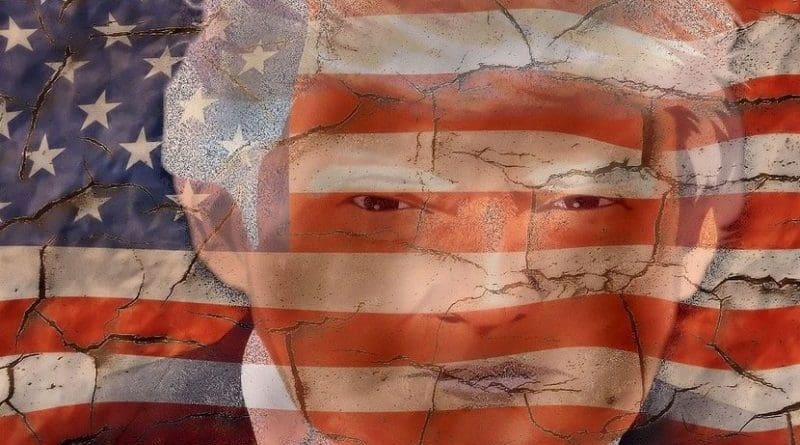
United States And The Quicksand Of Interventionism – OpEd
Graham Greene’s most prescient political novel ‘The Quiet American’ is about the perils of interventionism and the dangers of naive, misguided idealism and belief in simplistic good vs evil, freedom vs oppression binaries. The consequences of such wishful thinking are lethal, as the USA witnessed firsthand in Vietnam, Afghanistan, and Iraq.
Greene initially blamed American idealism, innocence lost, and ignorance as the biggest evils that bogged them down in Vietnam, not imperial hubris or inherent supremacist attitude like the British or French colonialists. This finds an echo in Francis Fukuyama’s 2001 book After the NeoCons:America at Crossroads, where he states that “Americans are not, at heart, an imperial people”.
“Even benevolent hegemons have to sometimes add ruthlessly, and they need a staying power that doesn’t come easily to people who are reasonably content with their own lives and societies”, he adds.
The roads to perdition are mostly laid with the brick of good intentions, as is often said.
The democracy exporters and human rights champions succumb to idealism of the naive, while the other faction of interventionists vastly overestimate their powers and underestimate all others, only to end up burning their fingers. The interesting part is that none of them learns from missteps and disasters.
Myth of ‘Happy Ending’
In the Tom Hanks movie Charlie Wilson’s War, based on the book about a Texas Senator, who single handedly altered public discourse and sparked what led to ‘history’s biggest cover operation’ – funding mujahideens in Afghanistan against the Soviet occupation– there is a line at the end, ‘It was all so wonderful until we screwed up the endgame’.
The US had no endgame for Afghanistan post the Soviet retreat; it had none for post-Gaddafi Libya; in Syria it ended up feting a former Jihadist declared Most Wanted by their own embassy. In good old Afghanistan, as the internet meme goes, it took four presidents and trillion dollars to replace Taliban with Taliban. All of these have been not just costly misadventures but failures of grand proportions.
The problem with regime change is information asymmetry, volatility of complex systems, and the most underemphasized second-order effects that can screw the whole game. These are the ‘unknown unknowns’ of Donald Rumsfeld that can crop up anytime.
The motorcycle mechanic at Taksim Square in Baghdad, who was filmed destroying Saddam’s statue, lamented after a few years that ‘earlier there was one Saddam in entire Iraq, now there’s one Saddam in every alley’. This was the humbling life experience of leading foreign policy writer Robert D. Kaplan as well, a zealous early supporter of regime change in Iraq
Kaplan fell into clinical depression, witnessing Iraq descending from a brutal dictatorship to a complete anarchy.
In his book ‘The Tragic Mind’, he writes, “My moment of comprehension came when I returned to Iraq embedded with the U.S.Marines during the first battle of Fallujah, in April 2004. There I experienced something far worse than even the Iraq of the 1980s: the bloody anarchy of all against all that Saddam’s regime, through the most extreme brutality, had managed to suppress”.
Like many others, Kaplan championed the Iraq war on the premise that nothing can get worse than Saddam’s brutal dictatorship. He turned out to be wrong when the can of worms was opened.
Bygone Era
Back in 2003, selling the Iraq War to the American public on fabricated WMD reports and the hoax of Saddam nurturing Al Qaida was a cake walk. The horrors of 9/11 were afresh in public memory, and most were walking lockstep behind the star spangled banner in the fearful and paranoid ‘Forever Wars’ zeitgeist for enhanced national security.
This was, after all the epoch, when Hunter S.Thompson prophetically anticipated, “We are At War now — with somebody — and we will stay At War with that mysterious Enemy for the rest of our lives”.
Circa 2025, in an America that’s more fragmented and lonely in decades, the scenario is totally different.
After leaving behind humvees and helicopters at Bagram, turning Iraq into Iranian proxy, reducing Libya to rubble, and installing a Most Wanted former Jihadist in Damascus, the war weariness of the American public has increased tremendously. War-mongering and costly engagements are no longer
The MAGA vs Mag-7 split among the Republican Party is only widening. Tucker Carlson’s interview where he grills Ted Cruz for not knowing Iran’s population went viral. The scepticism towards what the renowned political scientist John Mearsheimer terms ‘Israel Lobby’ is at an all time high in the West.
The USA needs to give up its role as the world’s top cop, break the dichotomy of isolationism and interventionism, focussing on domestic issues and meaningful broad coalitions. Hectoring and moral posturing need to be replaced by humility, respect, and understanding the problems.
American liberal hawks should heed the lesson of James Baldwin that the most dangerous person is one who imagines himself to be innocent, and the cowboy warriors need to understand complexity and uncertainty through the old proverb: Men make plans and God laughs!

Like what you read?
Please consider supporting Eurasia Review. Thank you for your consideration!

EXCELLENT,REAL GOOD, IT FITS PERFECTLY WITH MY LAST ARTICLES HERE UMBERTO ,