
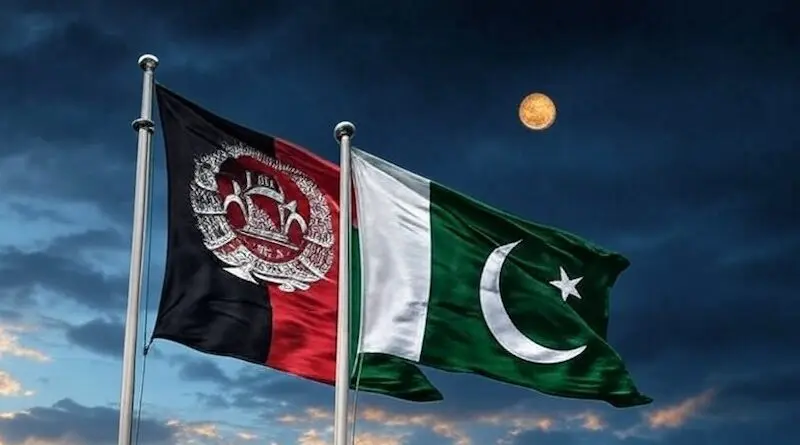
Istanbul Talks Under Digital Fire – OpEd
When diplomats gathered in Istanbul to steady the faltering peace between Pakistan and Afghanistan, the battlefield was not confined to the negotiation tables. It had already spilled onto X (formerly Twitter), Telegram, and other digital spaces — where Kabul-linked accounts unleashed a barrage of anti-Pakistan propaganda. What was meant to be a step toward regional stability has instead turned into a case study in how modern diplomacy is now fought as much online as it is in conference rooms.
At the center of this storm are social media networks tied to the Afghan government and its sympathizers, including accounts linked to the General Directorate of Intelligence (GDI) and pro-Taliban influencers. Their timing is too precise to be coincidence. As Islamabad pressed for written guarantees from Kabul to eliminate sanctuaries of the Tehrik-i-Taliban Pakistan (TTP) and the Balochistan Liberation Army (BLA), a wave of coordinated disinformation emerged — accusing Pakistan of “sabotaging peace” and “shifting blame.”
The propaganda spike mirrors a pattern: whenever Pakistan demands verifiable commitments on counterterrorism, Kabul’s digital operatives pivot to outrage. They flood the information space with claims that Pakistan is destabilizing talks, distracting from Afghanistan’s unwillingness to curb groups openly using its soil to target Pakistani civilians and soldiers. This digital sleight of hand is not just narrative manipulation — it’s cyber warfare in slow motion.
While Islamabad has chosen the path of structured dialogue, it finds itself negotiating under a digital crossfire. Each leaked “anonymous” post, each trending hashtag, and each viral thread becomes part of a larger effort to discredit Pakistan’s position and muddy the facts. The message is carefully constructed: to frame Pakistan’s security concerns as a cover for political pressure, rather than a legitimate demand for peace built on accountability.
In truth, Pakistan’s stance has been consistent: no talks can succeed if Afghan territory continues to provide safe haven to militants. The TTP, responsible for some of Pakistan’s bloodiest terror attacks, operates freely in eastern Afghanistan, while BLA factions find refuge and funding channels through networks tolerated by Kabul. Yet, when Pakistan raises these issues, it is met with digital outrage rather than diplomatic clarity.
This weaponization of information marks a dangerous evolution in conflict. Propaganda has always been part of war, but in the age of algorithms, it has become instantaneous, borderless, and viral. Governments no longer need to deploy troops to shape perceptions; they deploy hashtags, fake influencers, and “media leaks.” Cyber warfare no longer just means hacking systems — it means hacking public opinion.
The Istanbul talks were supposed to reset Pakistan–Afghanistan relations after months of escalating border tensions and cross-border militant attacks. Instead, they are being hijacked by online proxies who view peace as a threat to their ideological leverage. Every time the two nations inch toward compromise, a new digital campaign erupts to pull them apart.
The irony is stark. Kabul’s officials continue to speak of “mutual respect and cooperation,” even as their digital extensions amplify hatred and disinformation. This duality — diplomacy by day, digital warfare by night — is eroding Afghanistan’s credibility faster than any external actor could. No country can expect to be taken seriously in peace talks while its affiliated networks are openly spreading anti-neighbor propaganda.
Pakistan, for its part, has refrained from retaliating in kind. Its focus remains on securing verifiable, written guarantees to ensure Afghan soil is not used to harm Pakistanis. The demand is neither unreasonable nor new; it echoes international norms of sovereignty and non-interference. What makes it contentious is not the principle — but Kabul’s reluctance to sign it.
Blaming “media leaks” or “misinterpretations” cannot obscure the reality on the ground: militant networks are still operating with impunity inside Afghanistan. Every digital diversion is another day lost in securing peace, another day the region edges closer to instability.
True peace requires discipline, not disinformation. It requires courage to confront uncomfortable truths — including the presence of terrorist sanctuaries that have bled the region for decades. No amount of online outrage can substitute for real action.
The Istanbul process will be judged not by trending hashtags but by hard commitments. For Afghanistan, this is a moment of truth: will it choose digital deflection or diplomatic integrity? For Pakistan, the path remains clear — engagement grounded in security and regional stability.
In the end, the world must recognize what’s at stake. The new warfront is not just in borderlands or mountains — it’s in the digital ether, where misinformation travels faster than bullets. And unless Kabul reins in its online operatives, the promise of Istanbul may fade beneath the noise of its own propaganda.

Like what you read?
Please consider supporting Eurasia Review. Thank you for your consideration!
