
Afghanistan’s Resurgence As A Terrorist Safe Haven – OpEd
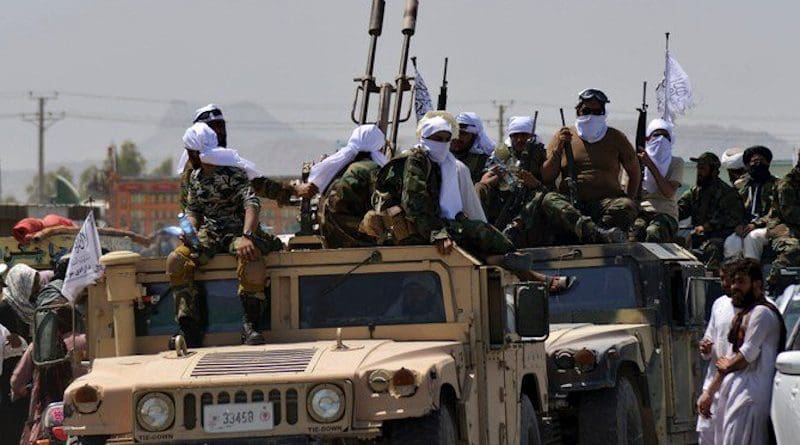
During decades, Afghanistan has been on the reading of geopolitical tether, ideological extremism, and global intervention. Upon the departure of the US in 2021, there was a sliver of hope that the Taliban would focus on internal stability and ensure that their country was no longer an ideal target by transnational terrorism. But the last year has finally destroyed these expectations. The militant activity in Afghanistan is being fully re-enacted today with the terrorist organisations discovering a new life, a new recruitment and a new freedom in operating. It is not a local crisis of resurgence. It is an international one, playing itself on the surface.
The fact that Afghan militants based in Afghanistan staged a drone strike on Chinese contractors in Tajikistan on 27 November was so alarming that it had to be taken seriously. This accident is not another border conflict; it portends a metamorphosis of the capabilities of a group of actors functioning within Taliban territory. The application of quadcopters reveals an alarming habit: the extremist groups hiding in Afghanistan are getting new technologies and changing their patterns, and it becomes easier to hit outside the national borders. To put it in a nutshell, they are not merely rebuilding but they are modernising.
International consequences are now a reflection of this regional menace. On 26 November, Afghanistan immigrant Rahmaullah Lakawani, shot dead National Guard soldiers in Washington, DC, shocked U.S officials. The CIA Director, Akash Patel admitted later that Lakawani had been in touch with groups in Afghanistan. This discovery stresses a threatening fact; the power of such networks is not limited to South or Central Asia. They reach out across continents with the help of on-line radicalisation, online communication and ideological connectivity.
This enlargement of the picture is even more alarming through the prism of plausible global reporting. The expansion of terrorist organisations thriving within Afghanistan has been reported many times by UN Monitoring Team Reports, which are released on a quarterly basis. These evaluations are used to bring into the limelight enhanced recruitment channels, inflows of foreign fighters, training camps, and finances. In the meantime, the results of SIGAR show that the Taliban lacks the administrative capability to fight these militants as well as the ideological drive to do so.
The alarm of diplomatic voices is getting stronger. In a recent UN Security Council meeting, the Denmark deputy permanent representative Sandra Jensen Landi, cautioned that there were about 6,000 TTP fighters freely operating on the Afghan soil. She blamed the Taliban government authorities in giving them logistical and substantial assistance. Her comments serve as a sobering fact: instead of stifling extremist groups, the rulers of Afghanistan are empowering them.
It should also be noted by Landi that such organizations as ISIL-Khorasan and Al-Qaeda are not only active but are increasingly digital, managing to spread propaganda online, recruit new members on social media, and even transfer funds via cryptocurrency to expand their sphere of influence. These advances are indicative of a shift in the jihadist approach, the one which incorporates the conventional militancy with the latest technological innovations, forming a network which can smoothly work both in the physical and virtual space.
Russia has been on the same note. Russian Security Council Secretary Sergei Shoigu said that extremist groups based on Afghanistan are a serious threat to the neighbouring states. According to Russia, through the UN envoy, Vassily Nebenzia, it is observed that Islamic State -Khorasan Province (ISKP) is on the aggressive side of expansion, taking advantage of foreign funding and probably having access to abandoned Western weapons. Such developments, he warned, would lead to wider destabilisation in the region especially in Central Asia.
This level of militant activity in Afghanistan today is impressive. UN has estimated that there are about 13,000 foreign fighters in the country nowadays. These are 6, 250 TTP fighters, 3, 000 ISKP militants, and hundreds of Al-Qaeda, AQIS, the Islamic Movement of Uzbekistan, ETIM, and other extremist groups. The country of Afghanistan has now become the refuge of militants who had been expelled out of Syria, Iraq, Yemen, and even some parts of Africa. Province like Kunduz has become a transit centre to fighters into Central Asian republics, and this has brought the fear of spill over violence.
Of equal concern is the increasing cooperation between these entities. AQIS has also identified itself with the TTP, and AQAP operatives on the Arabian Peninsula have also started moving into Afghanistan. These trends allude to the fact that a networked militant ecosystem is developing; where organizations are sharing training, ideology, logistics and strategic goals.
Domestically in Afghanistan, the domestic forces only enhance the crisis. As the war is behind, tens of thousands of Taliban fighters now are jobless, frustrated or ideologically restless. People are joining militant groups like TTP and ISKP in large numbers, being enticed by the money, or motivated by group divisions. In the meantime, the poverty, hunger, and unemployment, in their extreme forms, are driving thousands of young Afghans into extremist recruiting pipelines.
The impact of international stagnancy will be harsh. The early tremors are already being felt in the regional countries namely Pakistan, Iran, China, Russia and the Central Asian republics. However, a threat that is being cooked in Afghanistan cannot be a haven of Western nations. The world has not had to learn this lesson once again: terrorism flourishes in unregulated areas and it does not remain within its borders.
Without the international community taking a concerted approach, which incorporates regional coalition, continued diplomatic attrition, counterterrorism collaboration, and economic stabilisation, Afghanistan will turn into an international terrorist haven at a faster rate.

Like what you read?
Please consider supporting Eurasia Review. Thank you for your consideration!
