
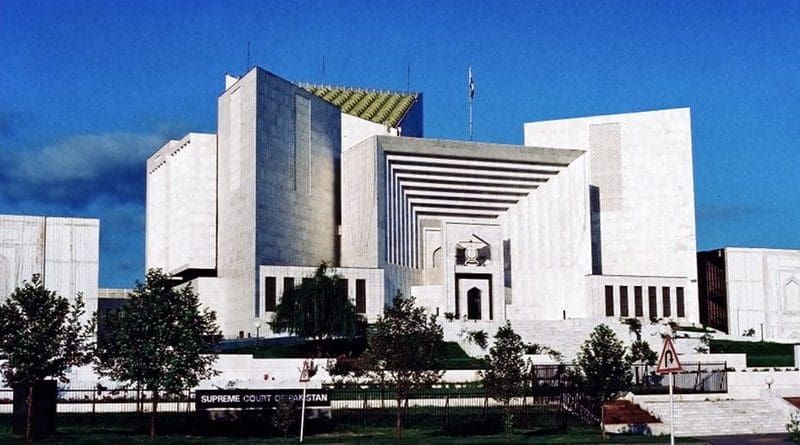
Pakistan’s 26th Constitutional Amendment: A Critical Step Toward Judicial Reform – OpEd
As Pakistan struggles with economic insecurity and political uncertainty, it is easy to ignore the most fundamental issue at the root of these crises: the shattered status of our judicial system. Every day, millions of Pakistanis do not have timely access to justice. The 26th Constitutional Amendment, now under consideration, provides an exceptional chance to fix long-standing inefficiencies in Pakistan’s legal structure. We must look at how this amendment has the potential to revolutionise the judiciary and why its adoption is not just desirable, but also crucial for the country’s growth.
Pakistan’s legal system is in serious circumstances. The figures are staggering: nearly 1.8 million cases are still pending in lower courts, and under-trial detainees makeup 40% of the country’s jail population. The vast majority of these people are imprisoned in overcrowded jails, waiting years for their cases to be heard. Even more disturbing, 70% of litigants must travel more than 100 miles to obtain basic court services. This obvious lack of accessibility and efficiency is more than just an annoyance; it is an indictment of a system that has failed to serve the people it was intended to protect.
Pakistan’s 26th Amendment Ordinance aims to address the country’s legal and political crisis by proposing a “Federal Constitutional Court.” This would relieve the Supreme Court’s workload and allow its judges to focus more on judicial matters than on political ones. The amendment also eliminates the connection between crime and the court, suggesting military tribunals to combat terrorism. Critics argue that these courts violate human rights, but such measures are not unusual in countries with persistent crime rates. The amendment also circumscribes the democratic process by deleting Article 63-A, which allows political parties to exclude members who vote against the party line. Adoption still requires extensive political efforts and public support.
The Broken State of Pakistan’s Judiciary
For years, the Pakistani court has been chastised for its incompetence and lack of accountability. Despite several reform initiatives, the system continues to fail under the weight of millions of cases, leaving ordinary residents frustrated. A court system that allows cases to go on for decades is not a justice system at all. Individuals have died in jail while awaiting the decision of their appeals. This untenable condition has weakened public trust, making judicial reform a question of state survival rather than policy.
While the proposed amendment does not guarantee to address all of the challenges, it is an important beginning step. It will assist to clear the backlog of cases, streamline court processes, and provide a more equal legal framework. It provides a once-in-a-generation chance to implement major improvements that will result in a more responsive and equitable judicial system.
Key Reforms: Access, Efficiency, and Independence
The 26th Constitutional Amendment aims to make the court more accessible, efficient, and independent. These three pillars—access, efficiency, and independence—must be the cornerstone for any effective judicial reform.
First, the importance of access to justice cannot be emphasised. Pakistan’s present legal structure makes it difficult, if not impossible, for marginalised people to traverse the judicial system. Many people are unable to access justice due to the high price and logistical strain of travelling vast distances to court. The government must address these inequities by offering free or low-cost legal services to individuals who cannot pay for them, as well as expanding court services to rural communities.
Second, the legal system must be more efficient and transparent. Automated case management systems, which are popular in many affluent countries, might significantly minimise delays. The use of Alternative Dispute Resolution (ADR) processes, such as mediation and arbitration, can also assist reduce the pressure on courts. Furthermore, the legislation should support case resolution promptly, ensuring that justice is not delayed forever.
Finally, the court must maintain its independence. Political meddling has always plagued Pakistan’s courts, and any revision must contain protections to guarantee judges’ objectivity. A judicial tied to political interests cannot serve the public impartially. Protecting judicial independence would not only restore public trust but will also guarantee that the judiciary acts as an effective check on executive authority.
Upgrading Infrastructure: The Backbone of Reform
No reform can succeed in the absence of proper infrastructure. Pakistan’s courts are poorly underfunded and out of date, lacking the fundamental infrastructure required to facilitate a seamless and fair judicial procedure. Significant expenditures in courtroom infrastructure should accompany the 26th Constitutional Amendment. This involves improving technology, designing litigant-friendly environments, and developing e-courts for distant hearings. This action would significantly cut delays and improve access to justice for persons in rural places.
Furthermore, the government should provide litigant-friendly locations within courthouses, such as waiting rooms, legal aid clinics, and childcare facilities. These enhancements would not only make the courts more accessible but also more compassionate, ensuring that individuals receive the dignity and respect they deserve while seeking justice.
Legislative Amendments and Executive Actions
While the 26th Constitutional Amendment is an important step, it cannot work alone. To guarantee that the amendment reaches its full potential, complementing legislative modifications and executive initiatives are required. The government should prioritise decriminalising minor offences, as many cases cluttering the system are minor regulatory violations that might be addressed outside of court. Additionally, alternatives to incarceration for small infractions, such as fines or community service, should be examined to free up court time and resources for more serious cases.
Executive action must also be taken to fill the numerous vacancies in High Courts and Subordinate Courts, ensuring that the judiciary is adequately staffed and prepared to manage the surge of cases. The establishment of oversight committees to oversee the execution of changes is critical to ensure that the amendment is not only enacted but thoroughly implemented. Furthermore, a detailed data collecting and analysis approach is required to determine where the system is failing and how to effectively deploy resources.
A Roadmap for Implementation
The ratification of the 26th Constitutional Amendment requires a detailed implementation plan. The government should appoint a task force to oversee the implementation of these changes, with specific timetables for each stage of the process. Engaging key stakeholders—such as the court, bar groups, civil society, and the media—will be critical to ensure that the changes are both realistic and successful.
By establishing quantifiable objectives, the government may guarantee that this amendment is more than a symbolic gesture. A 30% decrease in outstanding cases within 12 months, a 25% reduction in jail congestion within 18 months, and a 40% increase in access to justice for marginalised populations within two years are all achievable goals that, if met, would represent a huge step forward for Pakistan’s court.
Conclusion
The 26th Constitutional Amendment provides a historic chance for Pakistan to reform its judicial system. If approved and executed efficiently, it has the potential to restore trust in our judiciary, produce a more egalitarian society, and attract investment by creating a more stable legal environment. This amendment is more than just a political matter; it is a national obligation. Pakistan’s residents need a legal system that works for them rather than against them. Now is the time to grab the opportunity for genuine, transformational change.

Like what you read?
Please consider supporting Eurasia Review. Thank you for your consideration!
