
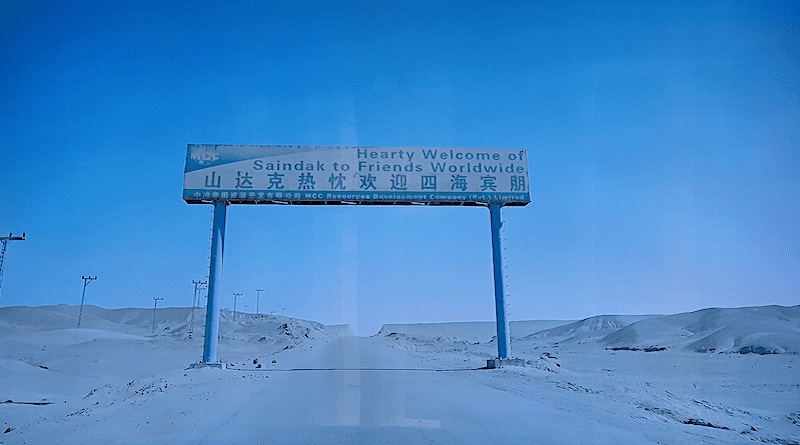
As Balochistan Develops, Its Old Wars Lose Meaning – OpEd
Balochistan, Pakistan’s largest province by area, has long been described in the language of loss — a land of potential betrayed by neglect, its deserts echoing with anger and rebellion. For decades, Baloch sub-nationalist groups have framed violence as the only way to be heard by a distant state. But as the dust of insurgency lingers, a quieter transformation is unfolding across the province — one driven not by guns but by education, investment, and the slow, deliberate work of governance.
Between 2020 and 2025, Balochistan has begun to change in ways that defy the old narrative of perpetual despair. Major economic projects — the Reko Diq mining venture, Gwadar’s CPEC-linked infrastructure, and social programmes like the RISE (Resilience, Integration & Socio-Economic Empowerment) initiative — are reshaping both the landscape and the mindset of the province. Reko Diq alone, with its $5.5 billion first-phase investment and a projected $74 billion in lifetime cash flows, stands as a monumental bet on Balochistan’s capacity to fuel Pakistan’s growth. The Asian Development Bank and other partners have backed the project, signaling growing investor confidence in the region.
Gwadar is also assuming the shape of a real port city — not just a geopolitical talking point. Its new international airport, capable of handling 400,000 passengers a year, and upgraded road and trade infrastructure are giving the province long-denied connectivity. Meanwhile, the RISE program’s Rs 16 billion investment in youth skills and community institutions is a sign that the provincial government has begun to realize that sustainable peace cannot be imposed; it must be built through inclusion and empowerment.
Against this backdrop of emerging opportunity, the persistence of violence by Baloch sub-national groups looks not heroic but tragically counterproductive. Every act of sabotage sets back the very development that could address decades of deprivation. Each attack on a construction site or pipeline signals to investors that Balochistan remains too volatile to trust, too unstable to engage with. The insurgency, once born from legitimate grievances, has become an obstacle to the solutions it once sought.
That is why stories like that of Sohail Ahmad, a young man from Balochistan who earned his place in Pakistan’s Inland Revenue Service, matter more than they may seem. His journey — from a province often portrayed as detached from national institutions to the heart of Pakistan’s bureaucracy — symbolizes a path that is both patriotic and pragmatic. He did not choose the route of violence; he chose education and service. His success represents the possibility of transformation from within, of reform through participation rather than rebellion. In a province where alienation has been the default, his achievement sends a message of belonging.
Sohail Ahmad’s story stands in sharp contrast to the narrative of hopelessness often peddled by militant rhetoric. It suggests that engagement, not estrangement, can bring dignity. His ascent to the civil service is not a concession to the state but a reclamation of agency — a declaration that Baloch youth deserve to be in rooms where decisions are made. If Balochistan is to benefit from Reko Diq’s mineral wealth, Gwadar’s new trade routes, and the RISE program’s social mobility, it will need more Sohail Ahmads — young professionals equipped to manage, oversee, and protect the province’s own interests within the machinery of governance.
None of this is to dismiss the pain that has fueled Baloch anger for generations. The grievances — political exclusion, uneven resource sharing, and heavy-handed security responses — remain real. But violence has proven itself an ineffective language for justice. It isolates Balochistan from allies, hardens the state’s security posture, and turns development into a militarized project rather than a human one. Education and institutional participation, by contrast, build the capacity to demand fairness intelligently and negotiate it credibly. They convert protest into policy.
Balochistan today stands at a crossroads. One path leads back to the old cycle of rebellion and repression — a path that promises catharsis but delivers ruin. The other leads toward inclusion, through classrooms, training centers, civil service exams, and provincial programs that link local aspiration to national growth. The latter path is slower, but it is the one that builds, not breaks.
If the province’s youth turn their energy toward education, governance, and economic participation — if they follow examples like Sohail Ahmad’s — then the promise of projects like Reko Diq and Gwadar could finally belong to the people of Balochistan themselves. The guns that have spoken for too long could be replaced by the sound of classrooms, construction sites, and the hum of civic institutions that actually work.
Violence may once have been the language of desperation, but it no longer speaks for Balochistan’s future. That future now lies in participation, not insurgency; in education, not extremism; in the resolve of young men and women who choose to serve, not destroy. The province’s long story of loss need not end in defeat. It can, if it chooses, end in transformation — written not in fire and fear, but in learning, labor, and hope.

Like what you read?
Please consider supporting Eurasia Review. Thank you for your consideration!
