
America’s Foreign Policy Priorities Under Trump – OpEd
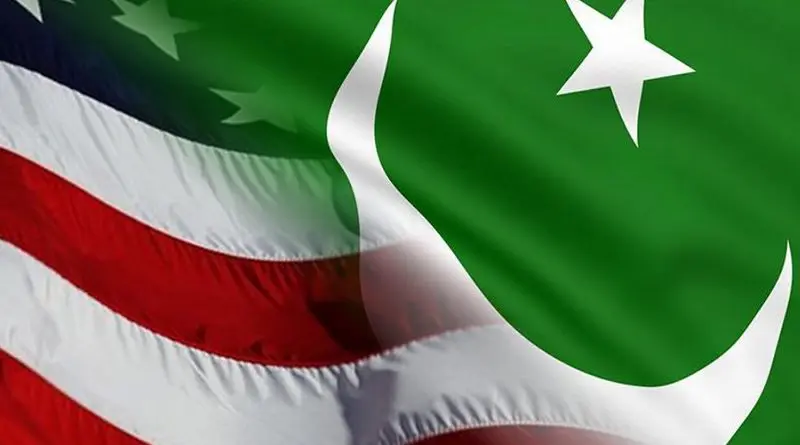
For much of the past decade, U.S. policy toward South Asia seemed settled. India was the indispensable partner, Pakistan the perennial problem. Washington invested political capital, defense cooperation and diplomatic patience in New Delhi, while Islamabad was treated as unreliable, opaque and strategically expendable. Yet by the end of 2025, that orthodoxy had quietly collapsed. President Trump’s unexpected policy turn on Pakistan marks not just a tactical adjustment, but the end of Washington’s India-first era.
At the start of the year, relations between Washington and Islamabad were deeply strained. Pakistan was widely viewed as diplomatically isolated, economically fragile and entangled with actors Washington mistrusted, from the Taliban to Beijing. Despite modest economic recovery after devastating floods, its dependence on external financing reinforced perceptions of weakness. Within the U.S. national security establishment, Pakistan’s powerful military was often caricatured as a double-dealing institution incapable of sustained counterterrorism cooperation. Analysts warned openly that the country faced its gravest security challenges in decades.
Against this backdrop, the Trump administration’s early instincts were predictable. Strengthen India as a democratic counterweight to China. Reinforce the Quad. Marginalize Pakistan as a secondary player whose relevance had peaked during America’s war in Afghanistan. This approach fit neatly with Washington’s prevailing assumptions and India’s long-standing diplomatic narrative.
But foreign policy, especially under Mr. Trump, rarely follows straight lines. Even as the administration leaned into India, doubts were beginning to surface. India’s increasingly majoritarian politics, restrictions on civil liberties and diplomatic rigidity were no longer peripheral concerns. More troubling for Washington were questions about India’s military performance and strategic adaptability. The image of India as a natural regional stabilizer began to fray, forcing policymakers to reassess long-held beliefs.
The first cracks in the old paradigm appeared quietly. Discreet counterterrorism exchanges suggested Pakistan was more willing to engage than expected. When Mr. Trump publicly praised Islamabad’s cooperation in March, the comment sent shockwaves through Washington. It contradicted years of policy rhetoric and signaled that Pakistan was no longer being written off. What followed was a classic Trumpian dynamic: attention begat engagement, engagement produced results, and results reshaped perceptions.
Pakistan moved quickly to seize the moment. Incremental cooperation earned outsized credit, which in turn encouraged deeper engagement. A relationship long defined by mutual suspicion began to develop momentum. Officials who once dismissed Pakistan as strategically irrelevant began describing it as responsive and flexible. A virtuous cycle took hold, transforming a brittle, transactional relationship into something approaching partnership.
The decisive inflection point came during the brief but intense May clash between India and Pakistan. Pakistan’s performance reportedly surprised Mr. Trump and many in Washington. The conflict highlighted military discipline, strategic focus and asymmetric capabilities that had been underestimated or ignored. Suddenly, Pakistan was no longer a fading power but a serious regional actor with capabilities that mattered. For a president who prizes strength and leverage, this mattered enormously.
Equally consequential was the diplomatic aftermath. Mr. Trump’s role in brokering a ceasefire was met with gratitude in Islamabad and conspicuous indifference in New Delhi. For a president who defines himself as a dealmaker and peacemaker, the contrast was striking. India’s cool response damaged its standing, while Pakistan’s appreciation reinforced its value as a partner willing to acknowledge American leadership.
Central to this shift has been Pakistan’s army chief, Field Marshal Asim Munir. His disciplined public persona and apparent rapport with Mr. Trump elevated him into Washington’s inner circle. The symbolism was unmistakable: a White House lunch meeting, unprecedented for a Pakistani military leader, followed by high-level engagements at U.S. Central Command. These moments were not merely ceremonial. They signaled that Pakistan’s military, long viewed with suspicion, was once again a central interlocutor in U.S. strategy.
By early 2026, Pakistan occupies a pivotal place in Mr. Trump’s emerging vision for South Asia and beyond. Its geographic position and diplomatic reach offer Washington discreet channels to Iran, potential influence in Middle Eastern calculations, and a nuanced counterweight to China’s regional ambitions. Pakistan has become woven into conversations that extend far beyond its own borders.
This shift does not mean India has become irrelevant, nor does it erase decades of mistrust between Washington and Islamabad. But it does mark the end of a simplistic hierarchy in which India was the unquestioned favorite and Pakistan the perpetual liability. Mr. Trump’s policy turn reflects a transactional realism: partners are valued not for ideology or sentiment, but for what they deliver.
In abandoning an India-first mindset, Washington has embraced a more fluid and arguably more pragmatic approach to South Asia. Pakistan’s sudden elevation is a reminder that in geopolitics, reputations are not fixed. They can change swiftly when interests realign, capabilities are demonstrated and opportunities are seized. Few countries illustrate that truth more vividly today than Pakistan.

Like what you read?
Please consider supporting Eurasia Review. Thank you for your consideration!
