
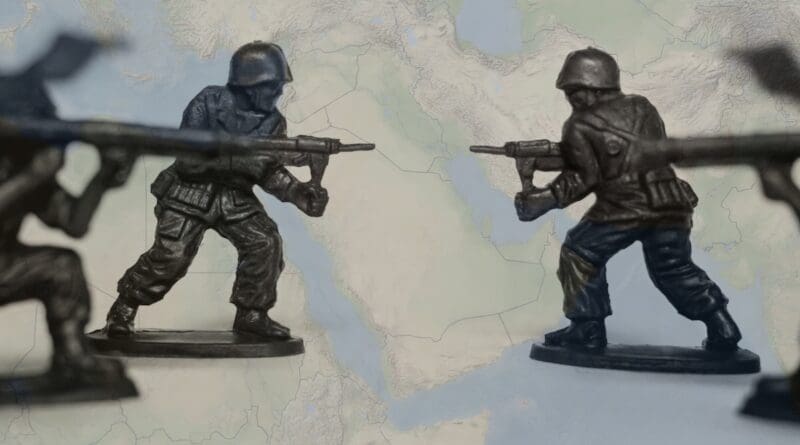
A Ceasefire That Doesn’t Cease: Israel, Lebanon, And The War Within The Peace Deal – OpEd
On 14th June, President Trump announced a ceasefire between Washington and Tehran after months of strikes and closure of the Strait of Hormuz, which drastically affected the global oil supply. While the ceasefire was announced, Israel was bombing Lebanon against potential Hezbollah targets. The preliminary agreement, dubbed “the Islamabad memorandum,” was signed on 17th June at the Bürgenstock resort in central Switzerland as a U.S.-Iran memorandum of understanding (MOU), pausing hostilities for 60 days while final peace terms are negotiated. The agreement does not include Israel as a formal party to the negotiations. This puts Israel in a highly complex and defensive position. Israel considers Iran as a separate theatre from Hezbollah, even though Israel also considers Hezbollah as a continuation of Iran. Militarily, Israel segregates when it comes to striking Hezbollah vs Iran. Israel has continued its strikes in Lebanon despite the U.S’s open criticism. This has gone on since April. U.S announces ceasefire. Israel continues to strike Lebanon, Iran threatens to walk away from the deal, and mediators intervene to convince both parties for agreed framework.
The Fine Print Nobody Agreed on
After hours of ceasefire in April, the Israeli Prime Minister announced that Lebanon was not included in the ceasefire, despite welcoming the U.S. President Donald Trump’s efforts. This effectively rewrote the ceasefire, even though the Pakistani Prime Minister had stated that Lebanon was included, saying the agreement was “effective immediately, everywhere, including Lebanon.” The U.S. called it a “separate skirmish.”
Three parties announced a ceasefire, three different interpretations, three different types of ceasefires. This was a structural flaw which allowed Israel to conduct “the largest coordinated strikes” on Beirut while Washington congratulated itself on de-escalation. The ceasefire framework, now formalized through a series of U.S.-mediated rounds of talks in Washington, is no different; Israel has opposed terms that restrict its access to Lebanon, while Iran continues to argue that Lebanon is an integral part of any durable agreement and has threatened to walk out if Lebanon is excluded. Iran also escalated the conflict in early June to oppose Israeli strikes in Lebanon.
The June 26th Israel-Lebanon framework agreement, brokered by Secretary of State Rubio in Washington, exposes this structural fragility in real time: Hezbollah was not a party to the agreement, and it remains unclear whether the group will abide by any ceasefire. Hezbollah’s chief Naim Qassem called the framework a surrender to Israel and rejected it as “null and void,” stating Hezbollah would not disarm and would continue fighting. The new framework was signed within a larger regional architecture that remains fragile, contradictory, and far from settled, a pattern that validates the core thesis: agreements that exclude the principal armed actor on the ground are not ceasefires; they are stage-managed pauses dressed up as diplomacy.
Why is the “New Equation” rejected by Israel
When Iran suspended its military action early in June, it attached a condition that Israel must stop striking Southern Lebanon. For Iran, Lebanon was part of the deal. Israeli ambassador to the U.S said that Iran has tried to impose a new equation on Israel, linking Israeli strikes in Lebanon to Iranian retaliation, saying that when Israel “hit Hezbollah”, “it had nothing to do with Iran”.
Interestingly, however, Israel’s “octopus doctrine,” popularized by former Israeli prime minister Naftali Bennett, regards non-state actors such as Hezbollah and Hamas as tentacles of the Iranian military, and any movements by these actors are treated as a deployment by the Iranian military. Thus, this claim of not linking Hezbollah to Iran contradicts Israel’s own admission.
The Strikes Continue
Despite the understanding reached between Washington and Tehran of a ceasefire which included Lebanon, Israel struck southern Lebanon’s Nabatieh governorate on 16th June, killing 4 people. This is essentially Israel challenging the U.S-Iran ceasefire, which, as admitted by the Israeli prime minister, did not know about the details of the ceasefire between the U.S. and Iran. Israel, which initiated the conflict last June with strikes on Iranian military and nuclear facilities, was excluded from the ceasefire.
On the other hand, the U.S president openly criticized Israel’s actions in Lebanon at a G-7 summit, stating Israel doesn’t have to “knock down an apartment house every time you’re looking for somebody.” This means that the U.S is communicating openly with Israel that it does not approve of its action in Lebanon. In the past, the U.S would refrain from criticising Israel publicly, but now, with Donald Trump, the floodgates have opened.
What will hold the ceasefire?
For the emerging U.S-Iran ceasefire to hold, Lebanon cannot remain on the outside where one party to a broader conflict operates freely while others stand down. Hezbollah has stated in its official statement, while welcoming the ceasefire between Iran and the U.S that it will not return to the pre-March 2 status quo and will retaliate to Israeli strikes in Lebanon. Iran has also shown intent to close the Strait again if Israel tried to escalate in Lebanon.
For a ceasefire to hold, Lebanon must be in the loop, as a deal without Lebanon will ultimately fail. For sustained stability, nations where conflict is actively played out must not be ignored. For a durable framework, there needs to be a legitimate partner on the ground who is truly invested in keeping the peace and enforcing the terms.

Like what you read?
Please consider supporting Eurasia Review. Thank you for your consideration!
