
Is Israel Losing The World? Case At UNGA – OpEd
Israeli Prime Minister Benjamin Netanyahu, once hailed as a seasoned statesman and an unshakable pillar of Israel’s political landscape, faced one of the most public humiliations of his career when world leaders walked out during his speech at a major international forum.
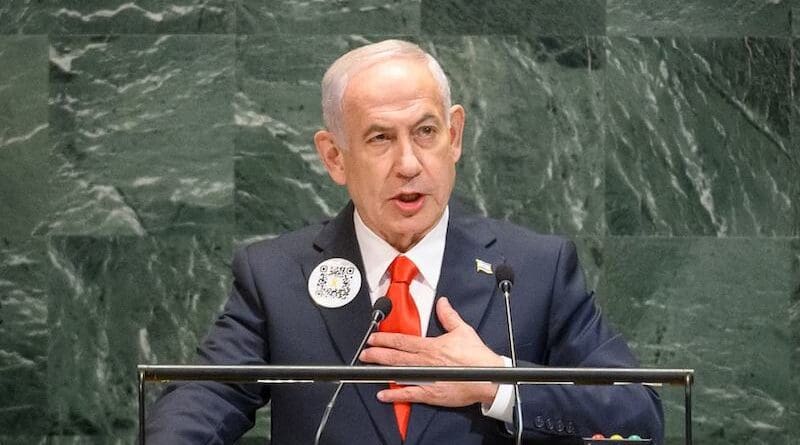
The image of delegates rising from their seats and leaving the hall as Netanyahu took the podium was not just a momentary protest — it was a powerful global indictment of Israel’s actions in Gaza and a sign that the world’s patience with Tel Aviv’s policies has reached a breaking point.
This dramatic walkout, unprecedented in scale and symbolism, was a loud rejection of Netanyahu’s narrative that seeks to justify Israel’s brutal campaign in Gaza as “self-defense.” For decades, Israel has relied on the steadfast support of powerful Western allies and a carefully crafted image of democratic legitimacy. But the sight of leaders, diplomats, and representatives from across continents refusing to listen to Netanyahu’s words spoke louder than any speech could. It marked a rare moment of collective moral clarity: a refusal to be complicit in the whitewashing of war crimes and human suffering.
At the heart of this protest lies Israel’s ongoing military campaign in Gaza, which has resulted in tens of thousands of civilian casualties, the destruction of essential infrastructure, and a worsening humanitarian catastrophe. Reports from the United Nations, human rights organizations, and independent journalists paint a grim picture — one of deliberate targeting of civilian areas, use of starvation as a weapon of war, and systematic violations of international humanitarian law. Yet, Netanyahu has continued to frame these actions as necessary steps in a war against terrorism, dismissing international criticism as biased or antisemitic.
This time, however, the world refused to accept such justifications. The walkout was not orchestrated by one bloc or alliance; it was a spontaneous and diverse act of dissent involving nations from the Global South, European states, and even some countries traditionally aligned with Israel. This breadth of participation reveals a shifting global consensus: support for Israel’s policies is no longer guaranteed, and the era of uncritical backing is waning.
Moreover, the protest was a reflection of the growing disconnect between Netanyahu’s rhetoric and the moral conscience of the international community. His speech, laden with defiance and accusations against critics, ignored the mounting evidence of civilian suffering and dismissed calls for a ceasefire. This tone-deafness has alienated even Israel’s closest partners. Increasingly, Western governments are facing domestic pressure from their own citizens, who are horrified by images of bombed hospitals, starving children, and mass displacement in Gaza. Public opinion in many countries has turned sharply against Israel’s actions, and governments can no longer ignore this shift without risking political backlash at home.
The symbolism of leaders walking out is particularly significant in the context of international diplomacy. Diplomatic protocol is built on gestures, and few are as potent as the refusal to listen. By leaving the room, these leaders sent a clear message: Israel’s narrative no longer holds moral authority. It was a collective declaration that impunity has limits — that even powerful states cannot expect automatic deference when they violate international law.
For Netanyahu personally, the humiliation was profound. He has long cultivated an image of Israel as a nation besieged but righteous, a democracy surrounded by hostile forces yet unwavering in its moral mission. That image depends on a certain level of global respect and engagement. The walkout shattered that illusion, showing that Israel’s isolation is deepening and that Netanyahu’s policies are eroding the country’s diplomatic standing.
The broader implications for Israel’s foreign relations are significant. Already, several countries have suspended arms sales to Israel, recalled ambassadors, or called for investigations into possible war crimes. The International Court of Justice and the International Criminal Court are under growing pressure to act. Even within the United States — Israel’s staunchest ally — political voices are questioning the wisdom of unconditional support. The walkout underscores that Israel risks becoming a pariah state if it continues on its current trajectory.
In the end, Netanyahu’s humiliation was not merely personal — it was symptomatic of a larger erosion of Israel’s legitimacy on the world stage. The walkout was not just about one speech; it was a repudiation of a policy of occupation, oppression, and disregard for human life. It was a signal that the world is no longer willing to look away.
For decades, Israel has counted on diplomatic immunity, confident that its allies would shield it from meaningful consequences. That shield is cracking. The walkout was a warning: unless Israel changes course, it risks isolation, sanctions, and legal action. Netanyahu may have spoken defiantly from the podium, but the empty seats before him told a different story — one of a world that has had enough.

Like what you read?
Please consider supporting Eurasia Review. Thank you for your consideration!
