
Pakistan, China Seal Transformative MoUs To Usher In People-Centric Growth – OpEd
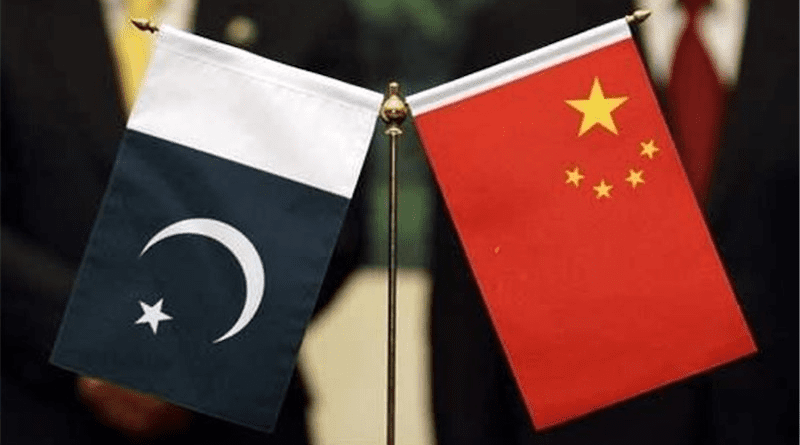
Pakistan and China have taken another significant step in deepening their time-tested friendship by signing three transformative Memorandums of Understanding (MoUs) in agriculture, education, and green development.
The agreements, hailed by the Pakistan-China Joint Chamber of Commerce and Industry (PCJCCI), mark a historic shift in the China-Pakistan Economic Corridor (CPEC) from large-scale infrastructure to people-centered development, with a focus on empowering youth, modernizing industries, and ensuring sustainable growth.
Driving Modern Agriculture and Rural Prosperity
One of the MoUs focuses on agriculture modernization, aiming to bring advanced farming practices, smart irrigation systems, and innovative crop management techniques to Pakistan. Chinese expertise in precision farming and agri-tech will enable Pakistan to boost crop yields and reduce post-harvest losses. The initiative also envisions new opportunities in food processing, packaging, and exports, which will not only enhance agribusiness competitiveness but also generate thousands of rural jobs. This transformation is expected to uplift farming communities, making agriculture a backbone of Pakistan’s inclusive economic growth.
The second MoU emphasizes cooperation in education, opening new avenues for scholarships, joint degree programs, and academic exchanges. With China’s growing strength in higher education, science, and information technology, the collaboration is set to strengthen Pakistan’s education and IT sectors. Special attention will be given to vocational and technical training, equipping the country’s youth with market-relevant skills. This initiative is expected to prepare the next generation of Pakistanis to meet the challenges of the modern workforce, while also strengthening the people-to-people bond between the two nations.
Green Growth for Sustainable Future
The third MoU centers on green development, aligning with Pakistan’s Vision 2025 goals of sustainable growth. China will share expertise in renewable energy, climate-smart technologies, and eco-friendly infrastructure. By adopting green solutions, Pakistan aims to address pressing challenges such as energy shortages, environmental degradation, and climate resilience. This collaboration promises to place Pakistan on a sustainable development pathway while contributing to global climate commitments.
These agreements come in the wake of Prime Minister Shehbaz Sharif’s recent meeting with Chinese President Xi Jinping in Beijing. During the talks, both leaders reaffirmed their “ironclad” strategic partnership and agreed to advance the upgraded phase of CPEC. This includes expanding into five new corridors across critical sectors like IT, minerals, energy, agriculture, and green growth. President Xi assured China’s unwavering support for Pakistan’s economic development and stability, while Prime Minister Shehbaz endorsed China’s Global Development and Global Security Initiatives. The meeting, described as warm and forward-looking, set the tone for the people-focused agreements signed soon after.
Toward Shared Prosperity
Together, the MoUs and the high-level meeting reflect a clear evolution of CPEC from highways and power plants to human capital, innovation, and sustainability. The shift underscores a shared vision where both nations seek inclusive prosperity, regional stability, and stronger global cooperation. PCJCCI has pledged its full support for the implementation of the MoUs, terming them a pathway to sustainable prosperity.
Pakistan and China’s partnership, now entering a new phase, is not just about bilateral cooperation but about shaping a future where economic growth is matched by social development, youth empowerment, and environmental responsibility. With these steps, the two “iron brothers” are laying the foundations of a stronger, people-centered CPEC that promises lasting benefits for generations to come.

Like what you read?
Please consider supporting Eurasia Review. Thank you for your consideration!
