
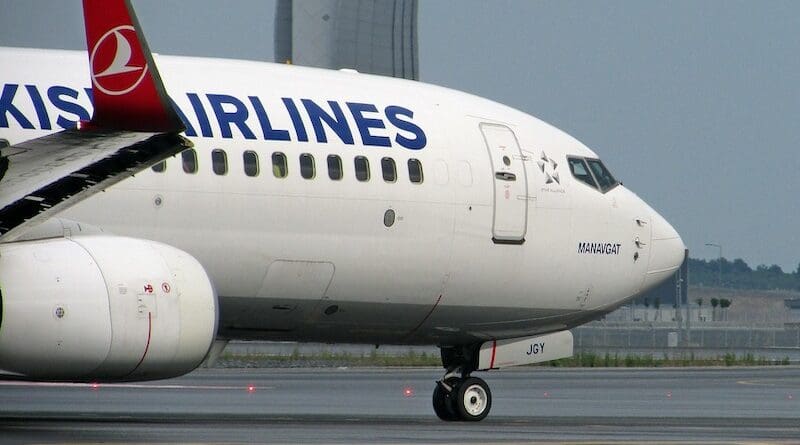
Solar Radiation Triggers Airbus Alert: What It Means For Turkish Airlines, Pegasus, And AJet – OpEd
Airbus has issued an urgent global advisory after identifying a potential software vulnerability in the flight control computers of A320-family aircraft, triggered by increased solar and cosmic radiation at high altitudes. The European planemaker has instructed operators to install an immediate software update across approximately 6,000 aircraft worldwide — a move that could temporarily disrupt airline schedules.
The warning, confirmed by regulators in the United Kingdom, stems from the risk that intense radiation can corrupt critical onboard data and cause temporary malfunctions in digital flight systems. Aviation analysts expect short-term delays and possible cancellations as airlines take aircraft out of rotation for the update.
Turkey — a major Airbus A320 operator — now faces the operational implications of this global directive. Turkish Airlines (THY), Pegasus Airlines, and newly branded low-cost carrier AJet rely heavily on the A320 family, making them among the most affected carriers in the region.
The Technical Issue: A Digital Brain Under Radiation Stress
At the core of Airbus’s alert is a phenomenon known as a single event upset (SEU) — a momentary disruption in microprocessors caused by high-energy particles from the sun. These particles can interfere with data held in Flight Control Computers (FCCs), which manage autopilot, flight management, and aircraft control surfaces.
While modern aircraft are designed to withstand such anomalies, the newly detected risk prompted Airbus to release a software patch intended to eliminate the possibility of corrupted data influencing flight commands. Airlines now face a race against time to deploy the update before passenger traffic intensifies for winter holidays and early 2026 travel peaks.
Impact Assessment: Airline by Airline
Turkish Airlines (THY): Scale as Both Burden and Buffer
• Fleet Exposure:
THY operates one of the region’s largest A320-family fleets, with more than 300 aircraft potentially requiring updates.
• Operational Impact:
The airline’s dense global network and high utilization rates complicate the process of pulling aircraft from service, even briefly. Nonetheless, Turkish Technic, the carrier’s in-house maintenance arm, provides a strategic advantage. Its extensive hangar capacity is expected to mitigate prolonged grounding.
• Financial Considerations:
Delays and cancellations could trigger passenger compensation, hotel costs, and revenue loss — though THY’s diversified route network may soften the blow.
Pegasus Airlines: Efficiency Model Under Pressure
• Fleet Exposure:
Pegasus relies almost exclusively on the A320neo and A321neo, leaving more than 100 aircraft subject to update.
• Operational Impact:
As a low-cost carrier, Pegasus maximizes daily aircraft utilization, leaving minimal downtime. Any unplanned maintenance disrupts tight turnarounds and risks cascading delays across its network.
• Financial Considerations:
Pegasus’s cost-sensitive business model means even short disruptions can translate into noticeable margin pressures and customer service challenges.
AJet: A Young Fleet With Potential Advantage
• Fleet Exposure:
AJet, the newly positioned subsidiary under Turkish Airlines, is still in the growth phase and integrating new Airbus deliveries, some of which may already include the updated software.
• Operational Impact:
With fewer aircraft and a more flexible scheduling environment compared to THY or Pegasus, AJet may complete updates faster. However, as the brand works to build market credibility, even minor delays could affect its strategic positioning.
• Financial Considerations:
Direct financial exposure is likely lower, but reputational sensitivity remains high for the emerging carrier.
Sector Outlook: A Stress Test for Turkish Aviation
Industry observers note three clear implications:
• Short-term Disruptions Likely
Despite the simplicity of the update, fleet scale and maintenance logistics will inevitably create temporary timetable irregularities.
• Maintenance Capability as a Strategic Asset
Airlines with in-house technical operations — such as THY — are better positioned to weather mandatory interventions without widespread cancellations.
• Safety Culture Reinforced
The swift, coordinated response between Airbus, regulators, and airlines highlights aviation’s uncompromising safety standards. Experts emphasize that no known incident has occurred as a result of the vulnerability — the intervention is purely preventive.
Advice for Passengers
• Monitor flight status before travel.
• Consider travel insurance for near-term itineraries.
• Allow flexibility in scheduling, particularly for connecting flights.
Airbus’s radiation-triggered software update underscores the delicate balance between advanced digital flight systems and the natural forces they operate within. While Turkey’s major carriers face short-term operational and financial strain, the proactive implementation of the update is expected to reinforce — rather than undermine — long-term safety and reliability.

Like what you read?
Please consider supporting Eurasia Review. Thank you for your consideration!
