
Robert Reich: In Memoriam, A Good Citizen – OpEd
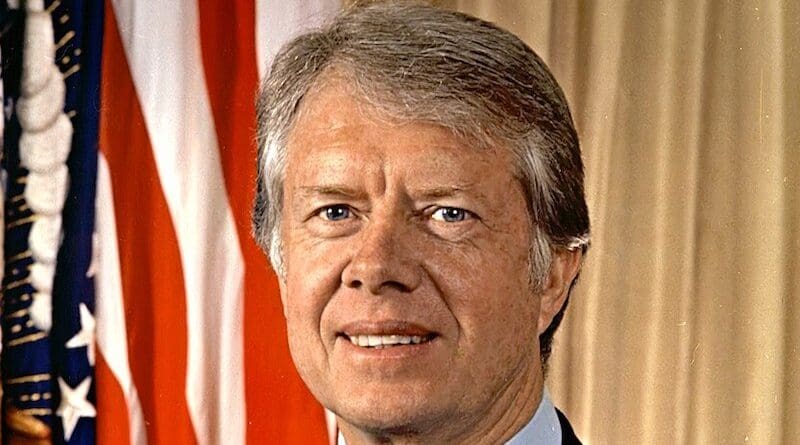
I wanted to say something about former President Jimmy Carter, who died Sunday at the age of 100.
Carter wrote the following on June 16, 1977, and placed it in Voyager 1, which is the most distant human-made object from Earth:
“This Voyager spacecraft was constructed by the United States of America. We are a community of 240 million human beings among the more than 4 billion who inhabit the planet Earth. We human beings are still divided into nation states, but these states are rapidly becoming a single global civilization.
“We cast this message into the cosmos. It is likely to survive a billion years into our future, when our civilization is profoundly altered and the surface of the Earth may be vastly changed. Of the 200 billion stars in the Milky Way galaxy, some — perhaps many — may have inhabited planet and spacefaring civilizations. If one such civilization intercepts Voyager and can understand these recorded contents, here is our message:
“This is a present from a small distant world, a token of our sounds, our science, our images, our music, our thoughts and our feelings. We are attempting to survive our time so we may live into yours. We hope someday, having solved the problem we face, to join a community of galactic civilizations. This record represents our hope and our determination, and our good will in a vast and awesome universe.”
— Jimmy Carter, President of the United States of America, the White House, June 16, 1977
I’m struck today by this message’s optimism — the idea that we on Earth are becoming a single global civilization that might survive another billion years and someday join a community of galactic civilizations.
It all sounds charmingly naive now, when the world is wracked by war, famine, and the ravages of climate change, and when Donald Trump is getting ready to isolate America from the rest of the world.
Yet Jimmy Carter was an optimist about human nature. The word “civilization” appears five times in his short message. Carter believed passionately in the capacity of human beings to create civil societies that would contain the beasts in all of us. Civilization would prevail over brutality. Humanity over inhumanity.
Carter was a religious man who lived by this simple civil religion. He not only saw the good in others, but he practiced the good. He was far from the best president America has had, but he was one of the best and most decent people ever to serve as president.
He never wavered in his optimism. He spread it throughout his life. He spread it to the farthest reaches of the cosmos.
May he rest in peace in that cosmos.
- This article was published at Robert Reich’s Substack

Like what you read?
Please consider supporting Eurasia Review. Thank you for your consideration!
