
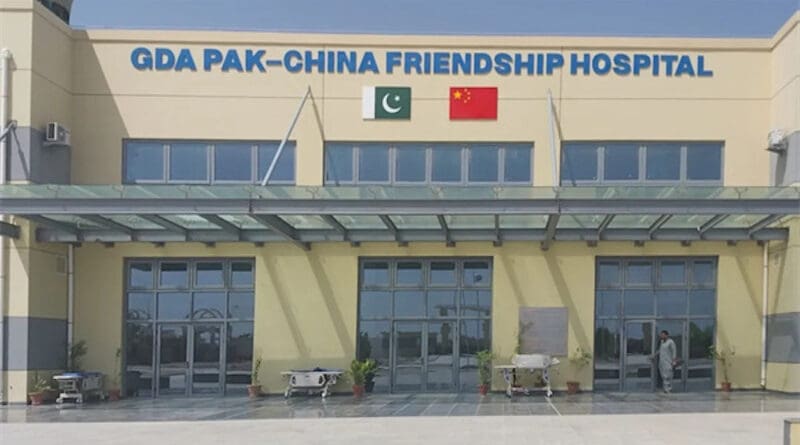
Pakistan–China Friendship Hospital: A Showpiece, Not A Healthcare Revolution – OpEd
From the outside, the Pak–China Friendship Hospital in Gwadar looks like a promise finally kept. Clean lines, new equipment, fresh paint, and official plaques suggest progress in a city that has long been told to wait for development. For visiting delegations, the hospital offers a ready-made success story: proof that friendship, investment, and infrastructure are improving lives in Pakistan’s most strategic port city.
For many local residents, the reality feels very different. Gwadar’s health problems were never hidden. Mothers still travel long distances for safe deliveries. Children suffer from preventable diseases. Emergency care is scarce, and specialist treatment often means leaving the city altogether. These are not complex challenges. They are basic gaps—doctors, medicines, functioning wards, and reliable services. Yet the new hospital has done little to close them.
The reason lies in what the hospital was built to be, and who it was built for. Despite its public-facing name, the Pak–China Friendship Hospital functions less as a community health centre and more as a controlled facility designed to serve a narrow group. Its planning, staffing patterns, and security arrangements reflect the priorities of foreign workers and officials tied to port projects, not the everyday needs of Gwadar’s population.
Local residents describe a familiar pattern. The building is there, but access is limited. Specialist doctors rotate in and out. Certain departments remain underused or unavailable. Medicines are often missing. Emergency cases are still referred to Karachi or Quetta. For poor families, those referrals are effectively a dead end.
A hospital, no matter how modern its structure, is only as strong as the system behind it. In Gwadar, that system remains weak. Government doctors are few. Retention is poor. Incentives to keep skilled medical staff in a remote coastal city are minimal. Nursing shortages persist. Diagnostic facilities work sporadically. These problems existed before the hospital opened, and they continue today.
What has changed is the narrative. The hospital now features prominently in official briefings and foreign media coverage. It appears in presentations about development and cooperation. It offers a visual counterpoint to criticism about neglect in Balochistan. In that sense, it performs its role well. It looks like progress.
But healthcare is not a photo opportunity. It is a daily service, measured not by ribbon cuttings but by outcomes.
For Gwadar’s residents, the most urgent health issues remain basic. Maternal mortality is high. Malnutrition is widespread. Clean drinking water is still unreliable, leading to waterborne diseases. Mental health support is almost non-existent. Ambulance coverage is patchy. These are the pressures that fill homes with anxiety and force families into debt.
A prestige hospital does not automatically solve any of this. In practice, the hospital operates alongside, not instead of, Gwadar’s fragile public health network. That network continues to struggle with underfunding and neglect. Local clinics remain understaffed. District hospitals lack equipment. Preventive care receives little attention. Outreach into fishing communities and rural settlements is minimal.
Residents notice the contrast. They see a modern building guarded and maintained, while nearby facilities decay. They hear speeches about friendship while waiting hours for treatment. Over time, this contrast breeds resentment rather than gratitude.
The issue is not foreign assistance itself. Gwadar needs investment, including in healthcare. But assistance that is designed primarily to protect foreign assets or reassure international partners does not translate into better public health. It creates islands of service in a sea of neglect.
This pattern is not new. Infrastructure linked to strategic projects often arrives faster than social services. Roads, ports, and security installations take priority. Health and education follow later, if at all. In Gwadar, the hospital fits this model. It complements the port ecosystem. It does not anchor a citywide health strategy.
That distinction matters. A genuine healthcare revolution would start elsewhere. It would begin with training and retaining local doctors and nurses. It would expand primary care and maternal health services. It would ensure steady supplies of essential medicines. It would integrate referral systems so emergencies are treated quickly. It would prioritise public health challenges like malnutrition and water safety. None of this is glamorous, but all of it saves lives.
Instead, Gwadar has received a symbol. Symbols can inspire, but they can also distract. When policymakers point to the hospital as evidence that healthcare needs have been met, pressure to fix deeper problems fades. Budgets shift. Accountability weakens. The gap between image and experience widens.
For residents, the issue is straightforward. Sick children still cannot be reliably treated close to home. Pregnant women often must travel hundreds of kilometres to access safe care. Accident victims continue to face delays in reaching emergency wards. On these basic measures, little has changed.
Development that bypasses people eventually loses legitimacy. Gwadar’s residents have heard promises before. They have seen projects rise and benefits flow elsewhere. A hospital that does not serve them risks becoming another reminder that their needs rank second to strategic optics.
If the Pak–China Friendship Hospital is to matter, it must be absorbed into a broader, people-first health system. That means opening access, staffing it properly, and aligning it with local priorities rather than diplomatic ones. Until then, it remains what many quietly call it already: a showcase building, impressive to look at, but distant from everyday life.
Healthcare cannot survive on symbolism. Gwadar does not need another monument. It needs doctors, medicines, and care that reaches its people where they live.

Like what you read?
Please consider supporting Eurasia Review. Thank you for your consideration!
