
Strategic Incorporation Of Bangladesh And Transformation Of Regional Power – OpEd
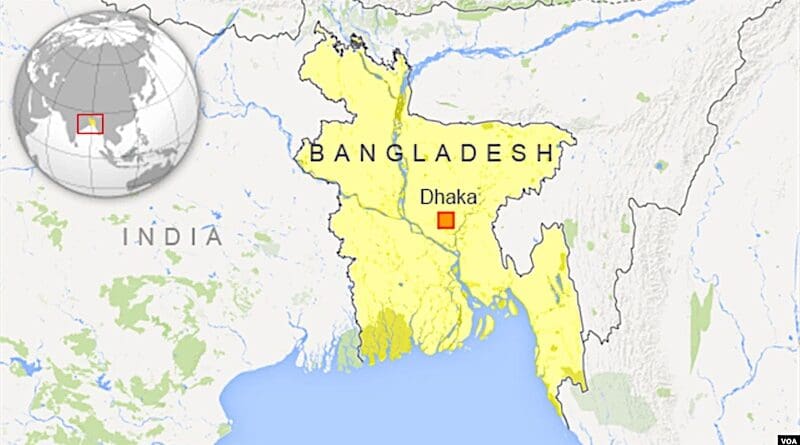
The thawing relations among China, Pakistan, and Bangladesh have recalibrated the power dynamics in South Asia. This scenario is very surprising for the foreign analysts, because during the period of the dismissed prime minister, Hasina Wajid, Bangladesh was a close ally of India, but now the manner of those relations is changing. This transformation is due to several aspects in Bangladesh, the most significant being the public mood that has urged for more independence and less of India’s control. It is also significant that any country has a certain degree of strategic temperament that is woven into its identity and history. Nevertheless, when a regime and foreign policy do not truly represent the people’s will, the outcome is similar to that in the case of Bangladesh’s Monsoon Revolution.
The evolving tripartite relations between these countries have their share of geopolitical underpinnings, China being the main player which had been eyeing to deal with the Global south positively, and at the present time, Bangladesh is very much a place where China can play the maritime game with its ports, and it would not be incorrect to say that this turn is a part of the very remarkable “String of Pearls” policy of China. Besides, under the BJP rule, India’s relations with Pakistan have soured even more due to the haughty attitude of India which is the main reason for Bangladesh to turn to Pakistan for collaboration in defence and other capacities while at the same time cutting India off.
Bangladesh’s foreign affairs advisor, Tauhid Hossain, who has been off-the-record about the situation, states that Bangladesh is now looking to pave its way with Pakistan in terms of strategy and is actively participating in defence and economic cooperation which is a clear deviation from the previous patterns of subcontinental alignments. The tripartite agreement could serve as a substitute for SAARC, the South Asian Association for Regional Cooperation. The reason for SAARC being in a state of impotency was the very fact that India was taking a passive stance which eventually dragged politics into the narrative and destroyed cooperation. On December 5, 2025, the Deputy Prime Minister and Foreign Minister of Pakistan said that the China-Pakistan-Bangladesh trilateral cooperation would not only open new avenues of collaboration but also bring about a new sub-block in South Asia.
The inquiry here is about the strategic necessities that drive the two parties to come closer, and it does so by asking to evaluate the contextual reasons for the existing situation. The Quadrilateral Security Dialogue, or Quad, is an alliance that constitutes the foundation of the U.S. Indo-Pacific policy. The Quad consists of three partner democracies Australia, India, and Japan—and the external resident power, the U.S. The Quad, however, is not an entity that forces its will through military power; its main goal was to prevent China’s rise. This is a tough one, but in a way it makes sense. The Quad countries together produce one-third of the world’s GDP. India’s “Necklace of Diamonds” strategy is a geopolitical countermeasure to China’s “Pearl of String” strategy. India aimed to cut off China by giving strategic access to its navy at places like Chabahar (Iran), Sabang (Indonesia), Duqm (Oman), and Changi (Singapore) and by improving relations with Japan, Vietnam, and Mongolia to make sure there was no Chinese influence in the Indian Ocean Region.
In the same way, China has had a great deal of access to one of the major ports of Bangladesh, Chattogram, as well as the other one, Mongla, which has made the country very comfortable for the Chinese to keep their interests there. This is part of China’s strategy to develop ties with the Global South through the Belt and Road Initiative (BRI) and to encircle India and challenge its dominance in the region through the sea lanes under the string of pearls strategy, which includes the major projects such as Gawadar in Pakistan, Hambantota in Sri Lanka, and Djibouti. Therefore, the geopolitical reasons are the main driving force behind the new alignment which all three countries would find, to a large extent, beneficial.
In June 2025, this diplomatic momentum was formalised at a trilateral meeting in Kunming where the deputy foreign ministers and foreign secretaries of Pakistan, China, and Bangladesh agreed to work together in trade, investment, maritime security, health, and education. These areas are identified as the main points of interdependence. Bangladesh has made its economy more favourable by combining its cooperation with China and dealings with Pakistan, thus being seen as equal in identity and legitimacy with them, due to their common legacy, and also filling the gap in the Security area.
Bangladesh’s politics remain to be unstable, while the coming of the 2024 monsoon uprising and the 2026 elections will only add to the burden of the state. The murder of the young leader, Sharif Osman Hadi, has stirred up the people’s anger against India and triggered demonstrations across the country. Therefore, Bangladesh might find itself in a situation where it is easily pressed and coerced by New Delhi and other major Western powers due to its strategic partnership with Islamabad, and the future is quite unpredictable. On top of that, the fact that Nepal and Bhutan are ready to form a strategic alliance with India only adds to the problem for Bangladesh.
The South Asian politics has reached a situation where the model calls for a real test to confirm the honesty and the partnership in the area. The first reunion of the 9th Joint Economic Commission after more than two decades is admirable. In the meeting, there was also a common agreement on different sectors, and the document on Halal trade was concluded by the officials of Pakistan and Bangladesh, which might be advantageous for both countries. However, the difficulties still exist, and every country is motivated by its foreign policy to get its interests, and nothing is stronger than the shifting geopolitical situations.

Like what you read?
Please consider supporting Eurasia Review. Thank you for your consideration!
