
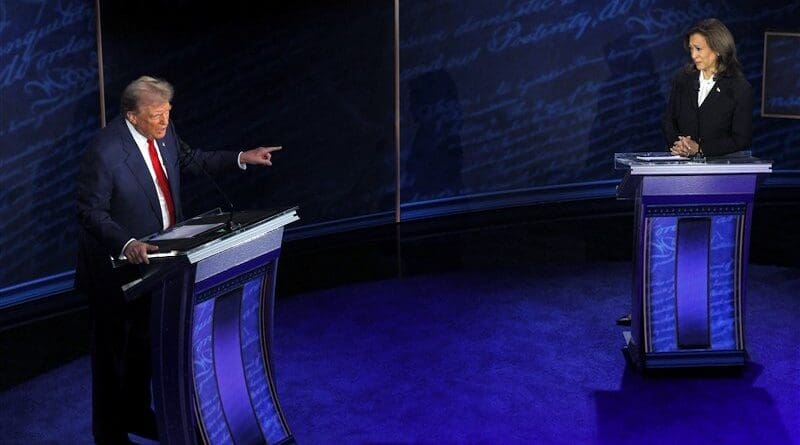
US Presidential Election: Key Policy Differences Between Kamala Harris And Donald Trump – OpEd
As the U.S. presidential election on November 5 approaches, the policy differences between Kamala Harris and Donald Trump are becoming increasingly evident. Kamala Harris takes a more moderate stance on immigration, while Trump aims to deport all undocumented immigrants. Harris pledges to continue social spending on NGOs, whereas Trump plans to cut social aid.
Regarding the Ukraine war, Trump seeks to engage in dialogue with Russia, while Harris adopts a more cautious approach. Both candidates have Jewish family ties; Harris’s husband is of Jewish descent, as is Trump’s son-in-law. Harris has expressed her intent to maintain U.S. support for Israel, while Trump is rumored to have unexpected moves planned for Iran.
Their approaches to U.S.-Turkey relations also differ. Harris appears likely to keep communications with Turkey limited, whereas Trump aims for a more active relationship. The candidates’ educational and career backgrounds reflect distinct differences: Harris is a well-educated lawyer and former state prosecutor with a strong commitment to ethics, while Trump is known as a profit-driven figure in the business world.
Kamala Harris is expected to continue Joe Biden’s economic and foreign policy trajectory, which could result in rising inflation and unemployment, along with ongoing arms support for Ukraine and the Middle East. Trump, in contrast, aims to cut spending to curb inflation and reduce unemployment.
In his campaign, Trump employs populist tactics, bringing celebrities to the stage and criticizing minorities and immigrants. Harris is expected to work with experienced advisors, while Trump tends toward loyalty-based, nepotistic appointments. Trump lacks the support of key Republican figures, while Harris has open backing from Democratic members, including former President Barack Obama, who speaks on her behalf.
Polls show the candidates are closely matched, with a narrow margin expected to determine the outcome. Votes from low-income voters and turnout rates are likely to be significant factors. If Trump loses, it’s anticipated he may contest the results, as he did previously, potentially leading to political tension.
The above assessment reflects the perspective of an average observer outside the U.S. who is not a voter. The choice made by American voters will impact not only the U.S. but everyone around the globe.

Like what you read?
Please consider supporting Eurasia Review. Thank you for your consideration!
