
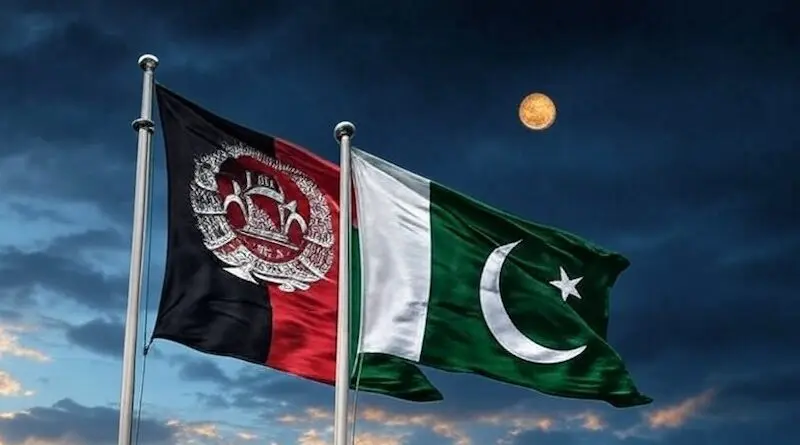
The Fragile Peace And Shifting Power Dynamics: Post-Istanbul Breakdown Of Pakistan–Afghanistan Dialogue – OpEd
The collapse of the Istanbul peace talks between Pakistan and the Taliban-led government of Afghanistan in October 2025 has reanimated long-standing questions about peace, sovereignty, and regional stability in South Asia. The failure of these negotiations, despite mediation by Turkey and Qatar, underscores the persistence of mistrust and strategic divergence between the two neighbors. To understand this impasse, it is necessary to situate it within key theoretical frameworks of International Relations, particularly Realism, the Security Dilemma, and Regional Security Complex Theory (RSCT).
In classical Realist theory, states act to ensure their survival and security within an anarchic international system. Pakistan’s foreign policy behavior, shaped by Defensive Realism, prioritizes safeguarding its territorial integrity and preventing cross-border terrorism rather than pursuing expansionist aims. The security dilemma, first described by John Herz (1950), explains how one state’s defensive measures can be misperceived as aggression by another, leading to cycles of suspicion and tension, an apt reflection of Pakistan–Afghanistan relations.
Barry Buzan’s RSCT (1991) further illustrates that geographically proximate states are bound by shared security interdependence; thus, instability in Afghanistan inevitably spills into Pakistan’s internal dynamics. Within this framework, Pakistan’s emphasis on border management, counterterrorism, and sovereignty is both rational and necessary.
The Istanbul deadlock reflects not Pakistan’s inflexibility, but the Taliban’s internal fragmentation and external manipulation, especially by India, aimed at destabilizing Pakistan after its failed Operation Sindoor 1.0. Pakistan remains committed to peace, but never at the cost of its sovereignty or national security.
Realism and the Regional Security Complex
From a realist perspective, the breakdown of the Pakistan–Afghanistan peace talks must be understood within the framework of national interest and security dilemma. Realism posits that states act primarily to ensure their survival in an anarchic international system. In this sense, Pakistan’s consistent emphasis on securing its western border and preventing cross-border terrorism reflects a classical realist pursuit of defensive security. Barry Buzan’s Regional Security Complex Theory (RSCT) also provides analytical clarity here: Afghanistan and Pakistan form an inseparable security complex, where instability in one inevitably spills over into the other.
For Pakistan, maintaining peace along the western frontier is not merely a diplomatic preference but a necessity rooted in its internal and regional security imperatives. The porous Pak-Afghan border has historically allowed transnational militant networks to exploit political vacuums within Afghanistan, undermining Pakistan’s domestic stability. Consequently, Islamabad’s policy remains centered on ensuring that Afghan soil is not used by hostile intelligence networks, particularly India’s Research and Analysis Wing (RAW), to orchestrate subversive activities inside Pakistan.
The Failure of the Istanbul Talks: Causes and Implications
The Istanbul peace talks failed primarily due to divergent threat perceptions and mutual mistrust. Pakistan entered the dialogue with the intention of institutionalizing mechanisms that could ensure long-term border security and prevent militant incursions. Conversely, the Taliban delegation, divided between the Kandahar and Kabul factions sought concessions on Pakistan’s alleged cooperation with U.S. counterterrorism operations, specifically drone activity near Afghan territory. The Afghan side’s insistence that Pakistan restrict U.S. drone flights through its airspace revealed a deeper anxiety about sovereignty and external influence, but it also reflected internal factionalism within the Taliban regime, where competing power centers are vying for legitimacy and control.
These internal divisions severely weakened the Taliban’s negotiating posture. The so-called “Kandahar Group,” traditionally closer to the ideological core of the movement, prioritizes autonomy from external influence, while the “Kabul Group,” more politically pragmatic, appears more open to engagement with regional actors. The inability of the Taliban delegation to present a unified position undermined any potential breakthrough, leaving Pakistan with limited options other than reinforcing its security posture along the border.
Pakistan’s Strategic Restraint and Sovereign Posture
Pakistan’s response following the failed talks has been measured yet firm. Defence Minister Khawaja Asif’s statement, asserting that while Pakistan seeks peace, it will not shy away from defending itself if provoked, reflects a balanced approach rooted in the principles of defensive realism. Islamabad’s stance is not predicated on aggression but deterrence: a clear message that peace cannot be achieved at the cost of national sovereignty or public security.
Pakistan’s internal counterterrorism experience, particularly under operations such as Zarb-e-Azb and Radd-ul-Fasaad, demonstrates a long-term commitment to eradicating terrorism regardless of its source. The state’s military and diplomatic strategy emphasizes regional cooperation over confrontation. However, Pakistan’s patience is not infinite, especially in the face of recurring attacks on its security forces and civilians emanating from Afghan soil. The right to self-defense, enshrined in Article 51 of the UN Charter, provides Islamabad with the legal and moral justification to protect its citizens if provoked.
India’s Destabilizing Role and the Shadow of Operation Sindoor 1.0
Amid this evolving geopolitical situation, India’s actions remain a critical destabilizing factor. Since the failure of its much-publicized “Operation Sindoor 1.0,” India has sought to deflect domestic embarrassment and international scrutiny by intensifying hybrid tactics against Pakistan. This includes leveraging its presence in Afghanistan through covert intelligence networks aimed at fomenting unrest in Pakistan’s border regions. Multiple reports from international watchdogs and leaked dossiers have highlighted how Indian intelligence operatives have used Afghan territory as a launchpad for funding, training, and arming anti-Pakistan militant proxies.
Such actions undermine not only Pakistan’s sovereignty but also Afghanistan’s own security. They exacerbate mistrust between Islamabad and Kabul and impede the prospects for regional peace. By attempting to internationalize its rivalry with Pakistan through Afghanistan, India risks destabilizing the very region it claims to support. The failure of the Istanbul talks thus cannot be viewed in isolation; it must be contextualized within India’s broader strategy of proxy engagement and narrative manipulation in South Asia.
Identity, Perception, and Miscommunication
From a constructivist lens, the breakdown of dialogue also reflects the deep-seated mistrust and misperception between Kabul and Islamabad, constructed through decades of mutual suspicion and historical grievances. Despite Pakistan’s consistent humanitarian support to Afghan refugees for over four decades, sections of the Taliban leadership continue to perceive Pakistan’s actions through a lens of historical dependency rather than partnership. This perceptional gap reinforces mistrust, even when Pakistan’s actions are grounded in legitimate security concerns.
Narrative politics play a crucial role in this dynamic. Regional actors, including India, have weaponized disinformation to portray Pakistan as an aggressor, thereby shaping international opinion against it. Such narrative manipulation complicates diplomacy and feeds into Afghanistan’s internal political fragmentation. Constructivist theory suggests that peace cannot emerge merely from agreements but from the reconstruction of mutual trust and identity, something that remains absent at this stage.
Regional Cooperation and Strategic Patience
Despite the setbacks, Pakistan continues to advocate for a cooperative regional security architecture. Islamabad’s diplomatic engagements with Qatar, Turkey, Saudi Arabia, and China signal a commitment to multilateral dialogue aimed at stabilizing Afghanistan. Pakistan recognizes that peace in Afghanistan is essential not only for regional stability but also for the success of transnational projects such as the China–Pakistan Economic Corridor (CPEC) and broader Belt and Road Initiative (BRI) connectivity in Central Asia.
For lasting peace, Afghanistan’s Taliban government must prioritize internal political coherence, sever ties with militant outfits targeting Pakistan, and take credible steps to prevent cross-border terrorism. In turn, the international community, particularly the United States and Gulf states, should support dialogue that respects Pakistan’s sovereignty and security concerns rather than coercing it into strategic compromises.
Conclusion
The failure of the Pakistan–Afghanistan peace talks in Istanbul underscores the fragility of South Asia’s regional order but does not signify a return to full-scale conflict. Pakistan’s strategic posture remains anchored in restraint, regional peace, and the defense of its sovereignty. The state’s actions are not driven by expansionism or hostility toward Afghan civilians but by a legitimate need to secure its people from cross-border threats and foreign interference.
The path forward lies in mutual recognition of sovereignty, the dismantling of proxy networks, and the reconstruction of trust through sustained diplomacy. If the Taliban leadership can transcend internal factionalism and engage Pakistan as a genuine partner rather than an adversary, a durable framework for peace remains achievable. Until then, Pakistan’s message remains clear: it seeks peace but peace must not come at the cost of its sovereignty, security, or national dignity.

Like what you read?
Please consider supporting Eurasia Review. Thank you for your consideration!
