
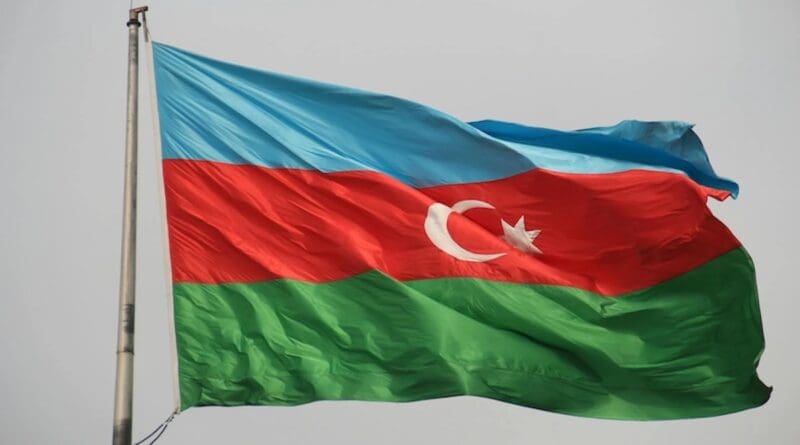
Azerbaijan’s Accomplishments In 2025 – OpEd
The year 2025 has been of particular significance for Azerbaijan in terms of maintaining internal political stability, deepening multifaceted partnerships in foreign policy, and achieving historic successes on the peace agenda. The political events that took place throughout the year clearly demonstrated the country’s growing influence at both regional and global levels.
Domestic Political Processes
The local elections held in Azerbaijan on January 29, 2025, marked an important step in strengthening local self-governance and the continuous development of democratic institutions. The elections were conducted in a stable socio-political environment and confirmed the continuity of reforms in public administration.
International Recognition in Humanitarian and Soft Power Diplomacy
On February 8, the Heydar Aliyev Foundation was awarded a prestigious international prize, highlighting Azerbaijan’s contributions to humanitarian diplomacy, intercultural dialogue, and social projects, which have been highly valued at the international level.
Expansion of Diplomatic Activity and Diversification of Energy Cooperation
On February 17, the resumption of the Azerbaijani embassy’s operations in Syria reflected the country’s increased diplomatic activity in the Middle East and its balanced, pragmatic stance in international affairs. This step laid the foundation for a new phase in Azerbaijan–Syria relations and created additional opportunities for political dialogue as well as economic and energy cooperation.
At the same time, agreements on the supply of Azerbaijani gas to Syria demonstrated the expansion of Azerbaijan’s energy diplomacy geographically. This process reinforced Azerbaijan’s position as a reliable energy partner in the Middle East and contributed to regional energy security. Gas transportation not only had economic significance but also supported Syria’s post-conflict reconstruction and the restoration of social and economic stability. Thus, energy cooperation served as a practical outcome of diplomatic relations and reaffirmed that Azerbaijan has turned its energy resources into tools for peace, stability, and cooperation.
The official visit of the Syrian President to Azerbaijan after many years was considered a significant political event in bilateral relations. The visit indicated the restoration of mutual trust and readiness for institutionalized development of cooperation. The negotiations conducted during the visit opened new prospects for deepening collaboration in political, energy, and humanitarian fields.
International Political Dialogue Platform
The commencement of the 15th Plenary Session of the Asian Parliamentary Assembly in Baku on February 19, the XII Global Baku Forum on March 13, and the international forum titled “Towards a New World Order” held at ADA University in April confirmed Azerbaijan’s status as a leading center for global political dialogue.
Islamic Solidarity and International Humanitarian Agenda
On May 26, the international conference on “Islamophobia: Exposing Bias and Eliminating Stigmas” held in Baku strengthened Azerbaijan’s position as a defender of justice, tolerance, and multicultural values in the Islamic world.
Strengthening Strategic Partnerships
In April, President Ilham Aliyev’s state visit to the People’s Republic of China and the signing of a Joint Statement on comprehensive strategic partnership marked a major success in Azerbaijan’s foreign policy towards Asia. At the same time, the Azerbaijan–Iran business forum contributed to deepening regional economic and political cooperation.
Reconstruction in Karabakh, Strategic Projects, and Strengthening Regional Cooperation
The opening of the Lachin International Airport on May 28 marked an important stage in the ongoing reconstruction efforts in the Karabakh region. The airport strengthens the region’s transport and logistics capabilities and contributes to the economic and social development of the liberated territories. Strategically, it enhances Azerbaijan’s role in regional transport corridors and enables international cooperation and humanitarian-logistical initiatives.
The participation of the President of the brotherly country, Recep Tayyip Erdoğan, demonstrated the high level of Azerbaijan–Turkey fraternal relations and strategic alliance. On July 4, the 17th Summit of the Economic Cooperation Organization held in Khankendi was a clear example of strengthening Azerbaijan’s sovereignty and reintegrating the liberated territories into the international political map.
The summit was attended by presidents and prime ministers from Turkey, Iran, Pakistan, Kazakhstan, Uzbekistan, Turkmenistan, Kyrgyzstan, Tajikistan, Afghanistan, and the Turkish Republic of Northern Cyprus, as well as representatives from the Organization of Islamic Cooperation, the Turkic Council, and the UN and its relevant bodies. This participation strengthened the international recognition of Azerbaijan’s liberated territories and confirmed the country’s role in regional cooperation and integration.
At the same time, the summit provided opportunities for developing political and economic dialogue among participants and contributed to promoting peace, stability, and sustainable development in the region.
Engagement in the Turkic World and International Organizations
In 2025, Azerbaijan further strengthened its positions within TURKPA, D-8, UNESCO, the UN, and other international organizations. Political coordination and solidarity with Turkic states reached a new level.
Historic Progress on the Peace Agenda
On August 8, the meeting in Washington between the President of Azerbaijan and the Prime Minister of Armenia, and the signing of a Joint Statement and the initialing of a peace agreement, confirmed the end of the long-standing regional conflict.
On September 1, the decision to close the OSCE Minsk Process and related structures was adopted, and on December 1, this process was effectively concluded, marking the legal and political finalization of this stage.
International Humanitarian Initiatives and Social Responsibility
The evacuation of Palestinian students from the Gaza Strip, bringing children affected by the war in Ukraine to Azerbaijan for rehabilitation, and the opening of the “Azerbaijan” neighborhood in Kahramanmaraş, Turkey, were clear examples of Azerbaijan’s contribution to international humanitarian solidarity. Especially in Kahramanmaraş, affected by the earthquake, this project demonstrated Azerbaijan’s consistent support to brotherly Turkey not only politically but also on humanitarian and moral grounds.
Azerbaijan–Turkey relations once again demonstrated high levels of mutual assistance and solidarity during crises and disasters, based on the principle of “one nation, two states.”
National Pride and State Symbols
The military parade on November 8 dedicated to the fifth anniversary of the Victory in the Patriotic War, the 80th anniversary of the Azerbaijan National Academy of Sciences on November 3, and the declaration of 2026 as the “Year of Urban Planning and Architecture” reflected the continuity of state ideology.
Regional Role in Energy and Food Security, Transit, and Trade
In 2025, Azerbaijan acted as an important transit and trade center for ensuring regional energy and food security. Its favorable geographic location and advanced transport-logistics infrastructure intensified the transit of strategic goods across the country.
The transportation of grain from Russia and Kazakhstan to Armenia through Azerbaijan in 2025 clearly showed Armenia’s significant dependence on Azerbaijan’s transit capabilities for food security. This process not only strengthened Azerbaijan’s key position in transport and logistics in the region but also highlighted the practical economic dimension of peace initiatives.
At the same time, the sale of Azerbaijani oil and petroleum products to Armenia during a stage when the peace agenda was progressing contributed to the formation of trust and mutual economic dependence between the parties. This interdependence in both food and energy sectors reinforced Azerbaijan’s role not only as a transit and producer country but also as an economic guarantor of peace and a major geoeconomic actor in the region.
Expanding Cooperation and Information Exchange within the Turkic Council
For the first time, Azerbaijan hosted a gathering of NGOs from Turkic Council member states and held a Media Forum, strengthening the country’s leadership within the organization. The events promoted cooperation, exchange of ideas, and sharing of media expertise among member states, contributing to regional integration and the development of joint projects. This also reinforced Azerbaijan’s role in promoting peace, solidarity, and sustainable development within the Turkic Council framework.
Overall, 2025 will be remembered in Azerbaijan for political stability, diplomatic activity, peace initiatives, and increased international influence. The achievements of the year confirmed Azerbaijan’s confident progression from regional leadership to global political actor status. Political Analyst Elmir Səftərov

Like what you read?
Please consider supporting Eurasia Review. Thank you for your consideration!
