
Afghan Taliban: Internal Rifts And The Illusion Of Legitimacy – OpEd
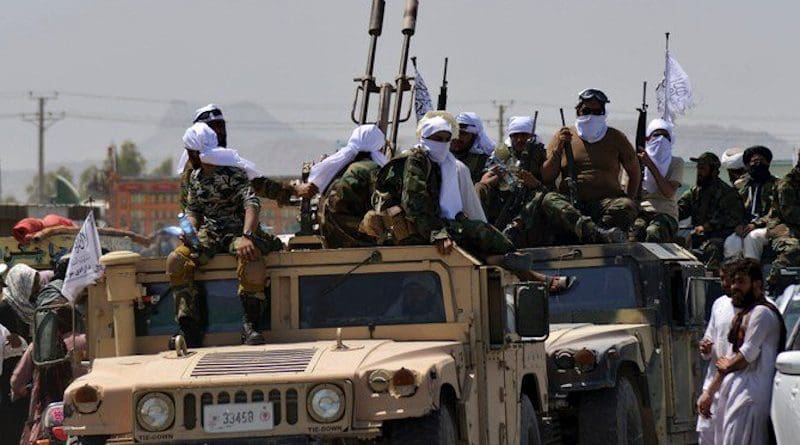
Since the Kabul takeover in August 2021, the Interim Afghan Government (I.A.G) mosaic is now in trouble. The Taliban government declined the support of the Western world and championed the narrative of an indigenous system based on the core Islamic principles. However, they failed to deliver because of poor management and a lack of national consensus and legitimization. The Islamic system has been mere rhetoric. It is the identity politics through which they seek recognition from the people.
Recently, an Afghan expert revealed some astonishing facts about the power contest among Taliban leaders. The fundamental division is often developed as a competition between Kabul and Kandahar leaders, but the reality is more complicated. The roots of the division are in identity-based factions, which are increased by the leadership of Mullah Haibatullah Akhundzada. Unlike Mullah Omar, they do not have the authority to unite the movement and, depending on their Noorzai tribe, have isolated other Taliban factions.
The current regime is the proponent of a strict version of Islam, which is called Salafism. Most of the Taliban government policies reflect such ideology, such as banning girls’ education, calling the image forbidden and promoting patriarchy in society. Preserving cultural values is an aspect of every civilization, but negating logic and rationality in this scientific age will further exacerbate the problems.
The Taliban have been in power for three years, but they have not been able to turn it into a functioning government. Instead of helping the economy grow and stabilize, they have taken over key industries like mining, which influential figures like Haji Bashir Noorzai control. The economic situation of regular Afghans has been made even worse by heavy taxes, which has led to their growing disillusionment. U.S. help intentionally kept the economy going, but it is now falling apart as talks about ending aid gain steam.
Inflation in Afghanistan has increased to more than 5.1% in 2024, which has further increased the economic crisis during the Taliban era. The group’s failure to rule effectively is apparent as they fail to meet basic needs such as food security and employment. In addition to economic mismanagement, the Taliban have rejected the U.S. and U.S. diplomatic measures and refused to meet the terms of international legal status. The ban on women’s education and work, including gender colour and their implementation of extreme social policies, has been globally condemned, which has made Afghanistan more isolated. The goodwill created by the Doha process has been wasted, which has brought the country into a serious human and economic state.
Taliban internal divisions are becoming more apparent as internal fault lines widen.
Some consider the recent arrest warrants for Taliban commanders issued by the International Criminal Court (ICC) as a chance to undermine Akhundzada’s rule.
This legal move has fueled discontent among commanders and the belief that the regime’s days are numbered, further undermining the Emir’s position.
To achieve the Taliban’s Decline, the International Community Must Sustain a Legal and Diplomatic President. The ICC warrant against Taliban Leaders for human rights abuses is a powerful tool to delegitimize their rule and Deepen Internal Rifts. The United States SIGAR restructured its $ 2.35 Billion Humanitarian Aid to Bypass the Regime, Ensuring Funds Reach Afghans Directly through NGOS and UN agencies. Cutting off financial lifelines, including illicit revenue from the opium trades –estimated at $ 1.8 billion annually – will cripple their grip on power. A strategic approach to exploit fictionalism, such as tensions between hardliners and Pragmatists, Could Further destabilize their Authority, Exposing their Governance FAILURES and Hastening their downfall.
The Taliban’s internal harmony is critical because of the alleged efforts of more than 20 factions. By maintaining sanctions, deducting $ 1.8 billion in annual opium revenue, and supporting opposition forces, U.S. TU’s divisions can increase the chaos, which ultimately led them to normalize their policies. The government’s failure to deal with Afghanistan’s 38% poverty rate and 14% inflation further weakens its legal status.
The question is not whether the Taliban will be broken or not but how soon their internal battle will lead to their elimination.

Like what you read?
Please consider supporting Eurasia Review. Thank you for your consideration!
