
Will The Indus Stay As A Bridge For Peace? – OpEd
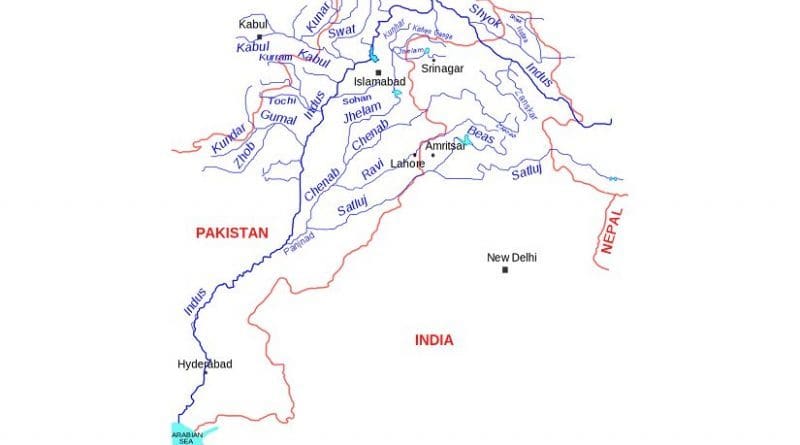
The Indus River system keeps showing a kind of paradox in South Asia. It runs through one of the world’s more conflict-prone areas, but still for more than six decades it has been managed through one of the sturdier international water pacts. The Indus Waters Treaty held on, because India and Pakistan realized that certain kinds of collaboration, were simply too vital to be traded off for political hostility.
That understanding is now being tested. India’s decision to hold the Treaty in abeyance has weakened a framework that provided predictability, transparency and legal structure in an otherwise unstable bilateral relationship. The move does not merely affect water allocation. It threatens a rare institutional bridge that continued to function through wars, border crises and diplomatic breakdowns.
The Treaty’s greatest value lies in its ability to convert potential conflict into procedure. It created the Permanent Indus Commission, required technical exchanges and established pathways for addressing questions, differences and disputes. These arrangements prevented every disagreement over a dam, canal or reservoir from becoming a political emergency.
By contrast, unilateral action removes the discipline of procedure. It replaces rules with uncertainty and institutional dialogue with strategic signalling. Once that happens, water management becomes securitized. Hydrological decisions are no longer viewed only through engineering or environmental considerations; they are interpreted as possible instruments of pressure.
This shift is especially dangerous, because Pakistan’s dependence on the Indus Basin is, sort of structural. The river system keeps irrigation going across very broad agricultural regions, helps sustain food production, feeds into hydropower generation and basically underpins millions of livelihoods. Pakistan’s economy can’t just shrug off prolonged uncertainty about river flows, reservoir operations or even simple information sharing
Agriculture is maybe the most exposed. Farmers and irrigation authorities need water that’s dependable, so they can figure out sowing windows, select crop arrangements and handle canal allocations. At the same time reservoir managers require trustworthy inputs to juggle water storage, flood control and electricity output. When cooperation gets weakened, choices are still made but with incomplete information, and then the risk rises both for economic loss and for humanitarian hardship.
The issue isn’t just about the physical quantity of water, it’s also the timing and quality of hydrological data. That timely information is, somehow, just as vital. When people have details on river flows, rainfall amounts, reservoir levels, and releases, downstream authorities can prepare for floods, handle drought conditions, and keep vulnerable communities protected. In a climate-stressed region, data-sharing ends up being a kind of risk reduction, even a practical one.
Climate change has made this sort of cooperation more urgent, like, immediately. The Indus Basin is being hit more and more by glacial melt, extreme rainfall, flash floods, long spells of heat and even shifting seasonal patterns. These dangers don’t pay attention to political boundaries. Neither India nor Pakistan can really manage them effectively by acting alone. Scientific coordination, shared forecasting and clear communication must happen, in other words, it’s essential.
The Treaty therefore functions as a form of regional security architecture. It lowers uncertainty, creates habits of communication and provides a controlled environment for disagreement. Such mechanisms are particularly valuable between states with a history of military confrontation. Their purpose is not to eliminate political conflict, but to prevent every political conflict from spilling into critical humanitarian domains.
India’s abeyance approach risks reversing this logic. It suggests that water cooperation may be made conditional on wider political relations. That principle is dangerous because it transforms essential resources into bargaining instruments. If water commitments can be suspended whenever tensions rise, then treaty stability becomes an illusion.
The legal implications are pretty serious all the same. International agreements basically get their credibility from the assumption that obligations stay binding even when following them becomes politically inconvenient, or awkward for officials in real time. When a country suspends things by itself, it sort of loosens that idea and then it nudges others toward what’s called selective adherence. And the damage really isnt limited to just one treaty or one specific region. It reaches confidence in international law itself, like as a practical mechanism for managing shared resources.
India also ends up with a strategic contradiction of its own. On one hand it aims for a bigger role in global governance, and it tries to show itself as a supporter of an international order. But in the end, responsible leadership depends on predictable conduct, especially in relation to neighbouring states. A rules-based system can’t actually work if powerful states keep the option to disregard agreements whenever circumstances get hard.
Pakistan’s response has to stay legally grounded, and also be strategically disciplined, without going off-script. It ought to keep insisting that the Treaty is still binding and that any dispute should be handled via the mechanisms it already set up. At the same time, Pakistan really needs to do a better job with domestic water governance: cut transmission losses, modernize irrigation systems, and enhance climate adaptation measures. International law yes, can help defend rights, but it will not magically make up for weak internal management.
The wider region also has a stake in keeping the Treaty intact. South Asia hosts multiple transboundary rivers and some of the world’s largest populations that are dependent on shared water systems. If Indus cooperation were to break down, that could shape how other states deal with river disputes, and it might end up nudging unilateralism, across the region, in ways that aren’t helpful.
The future of the Indus will therefore shape more than just India–Pakistan relations, it basically reaches beyond that too. It will test if South Asia can build institutions that are sturdy enough to outlast political crises. And a region under climate pressure, with population growth, and bigger water demand, really cannot afford to manage rivers via intimidation or sheer force.
The Indus can stay a bridge for peace, but only if both states quietly accept that cooperation is not some kindness, and treaty compliance is not something you can just skip. Getting back into institutional engagement, keeping information-sharing alive, and actually following legal procedures are key little steps, toward stability, not vague promises.
Water does not automatically trigger conflict. Conflict shows up when institutions break down, when transparency disappears, and when power ends up replacing law. The Indus Waters Treaty gives South Asia a workable option that already has proof behind it. The real question is whether the region can protect it before uncertainty turns into confrontation.

Like what you read?
Please consider supporting Eurasia Review. Thank you for your consideration!

YES Indus Can Stay As A Bridge For Peace :India has allowed Pakistan to continue enjoying an uninterrupted flow of waters from its rivers which is vital for its survival. It is in Pakistan’s best interest to foster good neighbourly relations. Maintaining peaceful ties with India would help ensure the continued and unhindered flow of these critical waters for the survival of their populace. “Kashmir Is Pakistan’s Jugular Vein” need to be change to “Indian Water is Pakistan’s Jugular Vein”. The Indian rivers that flow into Pakistan should carry a message that “Indian Rivers Water Can Stay As A Bridge For Peace as long as Pakistan behaves.