
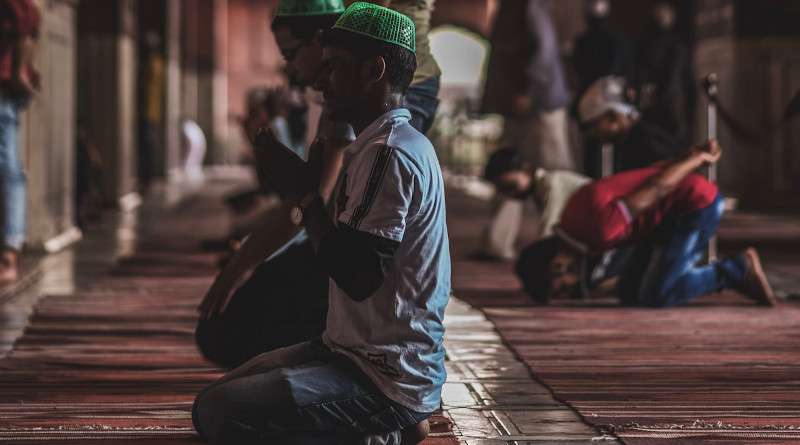
USCIRF Annual Report 2024: A Deep Dive Into Religious Freedom In India – OpEd
On May 1, 2024, the U.S. Commission on International Religious Freedom (USCIRF) released its much-anticipated annual report, shedding light on the deteriorating state of religious freedom in India. The report is a stark reminder of the challenges faced by religious minorities in the world’s largest democracy. With a detailed examination of the events and policies that have contributed to this decline, the report calls for significant international attention and intervention.
The USCIRF report highlights a disturbing trend of increasing discrimination and violence against various religious communities in India, including Muslims, Christians, Sikhs, Dalits, Jews, and Adivasis. The rise of nationalist policies under the current administration has fostered an environment where communal violence is not only rampant but often goes unchecked by the authorities. This has resulted in a climate of fear and insecurity among religious minorities.
In 2023 alone, non-governmental organizations reported 687 incidents of violence against Christians. This staggering number underscores the vulnerability of the Christian community in India, which has been subjected to physical assaults, church vandalism, and threats. The USCIRF report also documents the destruction of several mosques under police supervision, accompanied by vigilante attacks on Muslims purportedly to protect cows from slaughter. Such incidents highlight the role of state and non-state actors in perpetuating religious intolerance.
Legal Framework and Arbitrary Detentions
The report criticizes the enforcement of several laws that have been used to target religious minorities and their advocates. The Unlawful Activities (Prevention) Act (UAPA), the Foreign Contribution Regulation Act (FCRA), the Citizenship Amendment Act (CAA), and various anti-conversion and cow slaughter laws are cited as tools of oppression. These laws have led to arbitrary detentions, heightened surveillance, and the targeting of individuals who speak out against the government’s discriminatory policies.
One notable case is the suspension of the FCRA license of the Centre for Policy Research in February 2023. This NGO, known for its work on social issues, faced government crackdown for its critical stance on the administration’s policies. Similarly, journalists and human rights defenders in Kashmir have been detained and harassed, reflecting a broader pattern of repression in the region.
Communal Clashes and Displacement
The USCIRF report details several incidents of communal violence that have resulted in significant loss of life and property. In June 2023, more than 500 churches and two synagogues were destroyed in Manipur State, displacing over 70,000 people. This incident marks one of the most severe instances of religious violence in recent history, with entire communities uprooted and forced to flee for their safety.
In July 2023, communal violence erupted in Haryana following a Hindu procession. A Muslim tomb and mosque were torched, leading to the death of seven individuals. Such incidents underscore the deep-seated religious tensions in India and the failure of authorities to prevent or mitigate such violence.
International Implications and Controversies
The USCIRF report also touches on international controversies involving India. In September 2023, Canadian Prime Minister Justin Trudeau accused Indian authorities of involvement in the assassination of Sikh activist Hardeep Singh Nijjar in Canada. This allegation, coupled with a subsequent plot to kill Gurpatwant Singh Pannun in the United States, has strained India’s relations with these countries and raised serious concerns about the extraterritorial reach of its security apparatus.
The Kashmir Conundrum
The situation in Kashmir remains a focal point of the USCIRF report. In December 2023, the Supreme Court of India upheld the 2019 revocation of Article 370, which had granted special status and autonomy to the Muslim-majority state of Jammu and Kashmir. This decision has been met with widespread condemnation from human rights organizations, as it effectively nullifies the region’s autonomy and paves the way for increased central government control.
USCIRF Recommendations
In light of these findings, the USCIRF report makes several key recommendations. Foremost among these is the designation of India as a Country of Particular Concern (CPC) by the U.S. Congress. This designation would mark India as a nation where severe violations of religious freedom are systematic, ongoing, and egregious. Such a move would place significant diplomatic pressure on India to address these issues and could lead to the imposition of targeted sanctions.
The report also calls for increased support for civil society organizations working to promote religious freedom and human rights in India. These organizations play a crucial role in documenting abuses, advocating for victims, and holding authorities accountable. By bolstering their efforts, the international community can help create a more conducive environment for religious tolerance and coexistence.
Conclusion
The USCIRF Annual Report 2024 paints a grim picture of the state of religious freedom in India. The documented incidents of violence, discriminatory policies, and arbitrary detentions highlight the urgent need for action to protect the rights of religious minorities. As India continues to grapple with these challenges, it is imperative for the international community to stand in solidarity with those who are persecuted and to hold the Indian government accountable for its actions.
The report serves as a call to action for policymakers, human rights advocates, and concerned citizens around the world. By shining a light on these issues, the USCIRF hopes to foster a global dialogue on religious freedom and to inspire concrete steps toward ensuring that all individuals, regardless of their faith, can live without fear of discrimination or violence.

Like what you read?
Please consider supporting Eurasia Review. Thank you for your consideration!
