
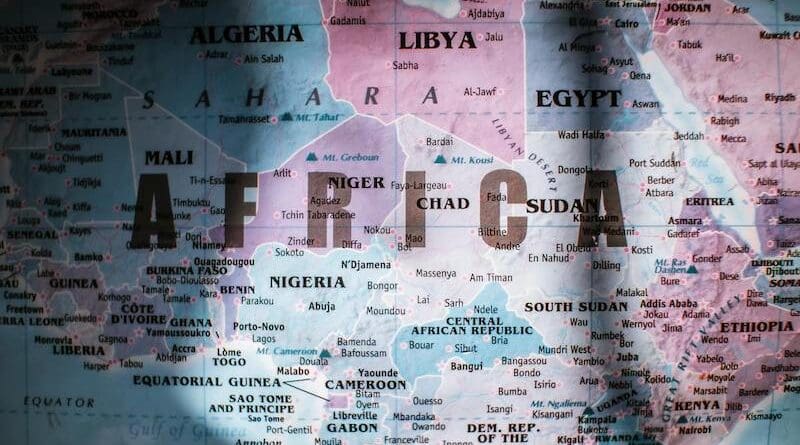
Africa Day Celebrated In A Big Way In Jakarta – OpEd
The Organization of African Unity (OAU) was established on May 25, 1963. Since then the African continent celebrates the Africa Day on every May 25. On May 31, all the Africans living in Indonesia celebrated the Africa Day in a big way at the Hotel Borobudur in Jakarta.
All the African ambassadors in Indonesia jointly organized a big reception on May 31 to celebrate this year’s Africa Day. Indonesia’s Minister of Youth and Sports Dito Ariotedjo was the chief guest at the reception. Several senior officials from Parliament and various departments, hundreds of Indonesian friends of Africa also were present at the grand reception.
In his opening address, the Dean of African Ambassadors and Moroccan Ambassador to Indonesia Ouadia Benabdellah said that Africa wants to strengthen its friendship and cooperation with Indonesia.
“Tonight, as representatives of African countries in this wonderful country, we extend our warmest congratulations to the President-elect Mr. Prabowo (Prabowo Subianto) and his running mate Mr. Gibran (Gibran Rakabuming Raka). Congratulations to the Nation and the citizens of Indonesia for the successful elections process that will bring a new President, a new Vice-President, and new members of Parliament. Best wishes for success in their mission and we hope that relations between Indonesia and Africa will develop even further,” Ambassador Benabdellah said in his speech.
Benabdellah appreciated Indonesia, which wants to organize the second Indonesia-Africa Forum in September 2024 in Bali. The forum will have a theme of “Bandung spirit for Africa agenda 2063”. He hoped that there will be a huge participation in the forum.
“Where 800 participants are expected to attend and we are confident that we can work together to effectively active tangible sustainable development goals,” Benabdellah said.
Minister Dito congratulated all the Africans for celebrating Africa Day in Jakarta. According to him, the relations between Indonesia and Africa have been growing since the Asia-Africa Conference in Bandung in 1955.
“For Indonesia, Asia and Africa are brothers, who have fought together for independence. By hosting the 1955 Asia-Africa Conference, Indonesia wanted to fight against colonialism and promote economic relations and culture between the two continents,” Dito said.
It is true that the relations between Indonesia and Africa are growing very fast. Last year, according to Central Statistics Agency (BPS), the bilateral trade reached US$16.71 billion. Indonesia exported $6.85 billion worth of goods to Africa while Indonesia imported $9.85 billion from there. Here is a list of top 10 Indonesia’s African trading partners.
Indonesian leaders have been trying to strengthen the relations with African countries.
Indonesian President Joko “Jokowi” Widodo visited Kenya, Tanzania, Mozambique and South Africa in August 2023. Indonesian Foreign Minister Retno LP Marsudi paid a visit to Tunisia, Algeria and Morocco in December 2023.
More and more African countries are showing interest on Indonesia and opening their embassies. Recently, Kenya, Tanzania, Angola, Ethiopia and Rwanda have opened their embassies. At present 28 African countries have their embassies in Jakarta.
“We look forward to welcoming more African embassies in Jakarta in the future,” Benabdellah said.
The Africa Day, which was formerly known as African Freedom Day and African Liberation Day, is the annual commemoration of the founding of the OAU on May 25, 1963. Later, the OAU was transformed into African Union (AU) on July 9, 2002.
Each year, the AU adopts a theme to highlight a particular problem the Africa faces and work together towards a solution. The theme for the year 2024 is “Education Fit for the 21st Century: Building resilient education systems for increased access to inclusive, lifelong, quality and relevant learning in Africa”. The education theme underscores the importance of education for Africa. Education is key to catalyse growth and socioeconomic transformation. The theme also aligns well with the aspirations of African Agenda 2063.
According to the AU, the Agenda 2063 is the blueprint and master plan for transforming Africa into the global powerhouse of the future. The agenda is the strategic framework for delivering on Africa’s goal for inclusive and sustainable development and is a concrete manifestation of the pan-African drive for unity, self-determination, freedom, progress and collective prosperity pursued under Pan-Africanism and African Renaissance.
“Education is not just a foundational element for individual success but a foundation for the sustainable development and prosperity of our entire continent,” the AU said on its website.
More and more African children are going to schools and the school dropouts have been decreasing rapidly.
“In the last 60 years, Africa has advanced significantly in education, with more kids now completing their schooling. The region’s primary school completion rate increased from 52 per cent to 69 percent between 2000 and 2022. The percentage of students dropping out of high school also decreased, with 50 percent of students finishing lower secondary education, up from 35 percent and upper secondary education, which rose by 23 percent,” Samir Bhattacharya, a research scholar at the Observer Research Foundation, wrote recently in an article on the orfonline.org website.
“With the world’s fastest-growing child population, the demand for education in Africa is set to rise. By 2060, more than 750 million children are anticipated to attain school age. The existing system is hardly adequate even for the present. Governments face severe financial strain, which affects the demand for early childhood development interventions, service delivery, and ongoing funding for universal access to high-quality education, particularly for girls. It would be challenging for African leaders to develop good education infrastructure for this large number of students”.
Africa is the content with lot of young people. The median age of Africa is 18.8 years. It has 1.49 billion people and a gross domestic product (GDP) of $2.86 trillion.
The AU has presently 55 countries as members. In fact, it has only 54 member states. One member state Sahrawi Arab Democratic Republic (SADR) is not a country, which do not have land and people. It is a rebel movement and a government in exile. Still it is a AU member.
This year, the Africa Day celebration in Indonesia was full of arts, music and cuisine. Most of the African embassies offered their delicious cuisines. Overall, it was an event of unity, appreciation, cultural exchange and fostering friendship.

Like what you read?
Please consider supporting Eurasia Review. Thank you for your consideration!
