
Europe’s Trigger Gamble: How Reviving The Snapback Mechanism Endangers The Nuclear Order – OpEd
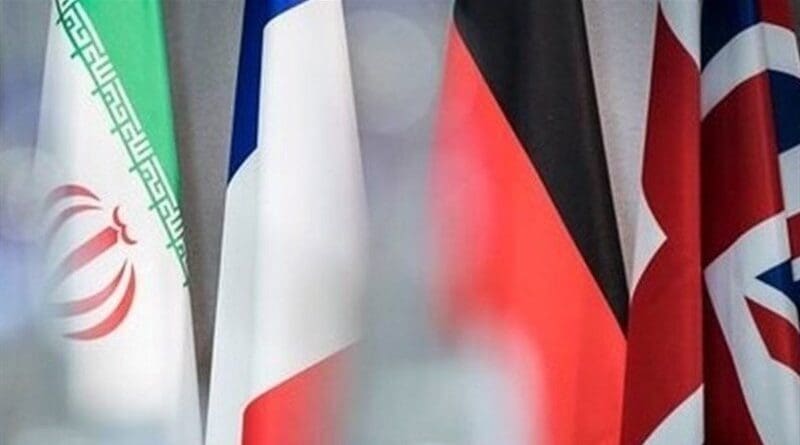
As the UN arms embargo on Iran nears its expiration in 2025, European powers, particularly France, Germany, and the United Kingdom (E3), are once again considering the activation of the “snapback” mechanism, a provision that could reinstate international sanctions on Iran under UN Security Council Resolution 2231. While this move may be framed as an effort to preserve Europe’s credibility in the face of Iran’s continued breaches of the nuclear deal (JCPOA), it is, in reality, a dangerous gamble. Its consequences are not confined to Iran alone; rather, it threatens to undermine the global nuclear order, Europe’s position in the Persian Gulf, and the future of diplomacy in the region.
According to a June 2024 report by the International Atomic Energy Agency (IAEA), Iran has increased its uranium enrichment levels. In response, the European powers have officially accused Tehran of violating its commitments and are now weighing the option of restoring sanctions through the snapback mechanism, a process that, once triggered, would automatically reimpose all pre-JCPOA UN sanctions.
However, this course of action could not only lead to the complete collapse of what remains of the nuclear deal, but also send catastrophic signals to the global non-proliferation regime. At a time when the world is grappling with simultaneous crises in Ukraine, Gaza, Taiwan, and Sudan, Europe’s move toward confrontation with Iran would open yet another dangerous front.
More critically, triggering the snapback would leave no room for diplomatic de-escalation. Iran has repeatedly stated that it would withdraw from the Nuclear Non-Proliferation Treaty (NPT) if UN sanctions were reimposed—a threat that could spark a nuclear arms race in the Middle East. Reinstating UN sanctions would also freeze Europe’s economic, trade, and energy ties with Iran for years to come, at a time when global competitors like Russia and China are swiftly stepping in to fill the void.
Europe must come to terms with a fundamental reality: neither the United States nor Israel is pursuing a diplomatic path. The Trump administration has little appetite for reviving the deal, and Israel’s far-right government seeks perpetual conflict rather than compromise. If Europe chooses to follow Washington and Tel Aviv instead of focusing on crisis management, it will effectively shut the window for any constructive dialogue.
Moreover, while activating the snapback may appear to be a symbolic move to preserve European prestige, it offers no effective leverage to contain Iran’s nuclear program. On the contrary, it could further entrench Russia and China’s strategic presence in the Persian Gulf. With dialogue between Europe and Iran cut off entirely, Tehran could fully align itself with the Eastern bloc and become a geopolitical Trojan horse for Moscow and Beijing—precisely when the Persian Gulf remains crucial to Europe’s energy security.
Additionally, isolating Iran completely could prompt Tehran to provide overt military support to Russia in the Ukraine war. Given Iran’s capabilities in drones, missiles, and electronic warfare—and in extreme scenarios, even ground forces—such support could shift the balance of power and lead to Ukraine’s collapse, a devastating outcome for Eastern European security. A Russian victory could trigger a geopolitical domino effect that threatens the entire global order—a scenario profoundly undesirable for the West, both rationally and from a Realpolitik perspective.
Domestically, the reimposition of severe sanctions would radicalize Iran’s political landscape. With no diplomatic horizon for peacefully resolving disputes, the Iranian response is likely to pivot toward full confrontation, potentially accelerating its pursuit of tactical nuclear weapons. Should Europe proceed with the snapback, this political humiliation would eliminate moderate, pro-Western factions from Iran’s internal scene. Such developments would not only extinguish hopes for reform within Iran but would also permanently close a golden window for dialogue and transformation in Iran–West relations.
Ultimately, Europe must ask itself: is the purpose of foreign policy to uphold prestige or to prevent war? In other words, the snapback mechanism is a tool of threat—not a viable solution. Complex and patient diplomacy, however difficult, remains the only way to prevent greater crises. Rather than following a path of “peace through force,” Europe could pursue a balanced, sustainable, long-term peace—one that draws Iran further away from Russia, opens regional footholds for Europe in the Middle East, and serves as a strategic geopolitical asset. Such a peace would secure Europe’s energy future in its enduring rivalry with Russia and transform a lose-lose scenario into a genuine win-win.

Like what you read?
Please consider supporting Eurasia Review. Thank you for your consideration!
