
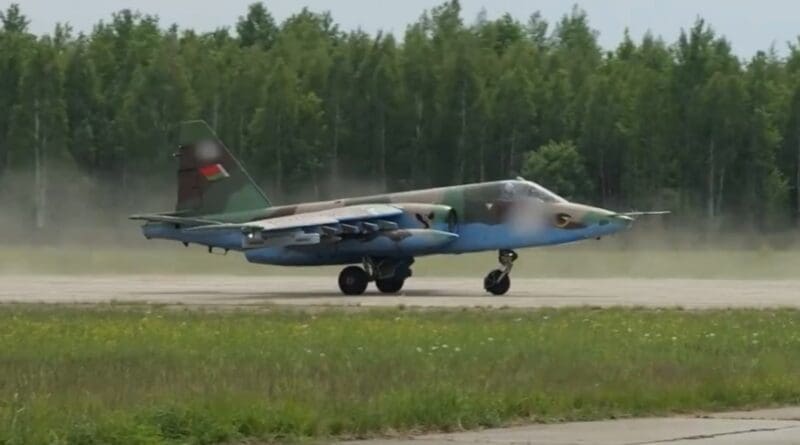
Lida Shuffle: Su-25 ‘Nuclear’ Exercises In Belarus – Analysis
By Michael Duitsman and Sam Lair
Key Takeaways:
- In late May 2026, Russia and Belarus conducted joint exercises that included Belarusian Su-25 aircraft at the reserve airbase in Babruysk rather than their usual base at Lida, with evidence of decoys deployed in aircraft shelters to enhance ground survivability.
- Analysis of imagery indicates the Su-25 loadouts in the 2026 exercise did not include nuclear training munitions (unlike claims surrounding the 2024 drills), featuring instead smaller non-nuclear objects and electronic-warfare pods from the Belarusian “Talisman” series.
- The overall focus of the Belarusian Su-25 component appears to be practicing dispersal, deception, and airborne self-protection measures to improve the survivability of the aging dual-capable aircraft rather than demonstrating actual nuclear delivery capabilities.
(FPRI) — At the end of May, Russia and Belarus conducted a set of what they claimed were nuclear exercises. Some nine or so systems were tested, including the Su-25 attack aircraft, Tu-95 bomber, the Yars and Kinzhal ballistic missiles, the Tsirkon anti-ship missile, the Borei-A and Delta IV ballistic missile submarines (SSBNs), and the Iskander ballistic and cruise missiles. The exercise involving Belarus’ Su-25 Frogfoot nuclear-capable aircraft deserves more interrogation. A closer look at the Su-25s suggests the only thing “nuclear” about the exercise was that the aircraft were dual-capable. Nevertheless, the exercise reveals interesting details about Belarusian Su-25 operations and some measures they are taking to try and enhance the survivability of the system while demonstrating operational readiness. This is in line with what Decker Eveleth and Gabriela Rosa-Hernandez recently observed about the recent set of exercises: that one of their goals is demonstrating that Belarusian and Russian nuclear forces are prepared and able to escape and defend against adversary strikes.
In 2022 President Vladimir Putin announced that Belarusian aircraft would be configured for nuclear use and that Russia would train Belarusian pilots on the modified aircraft in Russia. In 2024, Russia and Belarus conducted joint nuclear exercises which involved Belarus’ new and improved Frogfoots. Those drills were likely held at the 116th Guards Aviation Radomskaya Red Banner Base at Lida where Belarus bases their Su-25 force. Several images and videos were released that showed the Su-25s and some practice or trainer nuclear bombs.
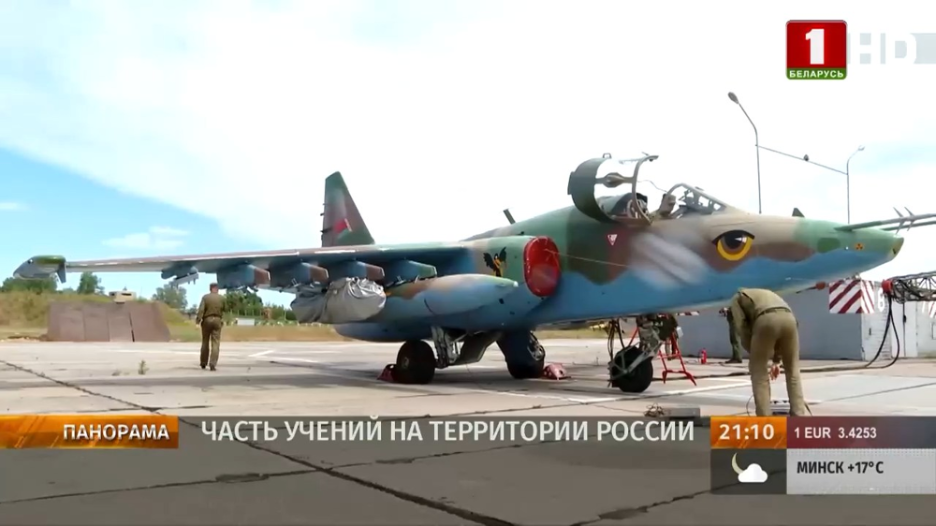
There are two major differences between the exercise held recently and the one in the summer of 2024: the location and the loadout of the Su-25.
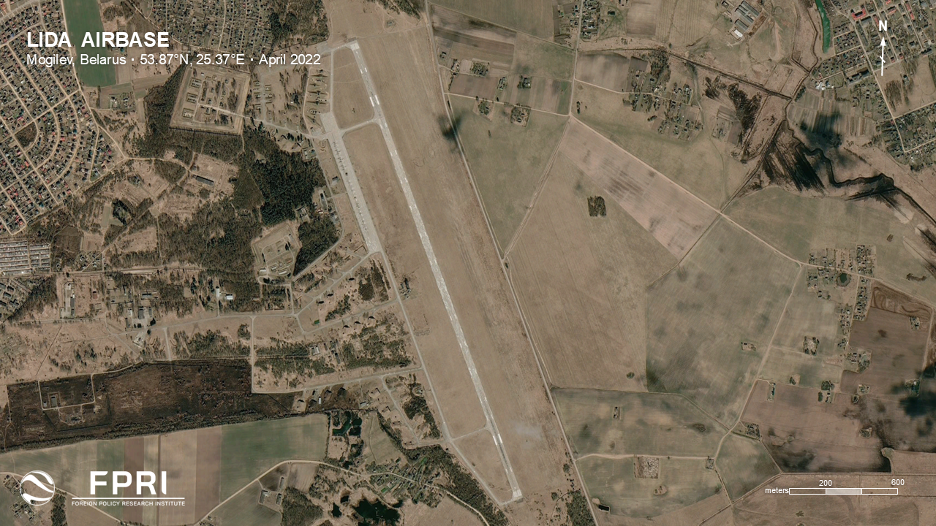
Starting with where the exercise took place, it is quite clear from the released footage that it was not at Lida.
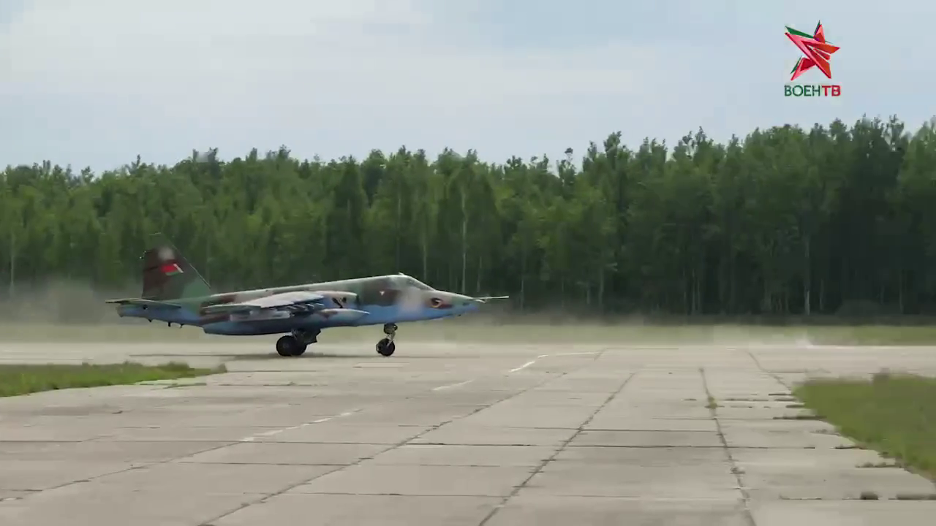
The trees close to the runway in the image are inconsistent with Lida. The footage from the most recent exercise has a taxiway in the foreground with the runway and aircraft in the middle ground silhouetted by trees in the background. Given the configuration of taxiways at Lida, the camera would have to be facing east, which has large open fields rather than trees.
Similarly, none of the other three active Belarusian airbases matched the environment or the particular taxiway configuration. In the exercise video, the taxiway has a dashed line running down the middle and a curved line to join the centerline of the runway. On either side of the dashed line of the taxiway, there are four segments of concrete clearly visible. Additionally, the right side of the taxiway ends more abruptly than the left side, as it creates a curve for aircraft to turn and take off.
Since none of the active airbases matched the taxiway or the environment, we surveyed Belarus’ reserve airbases. This map neatly shows where those are, with the active bases in red and the reserve ones in yellow.
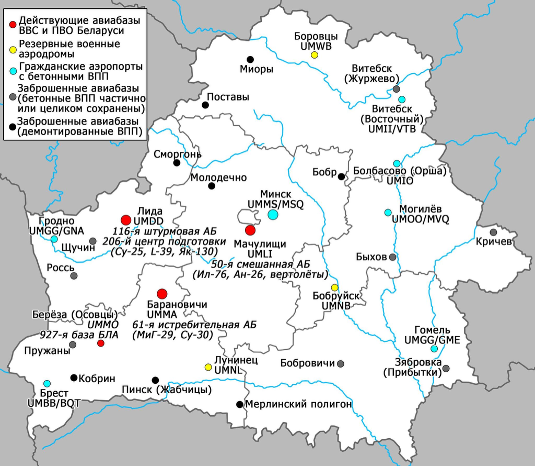
We ultimately geolocated the exercise to the reserve airbase at Babruysk. The taxiway at the western end of the runway there matched the signature, with its dashed line dividing an 8 block wide concrete path, its abrupt turn on the right-hand side, and curving line all lining up with satellite images.
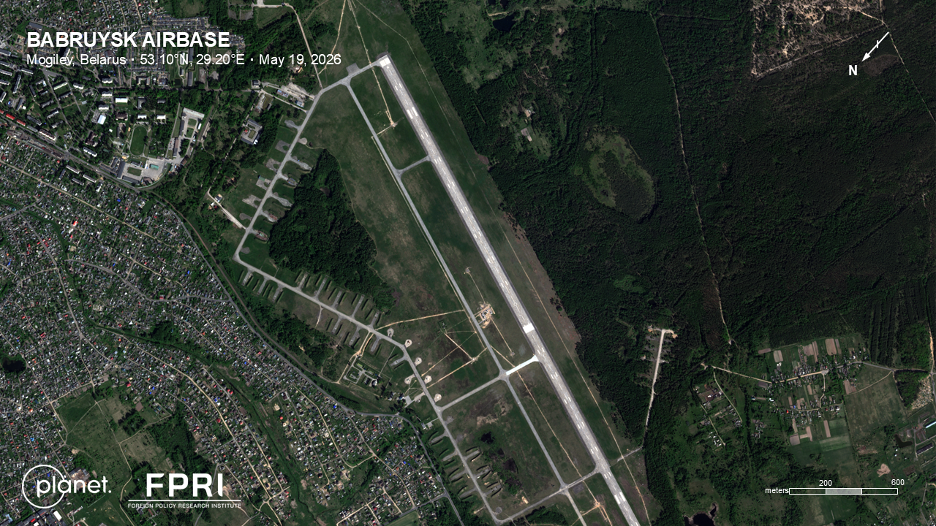
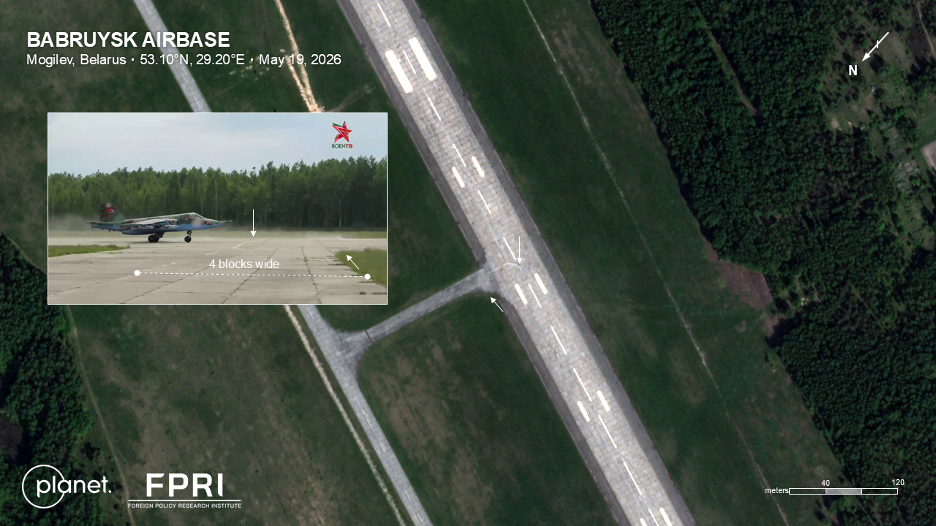
Beyond merely matching the features seen in the video, satellite imagery near the assumed date of the exercise also showed three Su-25s at Babruysk. In addition to the familiar silhouette, the measured length and wingspan of the aircraft (15.5 and 14.4 meters, respectively) match those of a Frogfoot.
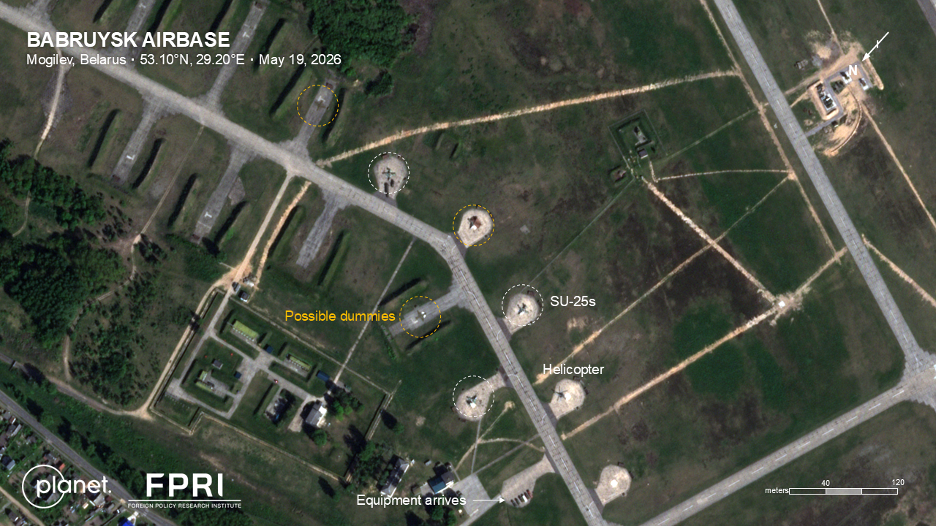
The aircraft arrive at Babruysk sometime between May 16 and May 19, and depart between May 21 and 23, placing them at the reserve base during the likely exercise window.
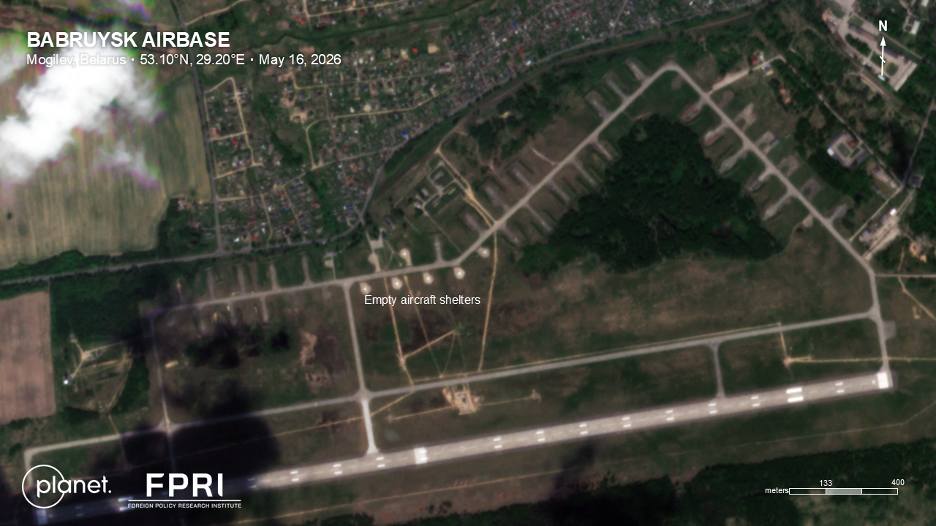
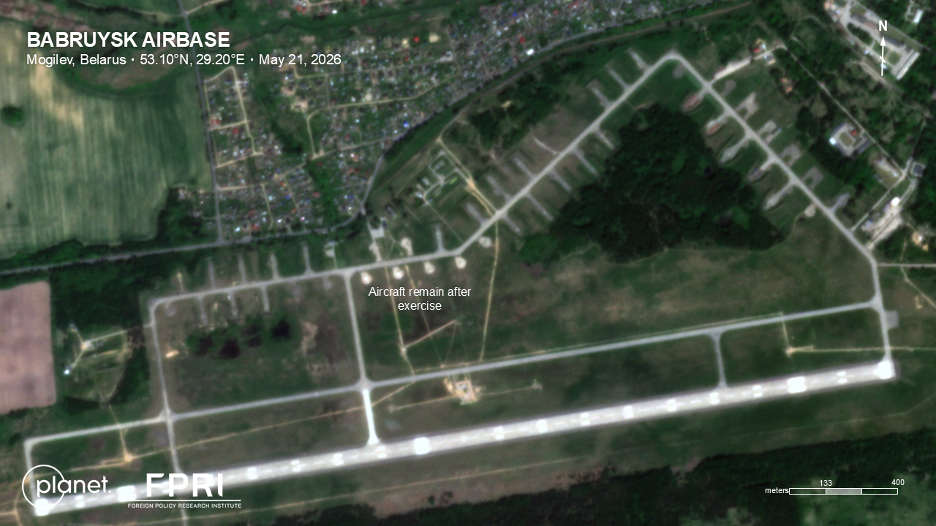
There are two other interesting details in the imagery. First, additional equipment arrives at the base to support the exercises, including a helicopter and a number of vehicles. This indicates Babruysk may not have enough organic resources to host a Su-25 unit, and it would need additional materiel to support operations during a conflict.
Second, there are three other objects in the bermed aircraft shelters that we assess to be decoys. The objects are different colors than the aircraft, two of them do not cast shadows and appear flush with the ground, and their shapes are not as firm, their lines not as clean, as the Su-25s. Moreover, the objects arrive and depart on the same timeline as the aircraft, suggesting they are related to the Su-25 deployment. The similar shape in particular leads us to believe they are decoys, designed to confuse munitions or intelligence, surveillance, and reconnaissance assets using electro-optical sensors. One of the possible decoys might be in the process of being inflated, as it casts a shadow, but it is unclear.
The presence of the Su-25s at a reserve airbase and the decoys suggest the Belarusians are taking steps to enhance the survivability of their tactical nuclear aircraft. Maintaining and practicing the capability to disperse to secondary airfields during a conflict will make it more difficult for an enemy to detect the Frogfoots, while the decoys will make it harder to destroy the aircraft during a strike if they are detected. Whether these measures will meaningfully increase the survivability of the roughly four decade-old aircraft or make it more difficult to track them down in such a small country as Belarus is questionable. Yet the imagery does indicate Belarus is taking steps to try and make this a more robust capability.
The loadout of the aircraft suggests the exercise was not nuclear in character, despite being portrayed as such by the Belarusian government. Compared with the images from 2024, there are some key differences. In 2024, there was nothing on the rails near the wingtips for air-to-air missiles (AAMs), and there were two practice bombs wrapped in covers mounted next to the drop tanks.
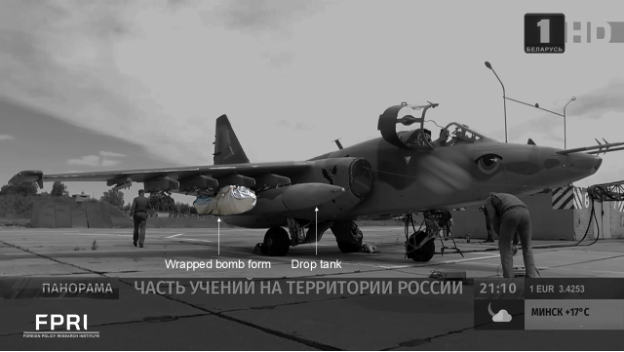
Some theories floated about the practice bombs are that they could be an IAB-500 simulator or the training version of a nuclear gravity bomb, although (as will be discussed later) they may be something completely unrelated. It is hard to say given the wrapping around the bombs. There are two explanations for why the trainer bombs were wrapped. One is to obscure them from the camera in order to not reveal any more details of Russian nuclear sharing. The second is that some Russian tactical warheads at least through the mid-to-late 1970s needed thermal protection to stay at their designed operating temperature. For ground-launched missiles, this included the R-14 (SS-5 Skean) and R-17 (SS-1 Scud) warheads which had thermal blankets that were removed shortly before launch, and the OTR-21 Tochka (SS-21 Scarab) and OTR-23 Oka (SS-25 Spider) launchers and transloaders which had clamshells that closed over the warhead (separate from the outer missile compartment doors). Externally carried air-delivered nuclear weapons used special pylons until at least the RN-40 of the early 1980s. One feature of these pylons was additional electrical connectors to provide heating to the warhead. The picture below, for example, shows the BD3-66-23N pylon used to mount nuclear weapons on the MiG-23. It has a much larger electrical connector than a normal gravity bomb.
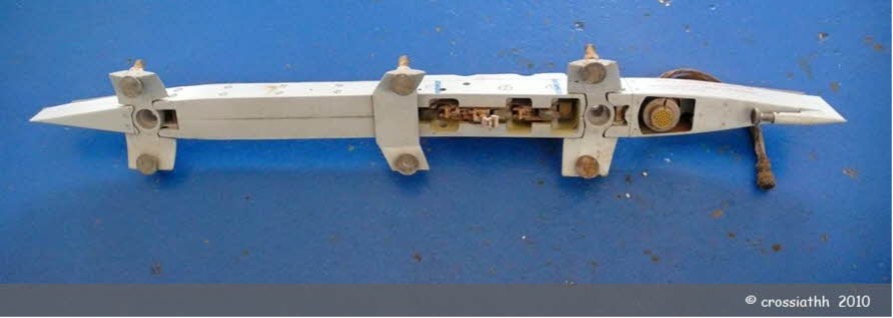
Image of the additional connectors on the pylon (Source)
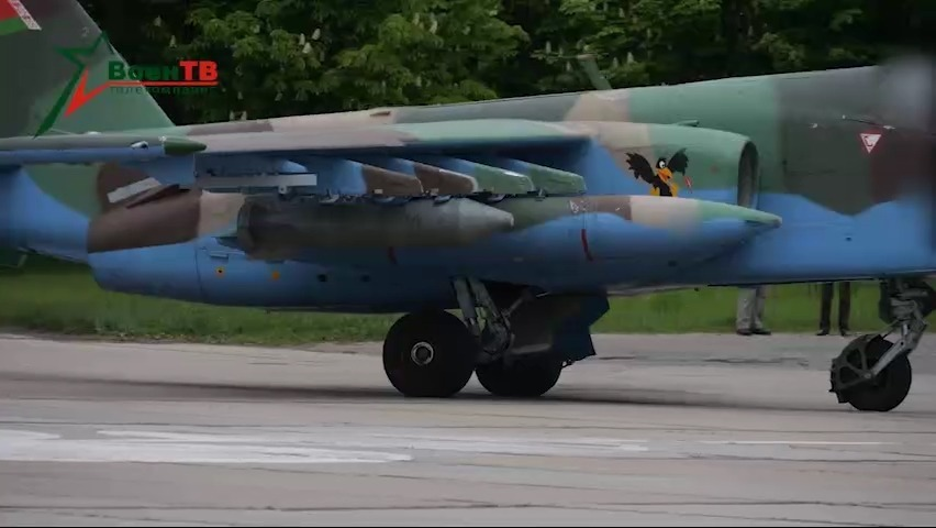
Covering aside, the size and shape of the practice bombs seen in 2024 stands in stark contrast to what is seen in 2026. The Su-25s in the recent exercise appear to be carrying a very small shape on the hardpoints next to the drop tanks, but they are nowhere near the length or width of those seen in 2024, or of known Russian non-strategic nuclear weapons (NSNW).
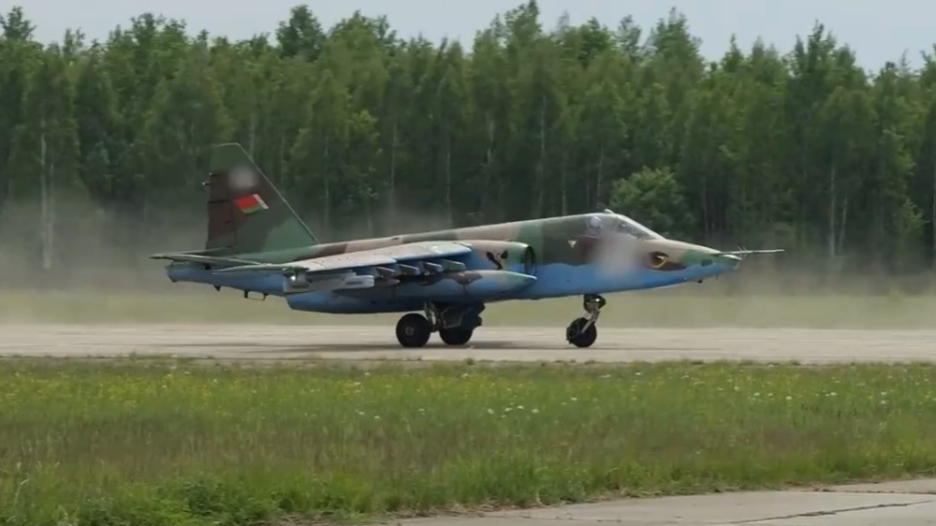
It’s unclear what these smaller objects are, but we are confident they are not training forms for nuclear weapons. Much like the rest of Belarusian involvement in these exercises, the Su-25 element is nuclear in name only.
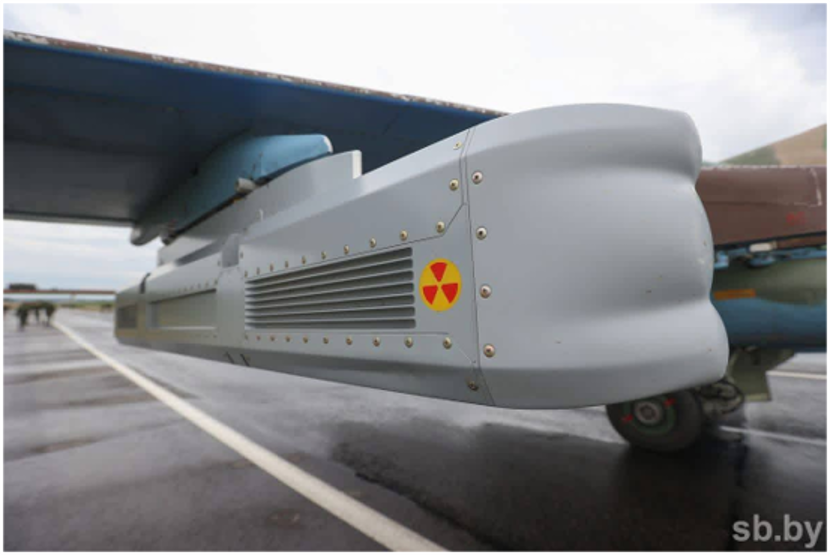
Of course, there are questions about whether even the 2024 exercises involved actual NSNW training devices. This image, for example, shows the supposed training device having a blunt nose and a circular element connecting the four fins:
These are not features of any known Russian NSNW (although we admittedly have never seen any of Russia’s more recent nuclear gravity bombs). They are, however, consistent with several conventional bombs, including the RBK-series cluster bombs and the AgitAB-500-300 propaganda leaflet bomb. It is possible that, like the 2026 exercise, either the Russians refused to let Belarus take photos and videos of the nuclear weapon training shapes, or there were no such items involved in the 2024 exercise.
There is something else interesting about the loadout in the 2026 exercise. Instead of having an empty AAM rail like the 2024 exercise, the Su-25 is carrying what appears to be an electronic warfare pod. More specifically, it seems to be one of the “Talisman” series of pods for defense against AAMs made by the Belarusian firm Defense Initiatives LLC (Абарочныя ініцыятывы). While we weren’t able to find a listing for this particular model, other versions include various AAM countermeasures including jammers, efforts to create false signatures, etc.
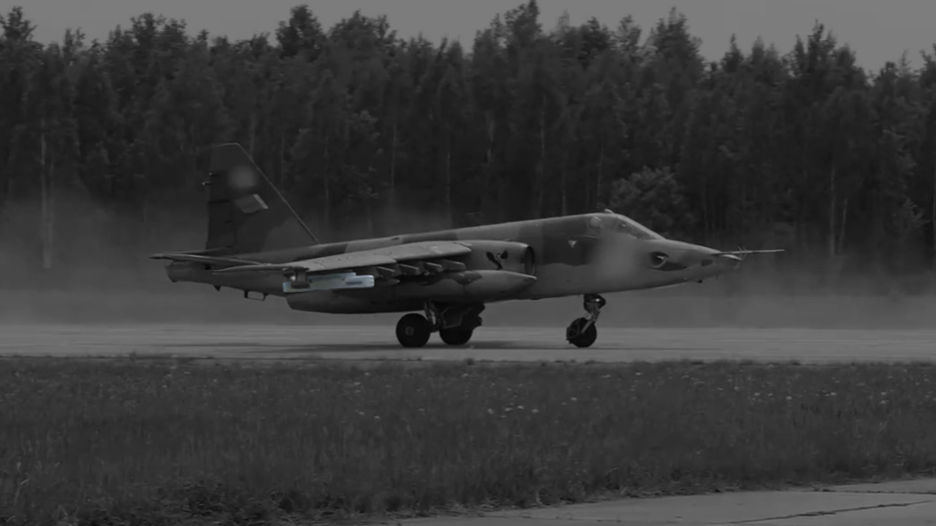
The Talisman pods are yet another measure to try and increase the survivability of the Su-25, this time in the air rather than on the ground. Despite their alleged nuclear focus, the real theme emerging from these exercises for Belarus’ air leg is survivability. While the Belarusians are right to be concerned about whether the Frogfoot is a credible nuclear delivery system in a modern air defense environment, we’re not sure these steps will be sufficient to redress those vulnerabilities.
About the authors:
- Michael Duitsman is a Fellow at the Foreign Policy Research Institute (FPRI) and an expert on open source techniques and weapons technology.
- Sam Lair is a Fellow at the Foreign Policy Research Institute (FPRI) where he manages and conducts investigations into nuclear and missile programs using satellite imagery, state and social media, and archival sources.
Source: This article was published by FPRI

Like what you read?
Please consider supporting Eurasia Review. Thank you for your consideration!
