
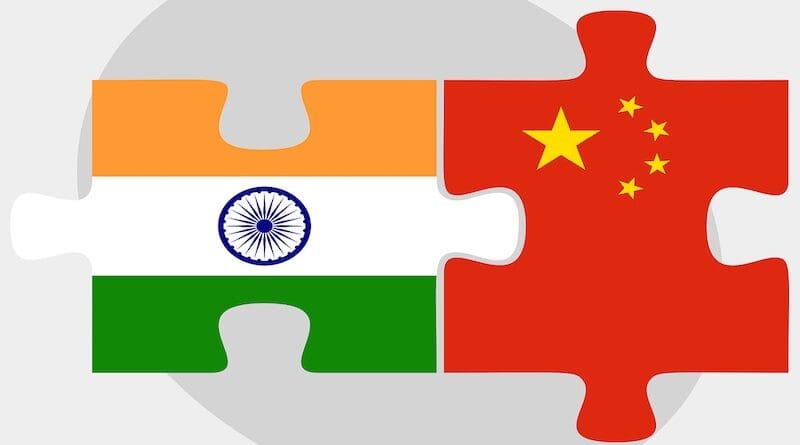
Indo-China Ties Tested Amid Detention Of Chinese Nationals – OpEd
Despite recent diplomatic efforts aimed at improving ties, India-China relations remain fragile, as demonstrated by the detention of Chinese nationals in India. While both countries have engaged in high-level dialogues, including Prime Minister Modi’s visit to the SCO summit and the revival of the Special Representatives’ Meeting on the boundary question, incidents on the ground reveal a stark contrast between rhetoric and reality. The security-related detention of Chinese nationals reveals the continuing distrust and suspicion between the two countries; hence the term reconciliation is doubted to last long. The recent happenings demonstrate that the public diplomatic claims are still prone to be overrated in comparison to the actual bilateral actions and thus the relationship is still threatened in terms of its already fragile progress.
On 24 November 2025, reports from Indian media highlighted that a Chinese national Liu Qunjing was arrested after illegally entering India from Nepal. According to officials, Liu was shooting videos of critical border areas and had money in different currencies from Pakistan, China, and Nepal, and hence, they viewed it as a serious security issue. This incident outrightly goes against the recent claim of the Indian Army Chief that the relations between the two countries had “improved.” Consequently, such incidences display a significant divergence between the diplomatic rhetoric and the reality, thereby calling into question New Delhi’s sincerity in characterizing the relationship as stable while still conducting aggressive surveillance and enforcement measures against Chinese nationals.
Therefore, the constant targeting of foreign nationals continues to be a major source of tension between India and China, with each nation taking actions that are looked upon as being antagonistic to the other’s nationals. An instance that drew attention was at the Pudong Airport in Shanghai where the officials of China declared an Indian passport invalid because it mentioned Arunachal Pradesh as the birthplace -a region in dispute between the two nations. India raised its voice against this issue referring to the Chicago and Montreal Conventions and the protecting of its citizens as a main argument. However, the situation is complicated by India’s own actions including the holding and intensive checking of Chinese citizens in the country that are seen as contributing to the hostility and at the same time, undermining the diplomatic claims of normalized relations. This, in turn, leads to the ongoing cycle of mutual distrust and retaliatory actions.
Throughout 2025, the Indian authorities have on multiple occasions arrested Chinese nationals, primarily along the India-Nepal border, which shows that the monitoring and security issues have been raised significantly. On May 7, four Chinese citizens Li Thungadhey, Den Bizone, Hin Kyun Hainsey, and Huang Libin were arrested near Raxaul, Bihar, along with two Nepalese guides who were later released. Subsequently, on May 16, a Chinese national was held in Delhi for alleged in-flight theft on an Air India flight, followed by the arrest of Yushicho on May 17 in Madhubani, Bihar, under the Immigration and Foreigners Act. On June 3, another Chinese citizen was detained at Raxaul, bringing the total arrests along the India-Nepal border to five. Most recently, on November 24, Liu Qunjing, 49, from Hunan, was detained at the Rupaidiha checkpost in Uttar Pradesh for allegedly entering India illegally, videographing sensitive border areas, and carrying currencies from Pakistan, China, and Nepal. Liu had previously traveled to both Pakistan and Nepal. Collectively, these incidents underscore India’s aggressive posture toward Chinese nationals, even amid claims of improving bilateral relations.
The clamps down on criminals in Bihar and Uttar Pradesh mean that India is keeping a close watch on and taking an assertive stance towards Chinese nationals, though the government is saying that relations have “stabilized” between the two countries. The cycle of constant detentions shows that there is a major difference between what India is saying and what is really happening, exposing the diplomats’ persistent suspicion and mistrust that are still the main obstacles to any real rapprochement.
Moreover, India’s actions reflect deeper expansionist contradictions. The harassment of Chinese nationals is paired with continued territorial claims over Arunachal Pradesh, demonstrating a willingness to provoke China while projecting a diplomatic façade. By detaining foreign citizens, violating international norms, and challenging China’s territorial assertions, New Delhi exposes a duplicitous strategy that undermines credibility. Far from fostering stability, these measures reflect a calculated approach in which diplomacy is manipulated to pursue aggressive, unilateral security and territorial objectives, casting serious doubt on India’s professed commitment to peaceful engagement.
For stable and smooth bilateral relations, both India and China must respect each other’s citizens and territorial integrity. Detentions, harassment, or unilateral actions only serve to deepen mistrust and undermine diplomatic efforts. Lasting peace and a durable rapprochement require mutual understanding, restraint, and respect for international norms, ensuring that engagement is guided by principles of fairness, sovereignty, and constructive dialogue rather than suspicion and coercion. Only through such a framework can the two regional powers build a relationship that is both stable and sustainable.

Like what you read?
Please consider supporting Eurasia Review. Thank you for your consideration!
