
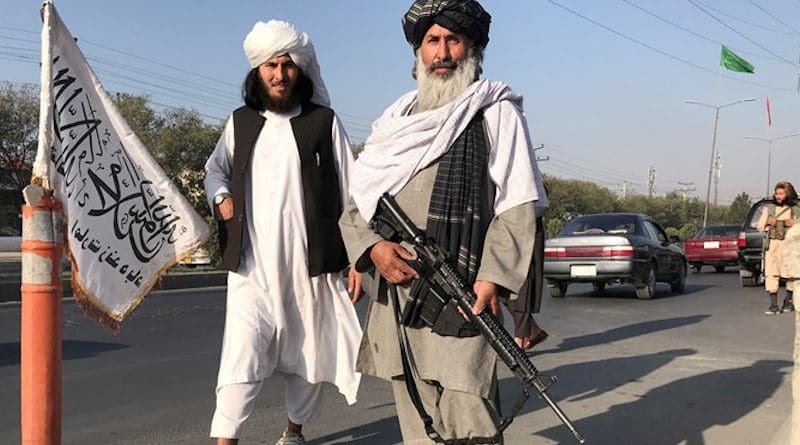
Selective Counterterrorism: A Double-Edged Sword – OpEd
The latest report from the U.S. Special Inspector General for Afghanistan Reconstruction (SIGAR), released on January 30, 2025, shines a stark light on the Taliban’s contradictory stance toward counterterrorism. While the Taliban presents itself as a force for peace in Afghanistan, its selective approach to combating terrorism—actively opposing ISIS-Khorasan (ISIS-K) while tolerating and even accommodating Al-Qaeda and the Tehrik-i-Taliban Pakistan (TTP)—poses a grave threat not only to Afghanistan but to the entire region.
Afghanistan has long been a fertile ground for terrorism, and the Taliban’s failure to address the full spectrum of extremist groups operating within its borders is deeply concerning. The SIGAR report underscores the reality that while the Taliban takes action against ISIS-K, it continues to allow Al-Qaeda, the TTP, and other terrorist factions to find sanctuary and operational space in Afghanistan. This troubling inconsistency in the Taliban’s counterterrorism efforts is not just a failure of governance—it is a policy that actively undermines regional stability and security.
By tolerating these groups, the Taliban is creating a permissive environment for terrorism to thrive. Al-Qaeda and the TTP are not only capable of launching attacks within Afghanistan but have the potential to strike beyond its borders, targeting neighboring countries such as Pakistan, India, and even the Central Asian republics. The close historical ties between the Taliban and these terrorist organizations raise the stakes of this selective approach. The Taliban’s refusal to crack down on these groups sends a dangerous message to the international community and further entrenches Afghanistan’s status as a safe haven for extremists.
This tolerance of terrorism is particularly concerning in the context of regional security dynamics. The Taliban’s selective counterterrorism policy directly impacts countries like Pakistan, which has long been dealing with the TTP’s cross-border insurgency. The TTP, an offshoot of the Taliban, has been responsible for numerous attacks within Pakistan, targeting civilians and security forces alike. By allowing the TTP to operate freely from Afghan soil, the Taliban is indirectly supporting the destabilization of its neighbor. Similarly, the resurgence of Al-Qaeda in Afghanistan poses a direct threat to international security, as the group has global ambitions and an established network of affiliates across the world.
The Taliban’s actions are also causing unease in the broader Central Asia region, where concerns about Islamic extremism and the spread of radical ideologies are mounting. The Taliban’s failure to crack down on terrorist organizations creates a breeding ground for instability, which could spill over into countries like Uzbekistan, Tajikistan, and Turkmenistan. These nations, with their fragile security environments, are already vulnerable to the spread of extremist movements, and the Taliban’s accommodation of terrorist groups only exacerbates the risks.
What makes this situation even more troubling is the failure of the Taliban to address the root causes of extremism and violence in Afghanistan. Their selective approach to counterterrorism suggests a lack of genuine commitment to peace. While the Taliban purports to be a stabilizing force in Afghanistan, it is, in fact, nurturing the very conditions that allow terrorism to flourish. The lack of a comprehensive strategy to eradicate all forms of extremism, coupled with their tolerance for select terrorist groups, exposes the Taliban’s double standard and weakens any prospects for long-term stability.
The regional implications of the Taliban’s inaction are severe. The group’s tolerance of terrorism will not only fuel insecurity within Afghanistan but will also destabilize its neighbors. The longer the Taliban remains in power and fails to address the full spectrum of terrorist threats within its borders, the more likely it is that Afghanistan will continue to serve as a breeding ground for extremism—spilling over into the wider region.
In light of these realities, the international community must take a hard stance against the Taliban’s selective counterterrorism policies. The U.S. decision to withhold nearly $4 billion in aid to Afghanistan, as highlighted in the SIGAR report, is an important first step in pressuring the Taliban to take action. The Taliban must be held accountable for allowing terrorism to flourish in Afghanistan and across the region. A failure to do so risks not only the future of Afghanistan but also the broader security of South and Central Asia.
The time to act is now. Regional security hinges on the international community’s ability to hold the Taliban accountable for its selective approach to counterterrorism. If the Taliban does not change its stance and take a more comprehensive approach to dismantling terrorist networks within its borders, Afghanistan will remain a hotbed of extremism, destabilizing the region for years to come.

Like what you read?
Please consider supporting Eurasia Review. Thank you for your consideration!
