
Pakistan’s Big Test In The China-Pakistan Economic Corridor – OpEd
By Dr. Sahibzada Muhammad Usman
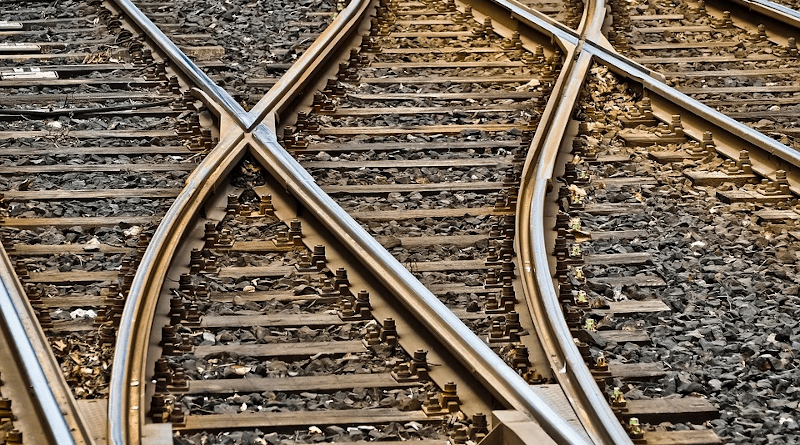
The Mainline-1 railway project between Karachi and Peshawar is the kind of story that says a lot about where Pakistan is headed. It’s massive, $7 billion to overhaul a 1,700-kilometer track that’s supposed to become the backbone of the China-Pakistan Economic Corridor’s next phase. People call it infrastructure, but it’s also a signal. It tells you whether Pakistan can move beyond patchwork fixes and finally build something that carries the country forward.
Anyone who’s travelled by train in Pakistan knows how outdated the system is. The tracks are old, trains crawl along at a frustrating pace, and freight has mostly shifted to the highways. Trucks now dominate long-haul transport, and that’s one reason traffic between cities feels endless. The railway, if it’s modernized properly, could cut down travel time drastically and move goods far more efficiently. It’s not just about comfort for passengers; it’s about unclogging highways and bringing down transport costs for businesses.
What makes ML-1 different from so many stalled or half-baked projects is the lineup of backers. China is of course central to it, but now the Asian Development Bank and Asian Infrastructure Investment Bank are part of the consortium too. That kind of mix matters. It shows this isn’t only a Beijing-Islamabad affair but something with wider buy-in. Multilateral involvement usually comes with more oversight, which Pakistan desperately needs in projects of this scale.
That said, execution is the real test. Pakistan’s history with mega-projects is littered with delays, cost overruns, and, bluntly, corruption. Financing is one hurdle, but keeping the project on track, literally and figuratively, will demand more discipline than governments here usually show. It can’t be another political trophy or a contract farm for well-connected players.
There’s also the debt side of it. Seven billion dollars doesn’t sit lightly on a country that goes back to the IMF every few years. The worry that Pakistan might be locking itself into another cycle of dependency is valid. People cite Sri Lanka’s Hambantota port as a warning, and they’re not wrong to. Whether ML-1 avoids that fate will come down to whether it genuinely boosts trade and productivity enough to justify itself.
The broader CPEC Phase II agenda is designed to make that possible. Alongside the railway, both countries are planning investments in agriculture, industrial zones, and mining. Special Economic Zones in Karachi and Islamabad are being expanded, with preferential policies dangled to attract Chinese investors. In theory, ML-1 connects all this together, the crops, factories, and minerals get a fast route to ports and markets. It’s a vision of integrated growth, not just a faster passenger train.
Agriculture is where things could get interesting. Pakistan feeds a huge population but struggles with inefficiency, poor storage, and outdated methods. CPEC talks about cooperation in crop cultivation, livestock, even aquaculture. That could make a difference, but there’s always a catch. Big projects often benefit larger landowners and foreign firms while leaving small farmers with scraps. If ML-1 ends up serving industrial-scale agribusiness while villages along the tracks see little change, resentment will grow.
Security is another piece people don’t like to talk about openly. The Karachi-Peshawar line passes through areas where stability isn’t guaranteed. Protecting the tracks and stations will be just as important as upgrading them. China already pours money into securing its projects here, but that creates its own anxieties. More Chinese personnel on the ground can spark sovereignty debates, and that tension isn’t going away anytime soon.
Still, despite the risks, the country needs something bold like this. Pakistan can’t pull itself out of stagnation without big infrastructure. Small tweaks to policy matter, but they won’t transform a clogged transport system or lure in serious investment. If ML-1 is delivered well, it could be a symbol of progress that’s visible in daily life. Trains running faster, cleaner, and more reliably may not solve everything, but they change how people feel about their country’s direction.
At the same time, it’s worth being cautious about the hype. A railway upgrade won’t fix customs bottlenecks, energy shortages, or governance failures. It won’t automatically create jobs or reduce inflation. Those require reforms that no foreign loan can deliver. If corruption eats into the project’s funds or politics delays it, the railway’s potential won’t be realized. The hard truth is that steel tracks can only take a country so far; the rest depends on policies and governance.
Whether Pakistan likes it or not, ML-1 ties its future even more tightly to China. The West has stepped back from playing a developmental role here, aside from offering bailouts. Beijing is willing to take risks others aren’t. Some see this as pragmatic partnership, others as dangerous dependency. Both views carry some truth.
So, is ML-1 a good bet? I think it is, but with strings attached. It’s a gamble Pakistan can’t really afford to walk away from, given how dire the state of its railways is. The question is whether the country can manage it responsibly. If it does, ML-1 could be remembered as a turning point. If it doesn’t, it’ll be one more entry in a long list of wasted opportunities.
