
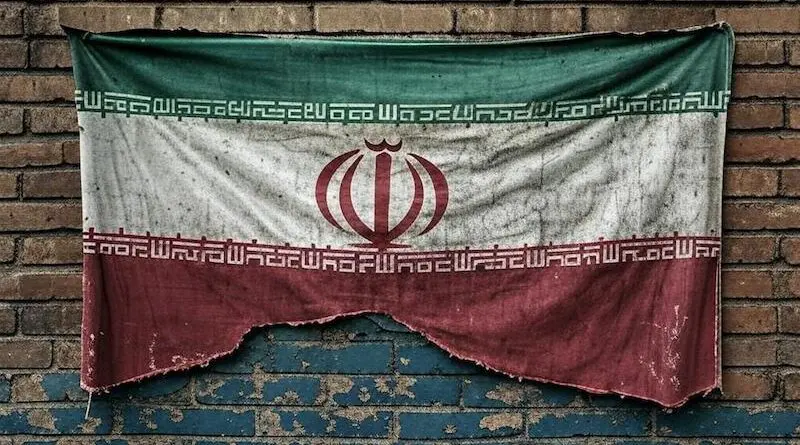
Iran: The Execution Machine Never Stops – OpEd
While the entire country is engulfed in clashes between rebellious youth and the religious dictatorship, the regime’s execution machine continues relentlessly.
The number of executions recorded in December 2025 has reached the shocking and unprecedented figure of 403 people.
Terrified by the prospect of its overthrow, Ali Khamenei continues to rely on executions as a tool of intimidation.
Uprising and Anger Intensify Across Iran
In many areas, protests have been marked by violent clashes, running battles, and direct confrontations with repressive forces, including police and special units, who have opened fire on civilians.
Tuesday, January 6, 2026 (16 Dey 1404)
Abdanan – Ilam Province
- The city has virtually come under the control of the population and rebellious youth.
- Large crowds have taken over the streets and confronted the Pasdaran (IRGC).
- The Ofogh-e Kourosh store, owned by the Islamic Revolutionary Guard Corps, was set on fire.
- Unable to cope, repression forces took refuge on the roof of the police station.
- Fearing the spread of the uprising, the regime cut electricity across the city.
- Regime propaganda billboards were torn down and a state-owned bank was burned.
Malekshahi – Ilam Province
- Massive crowds attended the funeral of martyr Fares (Mohsen) Agha Mohammadi.
- Enraged by the massacres of January 3 and 4, protesters chanted:
“I will kill the one who killed my brother.” - During clashes with special units, several agents were killed or injured, while others fled.
- A public bank was set on fire.
- Chants of “Death to Khamenei” echoed throughout the city.
- Witnesses report that parts of the city were liberated from regime control.
- Fars News Agency, affiliated with the IRGC, confirmed the death of Second Lieutenant Ehsan Aghajani, a member of Ilam’s repressive police forces.
Tehran
- Central districts, including Haft-Tir, Ferdowsi, and Valiasr squares, are under heavy security lockdown.
- Massive deployment of repression forces and the use of ambulances to transport agents.
- Tehran’s Grand Bazaar witnessed renewed protests by merchants and clashes with security forces.
- Students from several universities demonstrated, chanting:
“Death to the oppressor, whether Shah or Supreme Leader.”
Karaj (west of Tehran)
- Unprecedented deployment of security forces and armored vehicles.
- The city has been placed under conditions resembling martial law.
Other Cities
- Shahr-e Kord: A young woman bravely stood alone in front of a water cannon, humiliating repression forces.
- Firouzabad (Fars): 50 young people were arrested.
- Qazvin and Shahr-e Kord: Youth took control of public squares.
- Mashhad: Clashes on Tous Boulevard and Salman Farsi Street; equipment seized and motorcycle mercenaries forced to flee.
- Borujerd: Large-scale mobilization and clashes with repression forces.
- Ashkhaneh (North Khorasan): Roads blocked; regime responded with tear gas and live ammunition.
Protests in Nearly 30 Cities
Demonstrations chanting “Death to the Dictator” and “Death to Khamenei” continued late into the night in nearly 30 cities, including:
Abdanan, Ilam, Saleh-Abad (Ilam), Mor-Mori (Ilam), Malekshahi (Ilam), Asadabad (Hamedan), Borujerd, Bandar Abbas, Tehran, Saqqez, Sari, Sabzevar, Shahr-e Kord, Farsan (Chaharmahal and Bakhtiari), Qasr-e Shirin, Kerman, Karaj (Khwarazmi), Golshahr (Isfahan), Lahijan, Lapouyi (Shiraz), Mashhad, Mojan-Abad (Khaf), Neyriz, Yazdanshahr (Najafabad – Isfahan), Alvand (Qazvin), and Lirdaf (Jask – Hormozgan).
Support from Political Prisoners
Slogans chanted by political prisoners in Evin and Ghezel Hesar prisons, expressing solidarity with the nationwide uprising of the Iranian people, have been published online.
Measures Taken by the Iranian Regime
Statements by Mohseni Ejei – Head of the Judiciary
Source: Mizan News Agency – January 6, 2026 (17 Dey 1404)
- “We must eliminate the causes of unrest. The rapid yet precise prosecution and punishment of rioters, in accordance with legal standards, is on the agenda.”
- Establishment of special courts staffed by experienced judges to handle protest-related cases.
- Orders issued for judicial authorities to be present directly in the field to monitor developments without intermediaries.

Like what you read?
Please consider supporting Eurasia Review. Thank you for your consideration!
