
Pakistan’s Persistent Fight For Security And Stability – OpEd
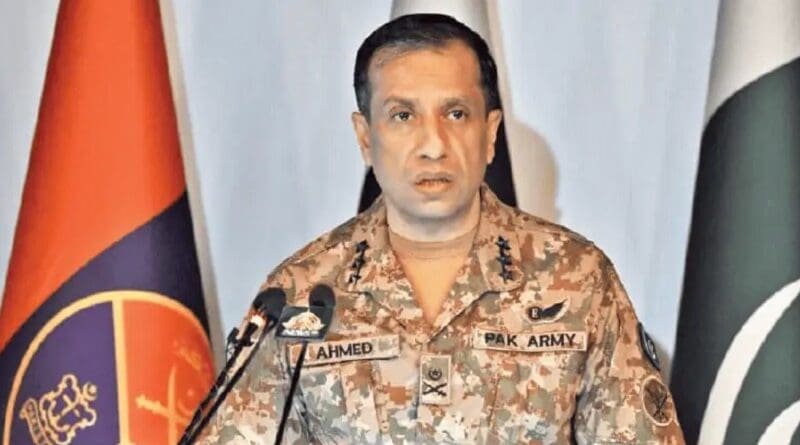
Pakistan had stood tall in face of terrorism and had endured immense human and economic costs over two decades, making unparalleled sacrifices as the country had risen to its feet against the terrorism formidable. The figures stated by Pakistan’s Director General of ISPR Ahmed Shareef Chaudhry during his press conference on January 6, 2026, were not merely the restatement of security figures but it symbolizes the national determination of Pakistan. These figure do not only provide the clarity on the magnitude of the war but also demonstrate the initiative taken by Pakistan that has challenged its foundations. Contrary to being a passive target, Pakistan has placed itself as a first line protector of the regional stability as it is actively going about breaking down networks that are aimed at derailing peace.
In the very core of the message of Chaudhry was one hard and factual statement that the epicenter of regional terrorism is in Afghanistan, and the terrorist outfits like; Al-Qaeda, Islamic State Khorasan Province (ISKP), Tehrik-e-Taliban Pakistan (TTP), and the East Turkestan Islamic Movement (ETIM) become a spillover effect for Pakistan, as Afghanistan provides safe havens to the terrorists, living on what is termed as a war-based economy. There are black markets selling wide range of weapons, worth of 7.3, million Dollars, in Afghanistan, left by USA after the fall of Kabul in 2021, which sustain an ecosystem of war and strife, creating an unmonitored arsenal that fuels cross-border attacks.
In 2025 alone, over 75, 000 intelligence operations were conducted by the forces to counter terror threats. Such operations are aimed at combatants only and are guided by strict procedures which have maximum consideration to civilian safety. Although the terrorists have been using civilian areas as shields and continued to exploit the weak points such as homes, schools, or places of worship to launch their attacks, Pakistani forces had been restrained to cause needless harm. This strategy highlights a belief in ethical warfare, which is a step ahead in a part of the world where ethical standards are not usually considered. The 2025 statistics depict a clear picture of the struggle and sacrifices. The country has registered total 5,397 cases of terrorism where the share of Khyber Pakhtunkhwa was the highest with reportedly 3,811 cases while Balochistan registering 1,557 cases. There were 27 suicide bombings witnessed, with 16 in Khyber Pakhtunkhwa, 10 in Balochistan and one in Islamabad. Security operations in response killed 2,597 terrorists including 16 high-profile ones. These data demonstrate the severity of the conflict, but also reflect the peculiarity of the situation in Pakistan: no one in the region makes such constant and regular confrontations with terrorism. Such a degree of interaction consumes huge resources and determination but still Pakistan can continue to defend its borders and its people without foreign assistance as it used to.
New technology and tactics among terrorists bring about new dimensions to the hybrid warfare. Khawarij have turned to the use of the modern technology of quadcopters and armed drones, in a war that they namely call “Jihad” with no essence of holiness in the act. The technological advancement allows them to attack military bases and non-military territories, and often, they have densely populated areas or religious sites as the source, complicating the responses. In sharp contrast, the military in Pakistan applies drones solely to reconnaissance purposes, which makes the operations measured and accountable. This gap highlights the disciplined approach of Pakistan in asymmetric warfare where technology has been carefully utilized in eliminating risks. Off the battle field, there is the ideological warfare that has to be reclaimed. Terrorist groups have no true creed; they merely have financial interest with zero spiritual belief. They act beyond the realms of Islam as highlighted by national consensus documents such as Paigham-e-Pakistan which brings together scholars of different sects in declaring that the state was the only entity entitled to take defensive arm measures, while any group or organization taking arms against state is not only illegal but Haram according to the fatwa. This position helps to demystify the actions of the terrorists clearing the truth that they are profiteers who play religious card to achieve their own goals. This story is encouraged by Pakistan, thus creating unity within the country and also countering any propaganda that may divide people. This effort is anchored on national cohesion.
The anti-terrorism campaign is a shared action and both political leaders and the military as well as the citizens are involved. The National Action Plan which has been supported by all the major parties gives a common road map to eliminate extremism. At the top, the government is unified in its strategies as the president, prime minister and military chief are in agreement on the strategies and hence consistency. In provinces like Khyber Pakhtunkhwa where issues are severe, governments do deal with misleading news articles that distort facts and convey them to serve a political agenda.
The anarchists that are disguised as the soft power of the terrorist outfits cause mistrust among the nation by using ideological and economic tactics, for example; mineral wealth of KPK and Balochistan is infamously quoted to be mismanaged by the state with little to no benefits received by locals. Whereas, the mineral wealth cannot serve to cultivate personal greed and criminal behavior but should support the whole country. The individual or local extraction of resources is more likely to breed corruption but at the same time, it may be indirectly used to finance terrorists, and therefore, equitable management of resources becomes a major security concern in Pakistan.
The reports of the United Nations, as well as the support of Russia, China and even the United States, recognizing Afghanistan as a source of terrorist threat. These international voices validated what Pakistan has been saying for decades that safe haven in Afghanistan is a continuation of instability in not only Pakistan but also in the region. The problem of commercialization of terrorism by the Afghan regime, selling chaos in dollars requires concerted efforts. The real peace in the region is impossible without the destruction of the terror networks.
In conclusion, the story of Pakistan is one of success amidst the mounting challenges. Success stories like that of Pakistan are unparalleled, as not many nations had endured a prolonged war while stabilizing the institutions and ethical integrity. The terrorism data of 2025 exposes not just wounds but also shows the morale of the nation with unbroken spirit. Pakistan is moving towards the future with a purpose and united front, where the specter of terror doesn’t exit. The arena of terrorism is changing and so is the defense of Pakistan, solid, ethical, and constantly alert to protect the people of Pakistan as well as to give the region stability.

Like what you read?
Please consider supporting Eurasia Review. Thank you for your consideration!
