
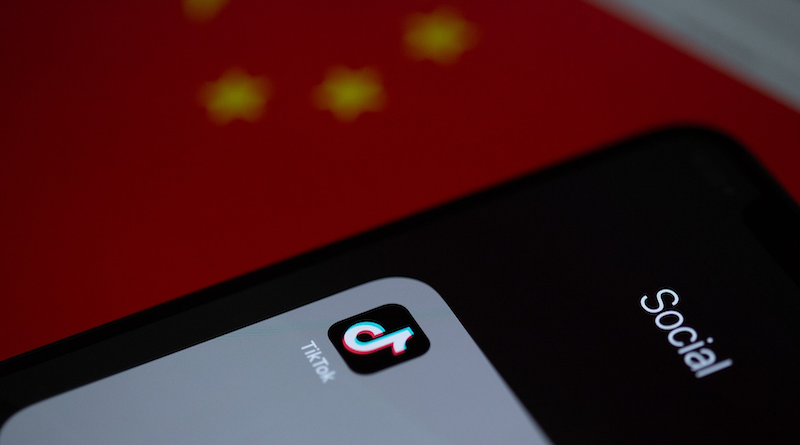
Is TikTok Working Against China’s Interests? – OpEd
The $65 billion flagship of China’s Belt and Road Initiative (BRI), for which Chinese President Xi Jinping has a standard salute, as CPEC is known, is much more: it is a geopolitical linchpin for Beijing’s push South Asia. But this strategic endeavor is being threatened with a paradoxical threat: The Baloch Liberation Army (BLA), a rebel group focusing on attacking Chinese interests, has weaponized the Chinese-owned platform TikTok against CPEC and spread anti-China rhetoric. This duality exemplifies how an actor would use tools created to project soft power as vectors of destabilization.
A Baloch separatist group, the BLA, fighting for independence from Pakistan also considers China accomplice to Islamabad’s alleged plunder of Balochistan’s resources. Since the inception of Group in 2018, the group rose to stages of escalating attacks on CPEC projects, Chinese nationals, and symbols of Sino-Pakistani collaboration like the Karachi Stock Exchange (40% Chinese owned) and the Gwadar Port. These attacks on military targets are not purely physical but have an aspect of hybrid warfare that mixes violence and digital propaganda. The BLA perceives CPEC as a colonial project that expropriates local communities, mines resources, and perpetuates Pakistani military oppression.
The group’s resistance is often presented through the group’s propaganda as being justified by historical grievances like 2006, the assassination of Baloch leader Nawab Akbar Bugti. That message combines calls for self-determination with allegations of Chinese involvement in the genocide: ‘China has allied itself with the Pakistan Army and is perpetrating brutality on our people’. This fits what the marginalized Baloch youth who are constantly deprived economically and feel that the CPEC is benefiting outsiders.
So far, TikTok’s algorithmic reach and particularly weak content moderation has made it an unwitting accomplice in the BLA’s digital offensive. Video with anti CPEC message on TikTok rose from 50 to over 1,200 in the period from 2015 to 2024 and acquired over 35 million views in Balochistan. Hashtags like #StopCPEC, which was trending over 500 times since 2018, has 15 million users. The BLA and its associated groups such as the Baloch Yakjehti Committee uses such hashtags to lobby. Almost all these campaigns occur at either the start or the end of crucial phases of CPEC’s development, putting forth the appearance of concerted efforts to derail economic progress.
The design of the platform makes divisive content seem louder to people. TikTok’s algorithm is shifting focus away from context to engagement and the result is extremist rhetoric has slipped in to satisfy the reach of impressionable users. It came to light that in 2024, one in three TikTok users in Balochistan encountered anti CPEC content which capitalizes on noticing narratives of Chinese exploitation. Yet, despite that, China’s own investments in TikTok hang by doubt. It is a stark paradox — a Chinese app that must follow Beijing’s National Intelligence Law is used to destabilize China’s flagship foreign project.
BLA’s digital warfare exacerbates the physical threat to CPEC. The group’s developing capabilities are shown in attacks such as the 2023 ambush of a Chinese convoy in Gwadar and the 2024 Operation Herof, which was a wave of violence on the 18th anniversary of the death of Bugti. They also carry out complicated media campaigns on encrypted platforms like Telegram where the BLA posts videos glorifying suicide bombers and maps out attack zones. Among other things, that content leaks into mainstream social media, thus defeating counterterrorism efforts universally.
China’s response has been reactive. Although Beijing wants Pakistan to be more secure, it has failed to deal with the digital dimension. The use of the BLA’s regional languages (Balochi, Brahvi) adds to that (Balochi, Brahvi), providing the tech platforms little linguistically trained moderators. However, with rising risks, China’s dependence on the CPEC as a conduit to the Indian Ocean and as an alternative to the Malacca Strait, it is impossible to withdraw from CPEC.
The challenge China faces is to tame the BLA’s digital insurgency without losing out in TikTok’s global mission. Given the evolution of hybrid warfare, the Chinese authorities must mediate between their technological dreams and their making it more vulnerable. If China can be turned on itself, it is the tip of the iceberg as the stakes are much larger, they extend beyond CPEC. Algorithms in this battlefield are both weapons and are weaknesses that China can no longer ignore.
The concern for the exploitation of the BLA on TikTok is a harsh reality in the digital age: Nothing is untouchable, even the tools of influence can become the tools of sabotage. CPEC presents both physical and narrative security risks for China and safeguarding it rests on not least the latter.

Like what you read?
Please consider supporting Eurasia Review. Thank you for your consideration!
