
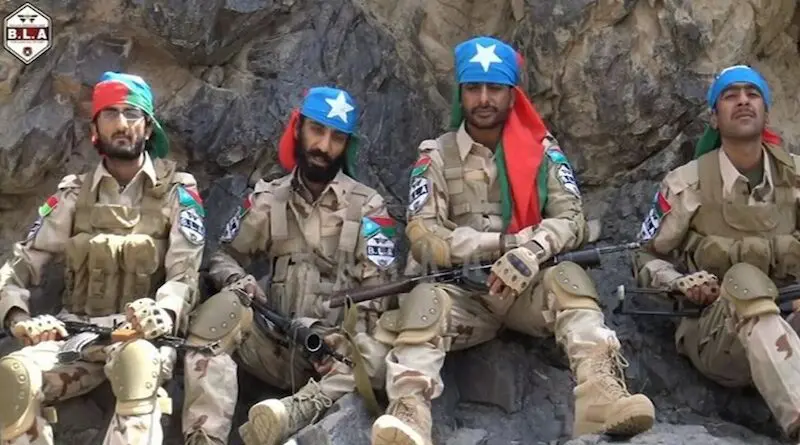
Why BLA Attacks Are Increasing: Key Factors Explained – OpEd
On August 25-26, a series of violent attacks occurred across various parts of Balochistan, resulting in 70 of casualties. The gravity of these attacks was further underscored by the horrific and cold-blooded murder of 23 bus passengers in Balochistan on the same day.
Official reports indicate that the earlier attacks were claimed by the Majeed Brigade of the Balochistan Liberation Army (BLA), and the subsequent brutal killing of civilians appears to be a targeted act of ethnic violence against Punjabi civilians in Balochistan, also perpetrated by the BLA. Among these incidents, the streak of killings warrants immediate and comprehensive analysis. These attacks raise critical questions about the increasing capabilities of the BLA, which seem to be escalating with each passing year. Furthermore, it is essential to examine the underlying factors driving this upward trend in violent attacks by the BLA.
Adaptive Tactics: BLA’s Evolving Warfare
Firstly, for every insurgent or terrorist group, adaptability is essential for their long-term survival. It helps them to remain relevant with fast-changing technological advancements and shifting geopolitical situations. The BLA has demonstrated a remarkable degree of adaptability, which has significantly contributed to its capacity to execute high-impact attacks against Pakistani security forces as well as civilians whom it designates as pro-federation and ethnic Punjabis (a violent xenophobic trait of BLA). Notably, over the years, the BLA has escalated its campaign from a low-intensity conflict to a more sophisticated insurgency.
In addition to targeting government infrastructure such as power towers, gas pipelines, and railway tracks, they have also taken on more challenging objectives, including security installations and heavily fortified China Pakistan Economic Corridor (CPEC) projects. In this context of adaptability, the BLA has introduced a new faction known as the Majeed Brigade, a specialized group engaged in suicide bombings, comprising both male and female members. Since 2018, the BLA’s Majeed Brigade began targeting high-profile locations like the Chinese Consulate in Karachi, the Pearl Continental Hotel in Gwadar, the Pakistan Stock Exchange, Chinese tutors killed in Karachi University and the Frontier Corps headquarters in Balochistan’s Nushki district. Meanwhile, Sumaiya Qalandrani’s fiancé, Rehan Baloch, son of Aslam Baloch—the Majeed brigade’s founder—became the movement’s first male suicide bomber when he attacked a bus carrying Chinese engineers working on the Saindak Copper-Gold Mine in Dalbandin district on 11 August 2018.
These development marks a notable shift in the operational tactics of the BLA, as suicide bombing was previously not a prevalent strategy within their repertoire. It has been reported that the BLA adopted these suicide bombing tactics from the Tehreek-e-Taliban Pakistan (TTP) during the period when both organizations found sanctuary in Afghanistan under the republican governments. This period of collaboration and shared refuge allowed the BLA to incorporate these advanced tactics into their own operations, thereby enhancing their overall strategic capabilities. Furthermore, after the BLA introduced suicide bombing tactics, it partially shifted from its traditional hit-and-run approach to more direct attacks on security forces, engaging them in prolonged confrontations until the end.
Sophisticated Weapons in BLA Hands
Secondly, the sophisticated and modern weapons serve as oxygen for any insurgent group and so is the case of BLA. In recent years, BLA has significantly bolstered its operational capabilities through the acquisition of sophisticated weaponry left behind by the United States forces in Afghanistan. Among these advanced arms are M24 sniper rifles, M4 carbines equipped with Trijicon ACOG scopes, and M16A4 rifles outfitted with thermal scopes.
Further, the militants are equipped with PVS 7D head-mounted night vision devices, enabling them to accurately target unsuspecting Pakistani soldiers. The introduction of such high-caliber weaponry has notably augmented the BLA’s effectiveness in their armed struggle against Pakistan, providing them with enhanced precision and lethality on ground. Adding injury to insult, the introduction of modern weaponry further undermines the capabilities of the Balochistan police. This institutions, which is regarded as the primary line of defense, is now struggling against better-armed adversaries due to their relatively weak arsenal.
Strategic Patience Towards Other Terrorists Organizations
In addition to the acquisition of advanced weaponry, another crucial factor contributing to the increased lethality of the Baloch insurgents is their strategic patience and calculated approach towards other armed groups operating within Balochistan, such as the TTP and the Islamic State of Khorasan Province (ISKP). Despite the ideological chasm between these groups—the TTP and ISKP being driven by a religion-led terrorist agenda, while the Baloch insurgents adhere to an ethno-nationalist ideology—the BLA has demonstrated a pragmatic willingness to coexist. This ability to navigate the complex landscape of militant factions in Balochistan, despite stark ideological differences, further enhances the BLA’s resilience and operational effectiveness in their ongoing insurgency against the Pakistani state.
Strategically, by avoiding conflict with religiously-led terrorist organizations, the BLA stays focused on its primary objective of opposing Pakistan. Engaging with groups like the TTP and ISKP would drain the BLA’s energy, resources, and time, diverting it from its core mission. Therefore, the BLA strategically avoids opening additional fronts, concentrating solely on its opposition to Pakistan.
Women Participation in Armed Struggle
The role of women in insurgencies is not a new area of study. There are numerous examples of women actively participating in armed struggles against the state, such as the involvement of women in the Liberation Tigers of Tamil Eelam (LTTE)’s insurgency against Sri Lanka and, more recently, the participation of Kurdish women in armed and violent conflicts. Experts point to another significant factor contributing to the increasingly violent campaign of the Baloch insurgents: the unprecedented involvement of Baloch women in large-scale protests against the disappearance of their loved ones. These protests, where women are often seen leading the charge, have a profound impact on the community. For many Baloch men, seeing their women take to the streets is a matter of deep honor and pride, which could drive them to join insurgent groups as a way to defend their families and uphold their honor.
Moreover, these protests have a dual effect. Not only do they spur men to take up arms, but they also inspire the women themselves to become more actively involved in the violent struggle. Some women are motivated to participate directly in attacks, targeting innocent Chinese nationals and Pakistani security personnel as we have seen in the cases of Shari Baloch. The active role of Baloch women in both protests and violence is thus a powerful force in the ongoing bloodshed, fueling the insurgency and intensifying the conflict.
Conclusion
In conclusion, it appears that the ongoing conflict between the Baloch insurgents and the state of Pakistan is becoming increasingly complex and multifaceted. The persistent friction between these forces has created a situation that is not only challenging to navigate but also fraught with escalating tensions and violence. While kinetic means have been employed extensively in this conflict, it is evident that such measures alone are insufficient to bring about a lasting resolution.
There is an urgent need for comprehensive and robust political and economic interventions in Balochistan. These efforts must be aimed at addressing the root causes of the unrest, including the deep-seated grievances of the Baloch people. Only through a combination of targeted economic development, inclusive political dialogue, and sincere efforts to integrate Balochistan into the broader national framework can end this bloodied chapter of history. The situation demands not just military action, but also a thoughtful and sustained commitment to creating the conditions for peace, stability, and long-term prosperity in the region.

Like what you read?
Please consider supporting Eurasia Review. Thank you for your consideration!
