
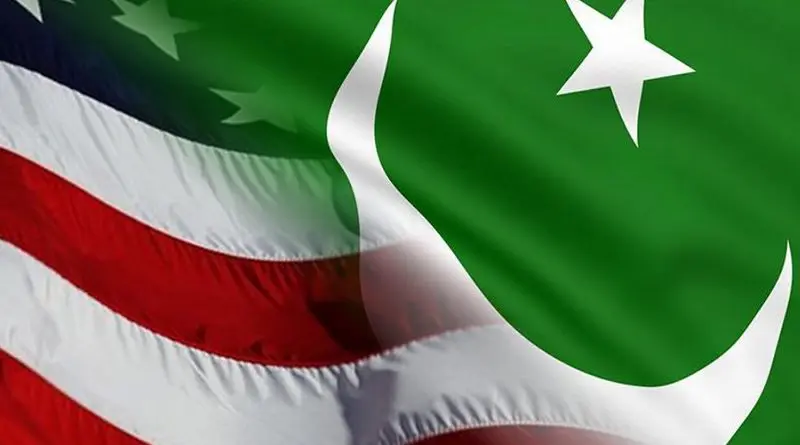
Pakistan And The United States: A Fragile Balance Act – OpEd
In late September 2025, U.S. President Donald Trump unveiled a 20-point peace plan aimed at ending the Gaza war. The proposal called for an immediate ceasefire. This consisted of a phased Israeli military withdrawal, release of hostages and prisoners, and eventually a two-state framework granting Palestinians self-rule.
Israeli Prime Minister Netanyahu welcomed the initiative, while several Muslim and Arab countries including Saudi Arabia, Turkey, Indonesia, and Pakistan publicly endorsed it. At a joint press event, Trump specifically singled out Pakistan. He praised Prime Minister Shehbaz Sharif and Army Chief Field Marshal Asim Munir for “being with us from the beginning” and backing the plan “100 percent.” Sharif again echoed this support, stressing that lasting peace in Gaza is critical for regional stability and growth.
The 20-point Plan held merit in its initial form, and Pakistan establishment and the Muslim countries welcomed the plan until it changed. In the light of the 20-point plan that President Donald Trump proposed to address the Israel-Gaza conflict, the timeline surrounding Pakistan’s involvement reveals a significant and rapid evolution of events. The exact date of the initial agreement among Pakistan and other Arab and Muslim countries is not explicit; however, it is clear from the statement of Pakistan’s Foreign Minister Ishaq Dar that the 20-Point Plan changed quickly. Dar noted, “I made it clear that the 20 points that President (Donald) Trump made public are not ours. Changes were made to our draft. I have the record.” This was a statement that Dar provided to the politicians in Pakistan and reported by the Dawn News, in Pakistan.
The changes to the original draft were reportedly made during a crucial six-hour meeting involving key figures such as Trump’s son-in-law Jared Kushner, US Special Envoy Steve Witkoff, and Israeli Prime Minister Netanyahu. This meeting took place just days prior to the announcement, indicating a swift alteration of the plan. Following the public release of the revised proposal on October 2, Pakistan’s Foreign Minister Ishaq Dar expressed immediate criticism, highlighting that the 20 points unveiled did not align with the original draft they had agreed upon. This sequence of events underscores a time difference that remains somewhat ambiguous; while the initial agreement likely occurred within a few days to a week before the announcement, the rapid changes made in the interim led to Pakistan’s quick withdrawal of support for the modified plan.
Initially, behind the endorsement was a period of unusually close engagement between Islamabad and Washington. Munir met Trump one-on-one at the White House in June. The first such meeting ever for a Pakistani army chief was a strong signal to the world, especially to India. This indicated that Pakistan’s efforts on counterterrorism and close collaboration with the United States earned Pakistan the recognition it has been longing for. Pakistan is now at the center stage in global diplomacy, forming strong diplomatic ties with major powers such as the United States, Russia, and China. Currently, the United States needs Pakistan to exert its relevance in a region that is shifting to a multipolar order.
Munir returned just weeks later, calling the second visit in one and a half months a “new dimension” in ties. In September, Sharif and Munir jointly visited the Oval Office, marking the first prime ministerial visit in six years. These visits have opened the doors for a new chapter between the United States and Pakistan. It is not just a military venture. Pakistan is rich in minerals and currently seeks global investment in developing its nation and the workforce that is prepared to compete with the rest of the world. Furthermore, these talks yielded a trade deal that paired United States tariffs on Pakistani imports with new American investment aid, alongside memoranda of understanding on energy and mining.
Trump’s public acknowledgment of Pakistan’s support for the Gaza plan emphasized Islamabad’s growing visibility in United States diplomacy. At home and abroad, Pakistan’s stance carries both opportunities and risks. Internationally, it aligns Pakistan with a coalition of moderate Muslim states working with Washington, potentially opening doors for trade, investment, and security cooperation. It also strengthens Islamabad’s standing with Gulf allies like Saudi Arabia and the United Arab Emirates, who have cautiously welcomed de-escalation. Netanyahu’s constant efforts to destabilize the Middle East and drag the United States into forever wars led Netanyahu to attack the very host country engaged in mediating a ceasefire and a peace deal. An attack on Qatar signaled to the stable monarchies in the Middle East that the United States is not a reliable partner of any of these monarchies, but a silent approver of Netanyahu’s policies.
Because of the abrupt changes in the 20-Point Plan that Pakistan originally endorsed, it signals strongly to the Arab nations and Pakistan that the United States is not a trustworthy and a strong partner. Arab nations and Pakistan must form their own defense arrangements. As the United States continues to support Prime Minister Benjamin Netanyahu and his agenda, the United States loses its credibility at such a rapid speed that globally, many nations are starting to either form their own alliances or pivot towards China to join BRICS. BRICS is a group of major emerging economies. It currently consists of Brazil, Russia, India, China, South Africa, Egypt, Ethiopia, Indonesia, Iran, and the United Arab Emirates. The organization was formed to counter Western dominance and as a means of establishing a balanced global order that fosters economic cooperation, provides an alternative to Western financial dominance. The key is to establish a multipolar order.
The defense agreement between Saudi Arabia and Pakistan makes Pakistan an asset to the entire Middle East region, including Iran. Pakistan is a battle-ready nation that is constantly diffusing threats on its borders and domestically. With the recent conflict with India, Pakistan demonstrated the highest level of professionalism in an armed conflict that put both nations, India and Pakistan, on the brink of a nuclear war. Hence, Pakistan’s resourcefulness, expertise in escalation, and knowledge of handling critical threats is the key experience all Arab monarchies need to deter Israeli threats. Internationally and domestically, the Sharif government and Munir can present Pakistan and its role as that of a responsible Muslim nation working for peace, which may appeal to investors and moderate voters. The real challenge for Pakistan here is how it manages domestic opinion and its citizens who are very clear on Gaza. Pakistan soon realized this upon abrupt changes to the 20-Point Plan. Additionally, the Muslim world now is looking for Pakistan to also intervene in the Middle Eastern region to bring peace and security by creating a deterrence of an extremist Israeli faction that is committing a genocide in Palestine.
Many believe that Netanyahu’s true intention has been to compel Hamas to surrender on Israel’s terms rather than seek a genuine end to the conflict. This has now proven true. Netanyahu and his extremist cabinet are pushing for the Greater Israel, and if it means committing a genocide and ethnic cleansing, Netanyahu believes he can get away if his deception and master manipulation bends his friends and adversaries to his will. The truth remains that it has become extremely challenging for him to project an image of any “victory.”
The only way left for Netanyahu to remain relevant is to burn down the entire Middle East while dragging the United States in his forever wars. Globally, he is a pariah and has made the state of Israel a global pariah. His only remaining move is that he must continue agreeing to concessions, then sabotage those concessions, blame it on Hamas, and return to Washington to manipulate the United States political elite and control the public opinion in the United States. When this dust settles and the global human voices speak and write history, Netanyahu and his allies will be written as mass murderers who built their empire on the blood and sweat of innocent. Then, it will be no surprise why the state of Israel is isolated, and its people rejected amongst the civilized.
Pakistan has long championed the Palestinian cause, and religious parties as well as opposition groups could see this alignment with Washington as a betrayal should Pakistan lean in too much toward the Trump administration. Pakistan also needs to read Trump properly as his decisions are based on the next best business decision or the next best deal where realities can shift quickly for the involved parties. Past United States peace plans and the current are one sided, though these plans do mention the self-determination of Palestinians. Recently, United States representatives again vetoed a ceasefire resolution in the United Nations. A fresh backlash may follow if the government is perceived as compromising on Palestinian rights. Pakistan must function with strong diplomatic will and maintain a clear position in its stance for Palestine.
In essence, Pakistan’s endorsement of Trump’s Gaza plan represents a strategic gamble, and it proved true. Netanyahu is one part of the equation that continues to change global political realities, and any nation involved between the United States and Israel, such nation risks a major political gamble internationally and domestically as Pakistan experienced.
Netanyahu, as proven repeatedly, is recognized for his political maneuvering skills, which consist of serial manipulation tactics, plausible political causes, and deep influence and control of the United States government. This allows Netanyahu to masterfully navigate obstacles to prolong his political existence that would be further cemented by waging forever wars. Currently, he is engaged in seven wars within the Middle East: Palestinian territories (Gaza and the West Bank), Lebanon, Syria, Yemen, Iran, Qatar, and Tunisia. At every turn, Netanyahu has changed his stance in past negotiations or sabotaged any ceasefire deals, only to withdraw when discussions of a permanent resolution arise.

Like what you read?
Please consider supporting Eurasia Review. Thank you for your consideration!
