
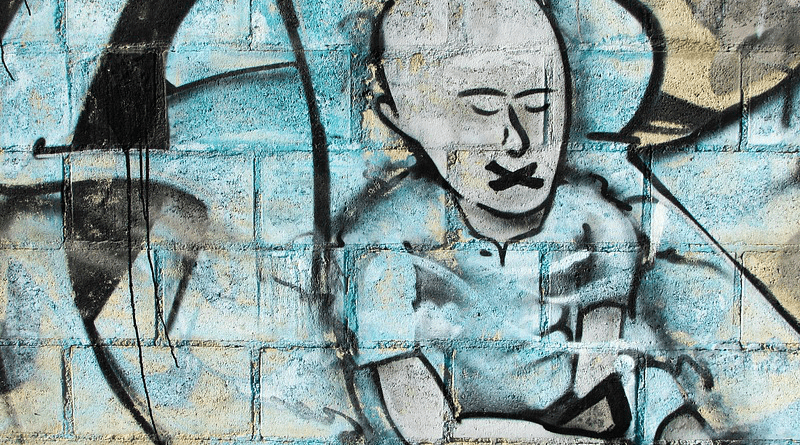
National Journalists Day In China Reminds Of Foreign Media Under Surveillance – OpEd
China is marking National Journalists Day on November 8, 2025. An observance for expounding on the importance of media freedom is expected to be healthy for any society.
But in China, it is a day marked in name only.
Journalists reporting on China have regularly described how they are being followed, threatened, and expelled. Their testimonies are evidence that at no point does the press control apparatus of the Chinese Communist Party allow for independent reporting.
The latest formal compilation of such obstacles faced by journalists came in the Foreign Correspondents’ Club of China’s (FCCC) 2024 working conditions report “New Red Lines: Increasing Obstacles for Foreign Journalists in China”. Released in August this year, it revealed that 50% of the surveyed correspondents described a big jump in official restrictions on reportable topics.
Regular topics about the Chinese economy— tariffs, unemployment, and labour conditions– joined an already long list of traditionally taboo subjects that includes Xinjiang, Tibet, Hong Kong, and references to Xi Jinping.
A staggering 86% of journalists said their interview requests were declined or cancelled. Additionally, 38% of the foreign reporters said their Chinese colleagues had been harassed or
intimidated, with every tenth survey responder alleging that they were either manhandled or encountered physical violence.
Given how pervasive the pressure on foreign journalists, and journalists in general, in China is, it is impossible to brush aside the reports as one-off instances. The figures point to a systematic destruction of journalistic freedom, orchestrated at the very top of the Chinese state.
Surveillance and expulsion have intensified dramatically since 2020. The largest mass expulsion since the 1989 Tiananmen Square massacre occurred in 2020 when China expelled 18 foreign correspondents from the New York Times, Wall Street Journal, and Washington Post.
Chinese authorities have also turned the visa renewal process into a weapon, denying credentials to journalists from major outlets and issuing restrictive short-term visas lasting only weeks or months rather than the customary annual renewal.
In 2022, the Canadian Broadcasting Corporation shuttered its Beijing bureau after visa applications for correspondents languished unanswered for months; meanwhile, in 2021, the BBC correspondent John Sudworth was forced to flee to Taiwan following personal attacks and government disinformation campaigns targeting his Xinjiang reporting.
The surveillance apparatus targeting foreign correspondents goes beyond mere bureaucratic interference. It has become systematic to monitor journalists’ communications. Surveillance by police and plainclothes officers continued, and drone monitoring — first reported in 2023 — expanded in 2024.
Chinese authorities have even built dedicated surveillance infrastructure focused on monitoring journalists. Henan Province built a face-recognition system classifying journalists into “traffic-light” categories, with “red” designations marked for hostile treatment.
The persecution of Chinese assistants and fixers working for foreign media is particularly severe. Chinese nationals working for international outlets are subjected to coercive interrogations, forced resignations, and lengthy detentions. In December 2020, authorities detained Haze Fan, a journalist for Bloomberg News, on national security charges—a pattern repeated with Australian broadcaster Cheng Lei, who was formally placed under “residential surveillance” in an unknown location in August 2020. Operations like this serve a dual purpose: gathering intelligence while terrorising sources and intimidating staff into compliance.
Physical surveillance, coupled with technological monitoring, forms a robust infrastructure for tracking. Incidents of GPS and device monitoring abound. Correspondents were influenced to cancel trips or interviews due to official pressure; others had been obstructed during travel, both by officials and unidentified people.
Journalists are subjected to “invited for tea” sessions— supposedly friendly meetings where officials interrogate them about sources and coverage— a tactic intended to intimidate while creating a chilling effect on reporting. Still, some incidents reveal the brazenness of the surveillance state. Freelance journalist Paul Mooney and other reporters have documented armed plainclothed individuals blocking Chinese citizens from speaking to foreign correspondents, as state surveillance systems are deployed to track journalists’ movements and contact with sources.
Cyberintrusions represent an especially insidious dimension of this assault on press freedom. A Henan Public Security Bureau surveillance document, unearthed by investigative firms, lays out a plan to surveil foreign students, migrant women, and, in particular, journalists via AI and facial recognition technology. The broader Chinese cyber-espionage infrastructure, as illustrated by the Salt Typhoon operation targeting eighty nations, demonstrates Beijing’s capability and intent to penetrate global communications networks. While specific journalist targeting has not been publicly documented at the same level of granularity as domestic surveillance, the technical architecture leveraged against foreign governments and corporations remains available to state security operations against international media personnel.
To report on China is to be reported to China.
The CCP has created an all-encompassing machinery of visa restrictions, physical intimidation, arrest of staff members, device monitoring, and cyber-surveillance in a bid to make independent journalism practically impossible. Chinese officials have managed to institutionalise harassment of the foreign correspondents with mathematical precision, using the administrative restrictions to frustrate access and deploying security agencies to gather intelligence on journalistic networks and sources.
This transformation shows the fundamental hostility of the CPC to accountability and transparency. Under Xi Jinping, state-controlled media outlets have been elevated as the only authorised voice, while international journalism has been systematically criminalised. The Chinese government has substituted the concept of free press with a surveillance-driven propaganda apparatus where security agencies monitor, track, and prosecute those who dare report truthfully about China.
The deterioration of press freedom in China represents not just a limitation to reporting but a basic reversal of democratic principles. By making journalists targets of surveillance, criminalising their Chinese colleagues, and building facial recognition systems that track their movements, the CPC has abandoned even a pretension toward international journalistic standards.

Like what you read?
Please consider supporting Eurasia Review. Thank you for your consideration!

“[Western] Journalists reporting on China have regularly described how they are being followed, threatened, and expelled. Their testimonies are evidence that at no point does the press control apparatus of the Chinese Communist Party allow for independent reporting”??
Chinese media are the most trusted on earth, so why did Western journalists have such difficulty?
Western journalists have misrepresented China for 75 years, more to our detriment than China’s, because it caused us to underestimate the Central Nation’s capabilities until it was too late. it’s no wonder Beijing became tired of their lies.